Mulch is one of the simplest tools a gardener can use, yet most of its work happens out of sight. The layer you spread on top of your beds influences soil temperature, moisture, weed pressure, and the community of living organisms that keep plants healthy. Here is a friendly guide to five common mulch types and what each one tends to do for your garden soil.
Why Mulch Matters Below the Surface
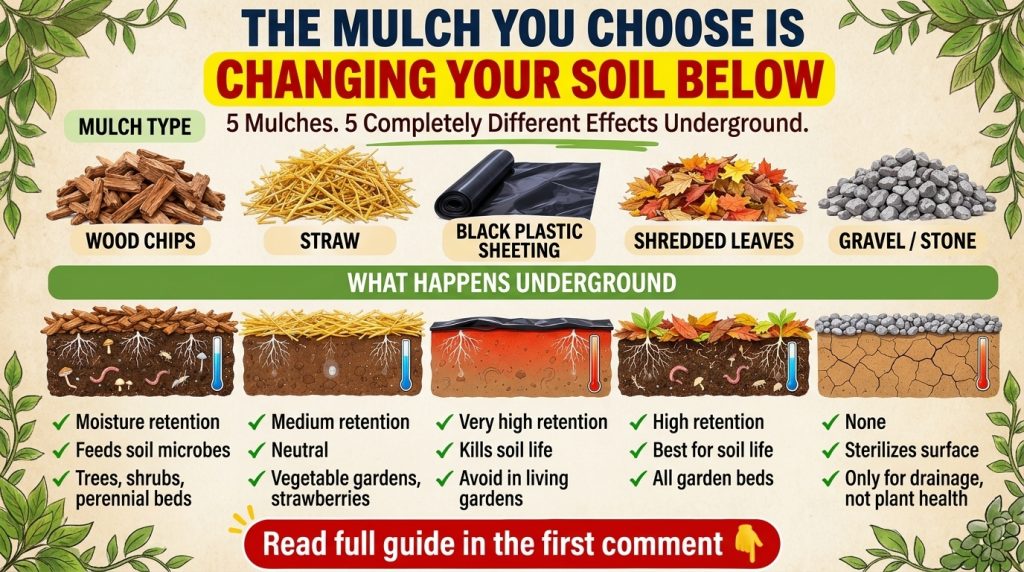
Healthy garden soil is alive. It contains fungi, bacteria, earthworms, and countless small organisms that break down organic matter and make nutrients available to plant roots. Mulch affects this hidden world by shading the soil, slowing evaporation, and buffering temperature swings. The right choice can create a calmer environment for roots, while the wrong one can leave soil dry, hot, or compacted.
1. Wood Chips
Wood chips are a popular choice for paths, borders, and perennial beds. As they slowly decompose, they add organic material to the soil and encourage fungal networks that many plants value. Wood chips are durable and tend to stay in place well. Use fresh chips with care around young vegetables, since some gardeners prefer aged wood for vegetable beds to avoid nitrogen tie-up near the surface.
2. Straw
Straw is a classic mulch for vegetable gardens and strawberry patches. It is lightweight, easy to spread, and helpful for keeping developing fruit off damp ground. Straw holds moisture well and keeps soil cooler in summer. It breaks down over a single season, so you may need to top it up. Choose weed-free straw to reduce the chance of unwanted seedlings.
3. Black Plastic Sheeting
Black plastic warms the soil quickly in spring, which can help heat-loving crops such as melons and peppers get a strong start. It also blocks most weeds and holds moisture beneath it. The trade-off is that plastic does not add organic matter or feed soil organisms, and it can make the soil surface hotter in peak summer. Many gardeners use it in early season and switch to an organic mulch later.
4. Shredded Leaves
Shredded leaves are a free, practical option that many gardeners already have on hand. As they break down, they feed earthworms and improve soil structure over time. Shredded leaves knit together well and resist blowing away. Whole leaves can mat down and block water, so shredding them first makes a noticeable difference.
5. Gravel and Stone
Gravel and stone mulch suit dry, sunny areas, rock gardens, and Mediterranean-style plantings. They do not decompose, so they will not enrich the soil, but they reflect heat, reduce erosion, and keep the crown of plants dry. Stone works best with drought-tolerant plants and well-drained soil.
Choosing the Right Mulch for Your Garden
The best mulch depends on what you are growing and the conditions in your yard. Consider the following when deciding:
- Vegetable beds often benefit from straw or shredded leaves.
- Perennial borders and shrubs often suit wood chips.
- Dry, sunny rock gardens may do well with gravel.
- Early spring warming for heat-loving crops may call for black plastic, removed or replaced later in the season.
Whatever you choose, spread mulch in a layer of about two to three inches for organic types and keep it pulled back from plant stems and tree trunks to prevent rot.
Final Thoughts
Mulch is much more than a decorative finish. By understanding how each type behaves beneath the surface, you can build richer soil, steadier moisture, and healthier plants season after season. Start with one bed, observe how the soil responds, and adjust your approach over time. Your garden will reward the attention with growth you can see and soil life you can feel.