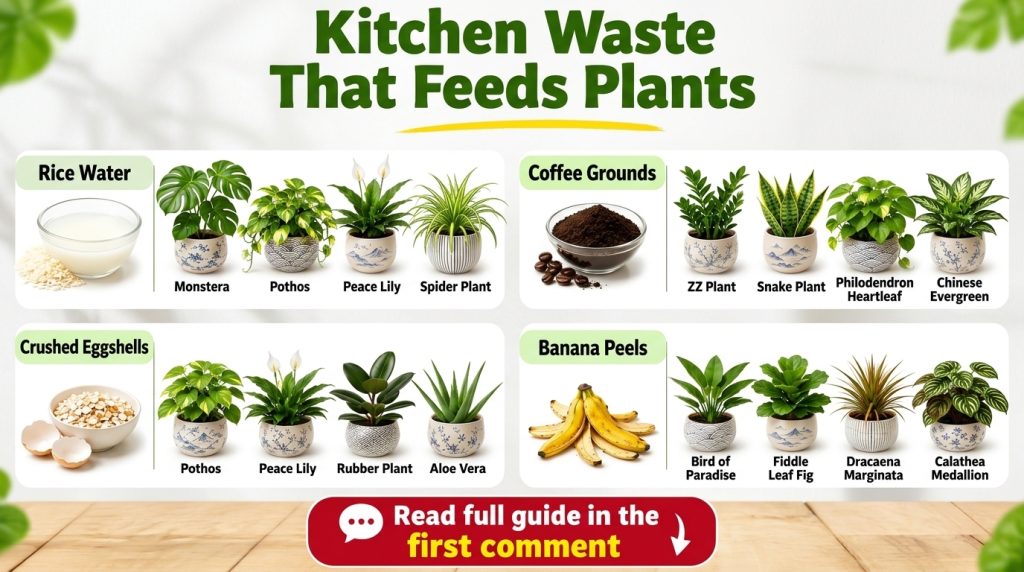
Before you toss your next kitchen scraps into the bin, take a second look. Rice water, coffee grounds, crushed eggshells, and banana peels can all play a supporting role in caring for your houseplants. Used thoughtfully, these everyday leftovers can add a little extra nourishment to your soil while keeping waste out of landfill. This friendly guide explains what each one offers, how to use it safely, and which common mistakes to avoid.
Why Kitchen Scraps Can Be Useful in the Garden
Plants need a steady supply of nutrients, water, and healthy soil to grow well. Many kitchen leftovers contain small amounts of minerals or organic matter that can slowly enrich the growing medium. They are not a substitute for a balanced plant food, but they can be a gentle addition to your regular care routine. Think of them as a helpful extra rather than a miracle solution.
Rice Water: A Gentle Liquid Boost
The water left after rinsing or soaking rice contains some starch and trace nutrients. Let it cool completely, and use it plain, without salt, oil, or seasoning. Water your houseplants with it occasionally, perhaps once a month, and continue with normal watering in between. Rice water can start to smell or grow mold if left sitting, so always use it fresh and discard any leftovers.
Coffee Grounds: Use Sparingly
Used coffee grounds can add organic matter and a small amount of nitrogen when mixed lightly into the top layer of soil. Some plants, especially acid-loving varieties, respond well to them, while others prefer more neutral conditions. Use only a thin sprinkle, stir it into the topsoil, and avoid building up a thick crust that can slow water absorption. Cooled, used grounds are the best choice.
Crushed Eggshells: A Slow-Release Helper
Eggshells contain calcium carbonate, which breaks down very slowly. Rinse the shells, let them dry completely, and grind them into a fine powder so they blend into the soil more easily. Mix a small amount into your potting mix or sprinkle it lightly on the surface. Eggshells work over a long period, so think of them as a patient, background contributor rather than a quick fix.
Banana Peels: Chop, Soak, or Bury
Banana peels contain potassium and other minerals that support plant growth. You can chop them into small pieces and bury them shallowly in the soil, where they will decompose over time. Another option is to soak a peel in a jar of water for a day or two and use the liquid to water your plants. Keep the amount small, and remove any peels that begin to attract fruit flies.
Safety Tips for Using Kitchen Scraps
- Avoid salty water, cooked oils, dairy, and meat scraps, which can attract pests or harm soil life.
- Test any new method on one plant first and watch how it responds over a few weeks.
- Keep scraps small and fresh to prevent odors, mold, and fungus gnats.
- Do not overuse any single material, since too much of one thing can unbalance the soil.
- Continue to water, light, and repot your plants according to their specific needs.
Bringing It All Together
Kitchen scraps can be a simple, sustainable way to add a little extra care to your houseplants. Start with one or two ideas, observe how your plants respond, and build from there. With patience and moderation, your kitchen can become a small part of your garden routine, and your plants will reward you with fuller leaves and steady growth.