Saving seeds from your own harvest is one of the most rewarding habits a gardener can build. It keeps your favorite varieties coming back year after year, saves money on seed packets, and creates a closer connection to the plants you grow. The good news is that many common vegetables are easy to save with just a little patience and the right timing.
Why Save Seeds at Home?
Seed saving helps you build a garden that suits your own climate, soil and cooking habits. Over several seasons, plants grown from your own seeds often adapt to your conditions. It is also a practical way to keep heirloom and open-pollinated varieties available, since these types produce seeds that grow true to the parent plant.
Choose the Right Plants to Start With
Beginners often find success with crops that have simple seeds and low cross-pollination risk. Good starting points include beans, peas, lettuce, cilantro, and tomatoes. Hybrid plants, labeled F1 on many seed packets, may not produce seeds that match the parent, so it is best to save seeds from open-pollinated varieties.
Simple Seed Saving Methods by Crop
Beans and Fava Beans
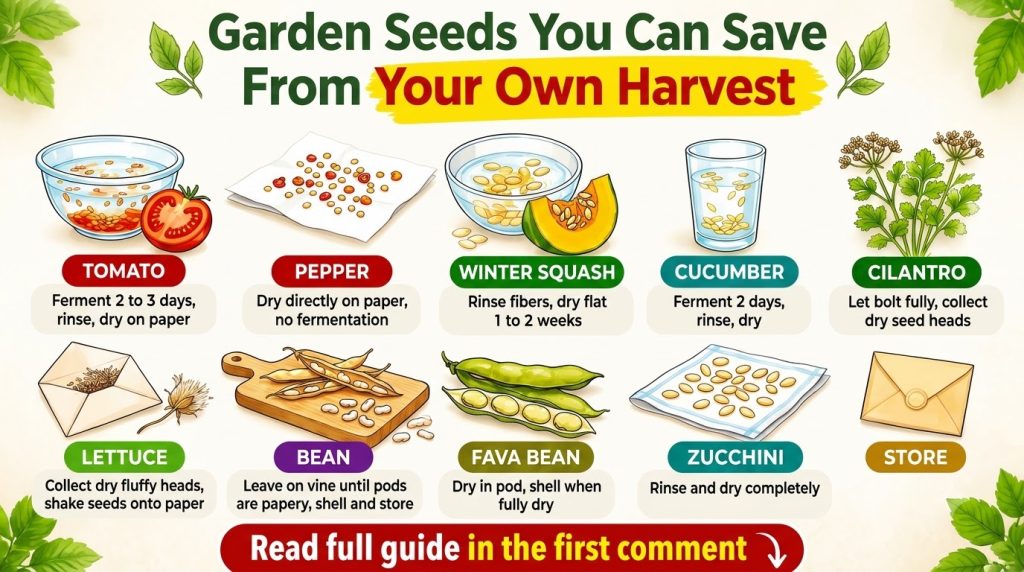
Leave a few pods on the plant until they turn dry, brown and papery. Shell the beans, spread them on a tray, and let them dry fully indoors before storing.
Tomatoes
Choose the most flavorful, fully ripe fruit. Scoop out the seeds with their gel, ferment them in water for two to three days until a thin layer of mold forms on top, then rinse and dry them on a paper towel or plate.
Peppers and Cucumbers
Let peppers ripen fully on the plant until they change color. For cucumbers, allow a fruit to over-ripen until it turns yellow and softens. Scoop out the seeds, rinse them well, and dry them thoroughly.
Winter Squash and Zucchini
Let winter squash mature until the skin hardens and the stem dries. Scoop out seeds, wash off the pulp, and dry them completely. Zucchini seeds can be saved from a fruit left to grow past edible size.
Lettuce and Cilantro
Allow lettuce and cilantro to flower and form seed heads. When the seed heads turn brown and dry, cut them and collect the seeds into a paper bag or tray to finish drying.
How to Dry and Store Your Seeds
Proper drying is the key step for long storage. Spread seeds in a single layer on a dry surface away from direct sunlight, and stir them occasionally. Once they are completely dry and brittle, store them in clean paper envelopes or glass jars in a cool, dark, dry place.
Always label each container with the crop name, variety and harvest year. This simple habit makes planning your next season much easier.
Common Mistakes to Avoid
- Harvesting seeds before the fruit or pod is fully mature.
- Storing seeds before they are completely dry, which can lead to mold.
- Skipping labels, which makes it hard to remember varieties.
- Saving seeds from hybrid plants and expecting identical results.
Start Small This Season
You do not need to save seeds from every plant in your garden at once. Pick one or two crops, follow the drying and storage steps carefully, and build from there. Over time, your seed collection will grow alongside your garden knowledge.
Have you saved seeds from your garden before? Share your favorite crop in the comments and tell us what you are planning to grow next season.