Timing is one of the most overlooked parts of a successful vegetable garden. Plant too early and a late frost can damage tender seedlings. Plant too late and your crops may not mature before cooler weather arrives. Learning how frost dates and soil temperature work together can help you choose the right moment to plant.
Understanding Frost Dates
Your average last spring frost and first fall frost dates are the foundation of most planting calendars. The last spring frost marks the end of the period when freezing temperatures are likely, while the first fall frost signals the approach of the end of the growing season. Local extension offices, regional gardening guides, and weather service records can help you find the frost dates for your area.
Keep in mind that frost dates are averages, not promises. Microclimates, elevation, and nearby buildings can shift conditions by a few days or even a couple of weeks, so it is wise to watch the forecast before planting tender crops.
Why Soil Temperature Matters
Air temperature gets most of the attention, but soil temperature often decides whether seeds germinate well. Many cool-season vegetables sprout in soil that is still chilly, while warm-season crops need soil that has truly warmed up. Planting seeds into cold, wet soil can lead to slow growth, rot, or poor germination. A simple soil thermometer can take the guesswork out of this step.
Cool-Season and Warm-Season Vegetables
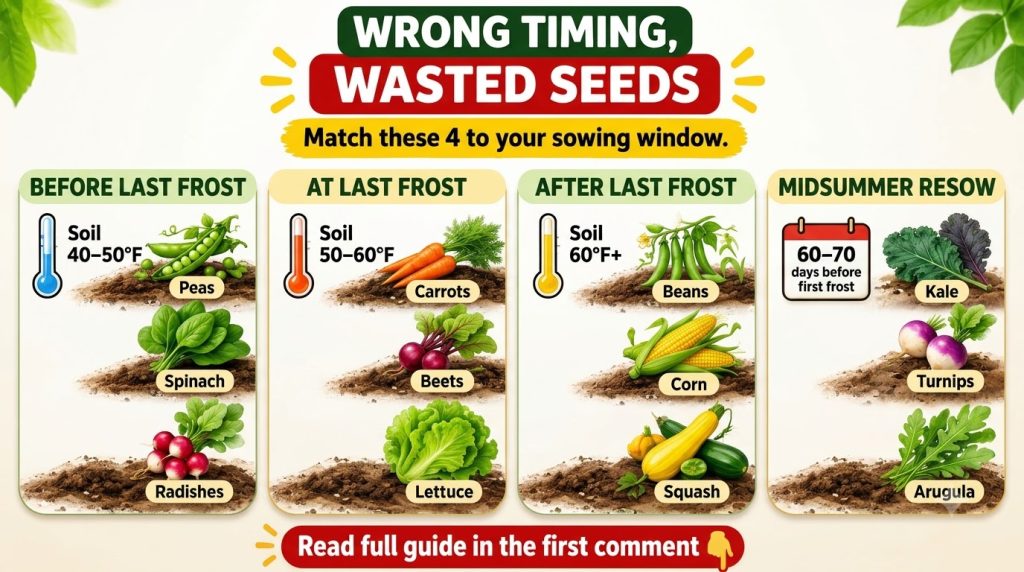
Vegetables generally fall into two groups. Cool-season crops tolerate light frost and can be planted several weeks before the last spring frost. Warm-season crops prefer steady warmth and should wait until after the danger of frost has passed and the soil has warmed.
Planting Times at a Glance
The infographic highlights a few common examples that many gardeners find useful as a starting point:
- Peas: A cool-season crop that can be sown early in spring, once the soil can be worked.
- Carrots: Best sown directly in the garden while the soil is cool and loose, with several sowings spaced out over the season.
- Kale: Hardy and cold-tolerant, so it fits well in both early spring and late summer plantings.
- Corn: A warm-season crop that should wait until the soil has warmed well after the last frost.
Always adjust these general guidelines to your local climate, and check seed packets for days to maturity so you can count backward from your first fall frost.
Practical Tips for Planning Your Garden
- Find your local last spring frost and first fall frost dates.
- Sort your vegetables into cool-season and warm-season groups.
- Use a soil thermometer to check conditions before sowing seeds.
- Keep a simple garden journal to record planting dates and results for next year.
- Use row covers or cold frames to extend the season when a surprise frost threatens.
Final Thoughts
Good timing gives your vegetables the best chance to grow strong and productive. By combining frost dates, soil temperature, and the needs of each crop, you can build a planting schedule that makes sense for your garden. Start with a few crops, take notes each season, and you will soon develop a reliable rhythm for growing your own food.