Fiber is one of those nutrients we hear about often but rarely get enough of. Fruit is one of the easiest ways to add more, and it also brings natural sweetness that can satisfy a sugar craving. In this guide, you will learn which fruits are especially high in fiber, how much they typically provide per cup, and simple ways to fit them into your day.
Why Fiber Matters
Fiber is a type of carbohydrate that your body cannot fully digest. It passes through your digestive system and plays a helpful role along the way. Diets rich in fiber are associated with regular digestion and a feeling of fullness after meals.
Fiber comes in two main forms. Soluble fiber dissolves in water and forms a gel-like texture, while insoluble fiber adds bulk to stool. Most fruits contain both, so eating a variety helps you get the mix your body needs.
Fiber Content of Popular Fruits
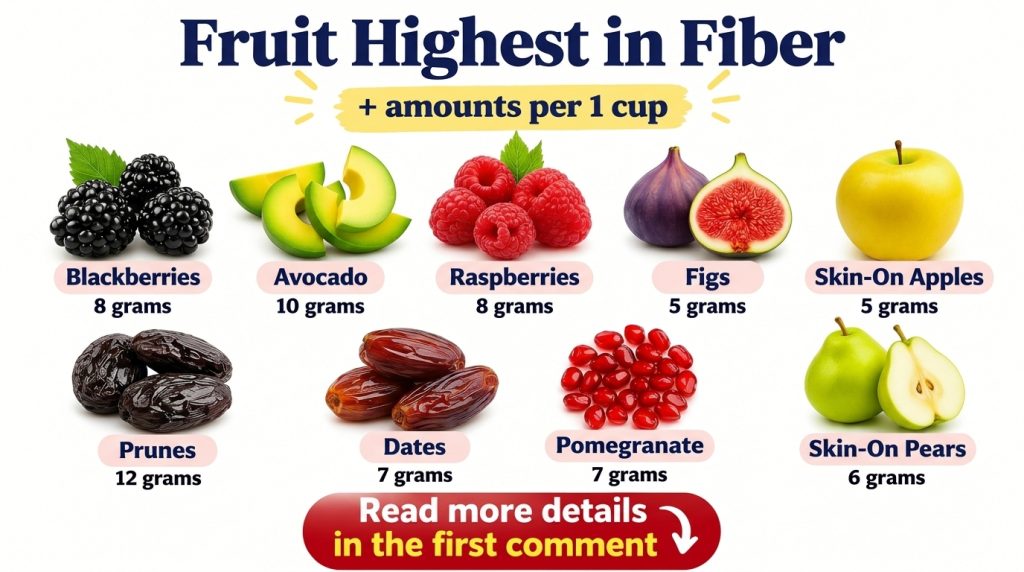
The amounts below are approximate and can vary by size, ripeness, and variety. Values are based on about 1 cup of each fruit.
| Fruit | Serving | Approx. Fiber |
|---|---|---|
| Prunes (pitted, dried) | 1 cup | About 12 g |
| Dates (chopped) | 1 cup | About 13 g |
| Avocado (cubed) | 1 cup | About 10 g |
| Raspberries | 1 cup | About 8 g |
| Blackberries | 1 cup | About 8 g |
| Pomegranate arils | 1 cup | About 7 g |
| Pears (with skin, sliced) | 1 cup | About 5 to 6 g |
| Apples (with skin, sliced) | 1 cup | About 4 to 5 g |
| Figs (fresh, chopped) | 1 cup | About 4 g |
Ways to Eat More Fiber-Rich Fruit
Small changes make a big difference. Try these easy ideas:
- Add a handful of raspberries or blackberries to plain Greek yogurt or oatmeal.
- Keep sliced pears or apples in the fridge for an easy afternoon snack.
- Toss pomegranate arils into green salads for color and crunch.
- Blend avocado into smoothies for a creamy texture.
- Chop dates or prunes into homemade trail mix or energy bites.
Tips for Getting the Most Fiber
- Eat the skin on apples and pears when you can, since much of their fiber is found there. Wash them well first.
- Choose whole fruit over juice. Juice removes most of the fiber.
- Spread fiber intake across the day instead of eating a large amount at one meal.
- Drink plenty of water as you increase fiber, which helps your body adjust comfortably.
- Increase your fiber slowly if you are not used to eating much of it.
Who Can Benefit Most
Most adults can benefit from more fiber-rich fruit, especially people who eat few whole plant foods. Families looking for healthy snacks for kids may also find that fruit with natural sweetness is an easy place to start. If you have a digestive condition or take medication that affects digestion, talk with your healthcare provider before making big changes.
Practical Tips for Your Week
- Buy frozen berries for smoothies and baking. They keep well and are often just as nutritious.
- Pick a couple of fruits from the list each week to rotate variety.
- Pair fruit with protein or healthy fats, such as nuts or cheese, to stay full longer.
This content is for educational purposes only and should not be considered medical advice. Consult a qualified healthcare professional for personalized dietary recommendations.
Frequently Asked Questions
Which fruit has the most fiber per cup?
Dates and prunes are among the highest in fiber per cup, but they are also dense in natural sugar, so a smaller portion goes a long way.
Are raspberries a good source of fiber?
Yes. Raspberries are one of the more fiber-rich fresh fruits, and a cup provides a solid amount for a fruit serving.
Should I peel my apples and pears?
Leaving the skin on adds more fiber. If you prefer peeled fruit, it is still a healthy choice.
Is dried fruit as healthy as fresh fruit?
Dried fruit is concentrated in fiber and nutrients, but it is also higher in calories and sugar. Enjoy it in smaller portions.
How much fiber do adults need each day?
General guidance for adults is often around 25 to 35 grams per day, depending on age and sex. Check with a healthcare professional for guidance that fits your needs.
Can fruit replace vegetables for fiber?
Fruit and vegetables both matter. Eating a mix of both gives you a wider range of nutrients and fiber types.
Does fiber help with fullness?
Fiber-rich foods can help you feel full for longer, which many people find helpful when building balanced meals.
Conclusion
Fiber-rich fruits are a simple, tasty way to support your daily nutrition goals. Start with a few favorites like raspberries, pears, or prunes, and build from there. For more ideas, explore our related guides on high fiber breakfast ideas, healthy smoothie recipes, and best foods for gut health. Share your favorite fiber-rich fruit in the comments below!