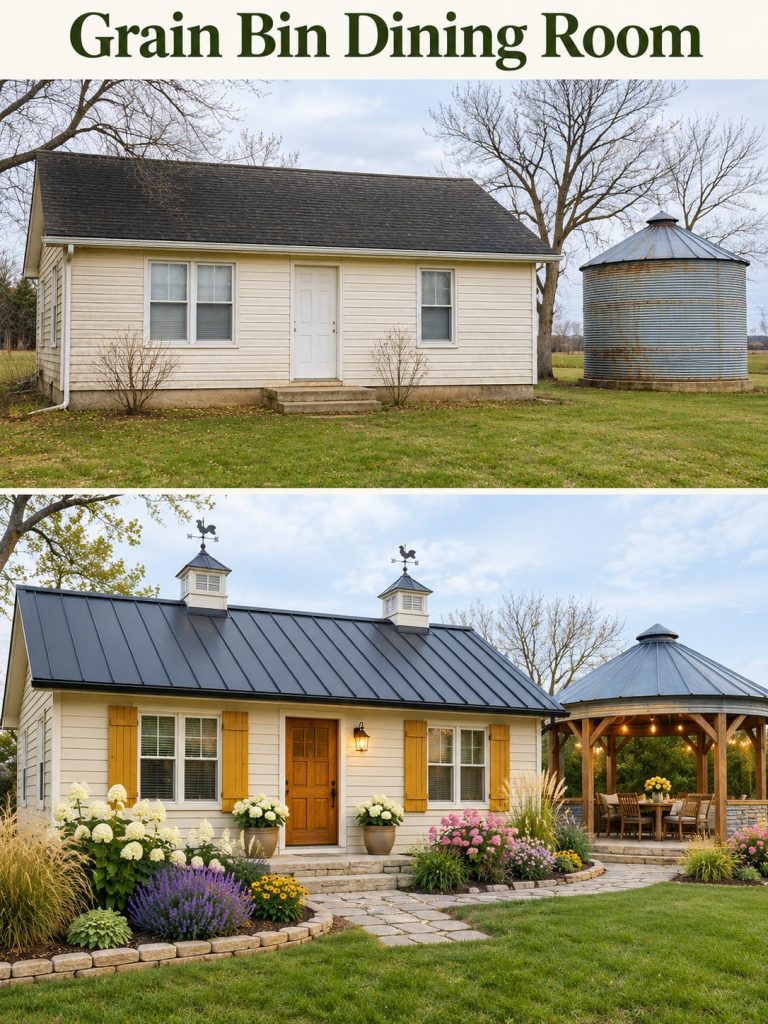
That weathered grain bin standing at the edge of your property may look like a relic, but it has real potential. Its sturdy walls, natural shelter from wind, and generous interior space can become a shaded garden pavilion where family and friends gather for meals, morning coffee, and long summer evenings. The challenge is turning a former storage structure into a space that is safe, comfortable, and pleasant to plant around. With careful planning, a few honest structural checks, and smart plant choices, you can create an outdoor dining room that feels like a hidden garden retreat without spending a fortune.
Why an Old Grain Bin Makes a Strong Garden Room
Few structures offer the combination of shelter, durability, and character that a grain bin provides. The rounded shape deflects wind, the metal shell holds up well to weather, and the interior can be made comfortable with simple furnishings. Because the bin already sits on your property, you avoid the cost of building a new pavilion from scratch. The real work lies in making it safe to enter, adding light and airflow, and planting the surrounding area so the space feels connected to the garden rather than isolated from it.
Start With a Safety and Structure Check
Before you move in a table or invite guests, inspect the bin thoroughly. Older grain bins were often used to store grain, fertilizer, pesticides, or other farm materials, so the interior and walls deserve careful attention.
- Look for rust and weak seams. Press firmly on the lower walls, roof edges, and bolted joints. Soft or flaking metal, sagging panels, and loose fasteners are signs that the structure needs professional repair.
- Test for hazards. Older coatings may contain lead, and some older building materials may contain asbestos. Have a qualified inspector or local extension office advise you before sanding, cutting, or painting.
- Clear residue completely. Remove old grain dust, chemical residue, and pest droppings. Wear a respirator, gloves, and eye protection during cleaning.
- Treat it as a confined space. Do not enter a sealed or poorly ventilated bin alone. Keep the door or openings open while you work.
Once the bin passes inspection, plan your openings carefully. A doorway cut should be framed and reinforced so the walls keep their strength. Ask a professional before removing any structural panel.
Plan the Interior for Light, Airflow, and Comfort
Grain bins can feel dim and stuffy without planning. Install a large entrance door or a few windows on the sunniest side, and consider a second opening on the opposite wall to create cross-ventilation. Solar-powered lights or string lights make evening dining easy without running complicated wiring. If you plan to use the space in summer, a ceiling fan on a weatherproof, outdoor-rated circuit can make a noticeable difference in comfort.
Choose a Floor That Drains Well
Concrete pads, gravel with a sand base, or pavers laid on compacted gravel all work well. Avoid setting the floor lower than the surrounding ground, because rainwater will collect inside. Slope the surrounding soil away from the bin so water flows outward, and consider a shallow gravel drainage strip along the outside walls.
Plant the Surroundings to Soften the Structure
Plants bridge the gap between the hard metal shell and the landscape. Choose plants based on how much light reaches the spot, and check your local hardiness zone before buying.
Shade-Tolerant Perennials for the Entrance
If the bin sits in partial shade, hostas (Hosta species, generally hardy in USDA zones 3 to 9) and astilbe (Astilbe species, generally hardy in zones 3 to 8) create soft texture with minimal fuss. Plant hostas about 18 to 24 inches apart in amended soil that holds moisture without staying soggy. Protect them from slugs with a copper barrier or hand removal in the evening.
Sun-Loving Edge Plants
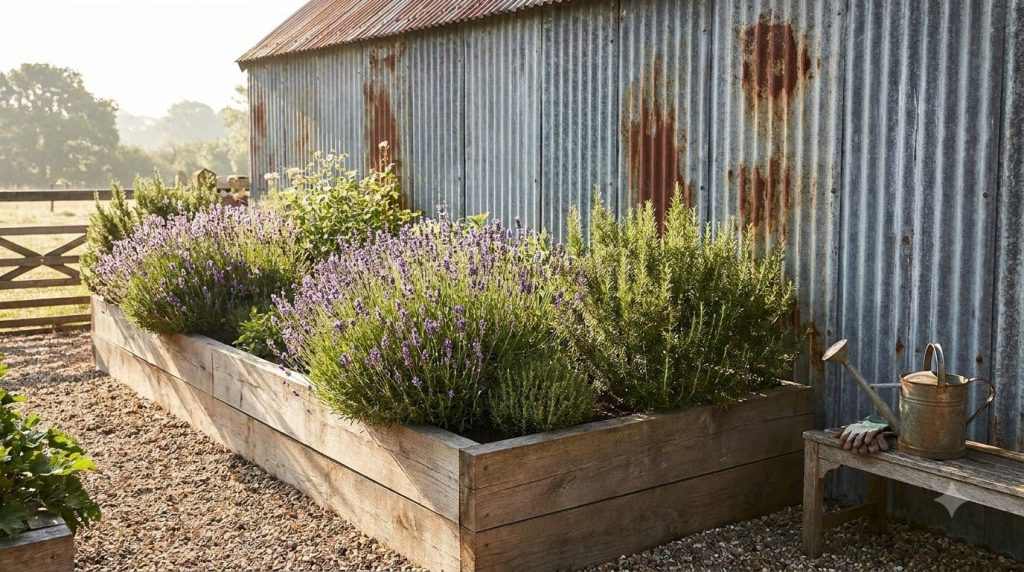
On the sunny side of the bin, lavender (Lavandula angustifolia, typically zones 5 to 9) and rosemary (Salvia rosmarinus, typically zones 8 to 10, often grown as a container plant in colder areas) can thrive in well-drained soil. Space lavender about 18 to 24 inches apart. Prune lavender lightly after flowering, and avoid cutting into old, woody stems because they may not regrow. Rosemary needs excellent drainage, so plant it in a raised bed or a sloped container rather than heavy clay.
Vines Need Careful Placement
Climbing plants can soften metal walls, but they need support and a little caution. Install a trellis or cable system several inches away from the wall so air can circulate and the plant does not trap moisture against the metal. Before choosing any vine, confirm its invasive status with your state extension service, because some aggressive vines can spread into nearby areas.
Use Containers for Flexible Greenery
Containers are ideal if the ground around the bin is compacted, shaded, or prone to flooding. Choose pots at least 12 inches wide and deep for herbs, and make sure every container has drainage holes. Use a quality potting mix rather than garden soil, which compacts in pots. Basil (Ocimum basilicum) is an annual that loves warmth and makes a fragrant addition near the dining area. Water containers when the top inch of mix feels dry, and check more often during hot weather because containers dry out quickly.
Common Mistakes to Avoid
- Skipping the structural check. A dining space is only inviting if the walls and roof are sound.
- Ignoring drainage. Standing water causes rust, mold, and rotting wood furnishings.
- Overcrowding plants. Leave room for airflow and walking paths, especially near the entrance.
- Planting thirsty species in shade. Plants that need full sun may stretch and weaken in a shaded bin area.
- Forgetting the lighting plan. Without good light, the interior feels cramped and unused after sunset.
Climate Matters When You Plan Your Space
USDA hardiness zones measure winter cold tolerance, not summer heat, humidity, rainfall, or the length of your growing season. In zones 3 to 5, focus on hardy perennials, mulch new plantings well, and choose containers that can be moved indoors before hard freezes. In zones 6 to 8, you have more flexibility with lavender, hostas, and many herbs, though summer humidity can increase fungal problems, so space plants for airflow. In zones 9 to 11, shade from the bin may be valuable during intense afternoon heat, but many plants will need extra watering. Your local extension office can help you match plants to your soil, rainfall, and microclimate.
Your Next Steps
Start with one small project rather than trying to finish everything at once. Inspect the structure, clear and ventilate the interior, set up a level well-drained floor, and plant a few hardy perennials or containers around the entrance. Then add furniture, lighting, and seasonal plants as your confidence grows. Over time, your old grain bin can become more than a storage relic. It can become a place where your garden feels lived in, shared, and rooted in the land you already own. Take the first step this week by walking around the bin and checking one structural detail, and your secret garden dining room will start to take shape.