Why Container Depth Matters
When you grow vegetables in containers, the depth of the pot is just as important as its width. Roots need enough room to anchor the plant, reach moisture and nutrients, and develop properly. A container that is too shallow can leave roots cramped, dry out quickly, and stunt growth, while a well-chosen depth helps plants stay healthy and productive throughout the season.
Many beginner gardeners focus on picking a pretty pot and forget about what lies beneath the soil. Matching the container to the root system of each vegetable is one of the simplest ways to reduce common problems like wilting, poor yields, and plants that never seem to thrive.
Understanding the Four Depth Categories
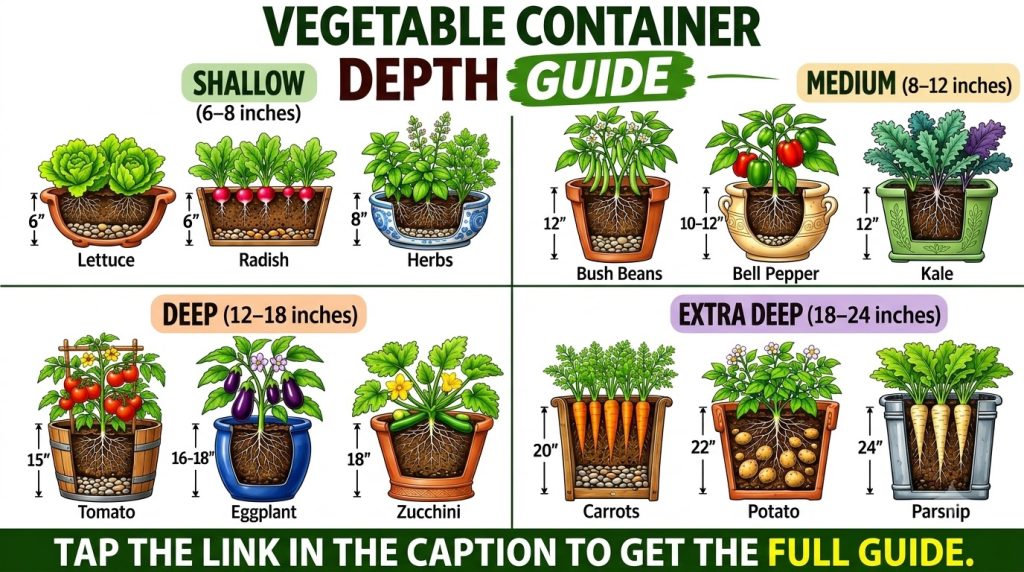
Vegetables are often grouped by how deep their roots typically grow. A helpful infographic usually sorts them into four simple categories: shallow, medium, deep, and extra deep. While exact measurements can vary by variety, climate, and growing conditions, these general guidelines make it much easier to plan your container garden.
Shallow-Rooted Vegetables
Shallow containers, usually around 6 to 8 inches (15 to 20 cm) deep, suit crops with compact root systems. Leafy greens such as lettuce and spinach, along with quick-growing radishes and many culinary herbs, are good examples. These plants are ideal for windowsills, balconies, and small patio spaces.
Medium-Depth Vegetables
Medium containers, often 10 to 12 inches (25 to 30 cm) deep, work well for many popular crops. Peppers, bush beans, and bok choy typically fit comfortably in this range. Choose a pot with good drainage and fill it with a light, well-draining potting mix.
Deep-Rooted Vegetables
Deep containers, commonly 12 to 18 inches (30 to 45 cm), support plants that send roots further down. Carrots, beets, and many types of eggplant benefit from this extra room. Deeper soil also holds moisture longer, which can reduce how often you need to water.
Extra-Deep Vegetables
Some vegetables need the most space. Large tomato varieties, potatoes grown in containers, and vining crops such as squash often perform best in extra-deep containers, sometimes 18 inches (45 cm) or more. Larger containers also give these plants a stable base as they grow heavier.
Tips for Choosing the Right Container
- Check the mature root depth of each vegetable variety before buying pots.
- Make sure every container has drainage holes to prevent soggy roots.
- Use a quality potting mix rather than garden soil, which can compact in pots.
- Group plants with similar water needs together to make care easier.
- Consider moving containers as the seasons change to protect plants from extreme weather.
Common Mistakes to Avoid
One of the most common mistakes is planting a deep-rooted crop in a shallow pot to save space. This often leads to stressed plants and disappointing harvests. Another frequent issue is overcrowding, where several plants compete for the same soil. Giving each vegetable enough depth and width helps prevent these problems and supports a healthier garden.
Bringing It All Together
Choosing the correct container depth is a practical step that can make a real difference in how your vegetables grow. Start by deciding which crops you want to grow, look up their general root depth needs, and match each one to a suitable pot. With a little planning, your container garden can become a productive and rewarding space for fresh homegrown food.