Before you toss that carrot top or green onion root into the bin, consider this: many everyday kitchen scraps can sprout new growth with a little water, patience, and light. Regrowing food from scraps is a simple, budget-friendly way to enjoy fresh greens, learn how plants grow, and reduce household waste.
Why Regrow Kitchen Scraps?
Regrowing scraps is a practical habit for home gardeners of all levels. It cuts down on food waste, gives you fresh herbs and greens within days, and makes a great hands-on project for families, students, and anyone who enjoys watching plants develop. It is also an easy first step into sustainable living.
Best Scraps to Try First
Some kitchen scraps regrow more readily than others. Good beginner choices include:
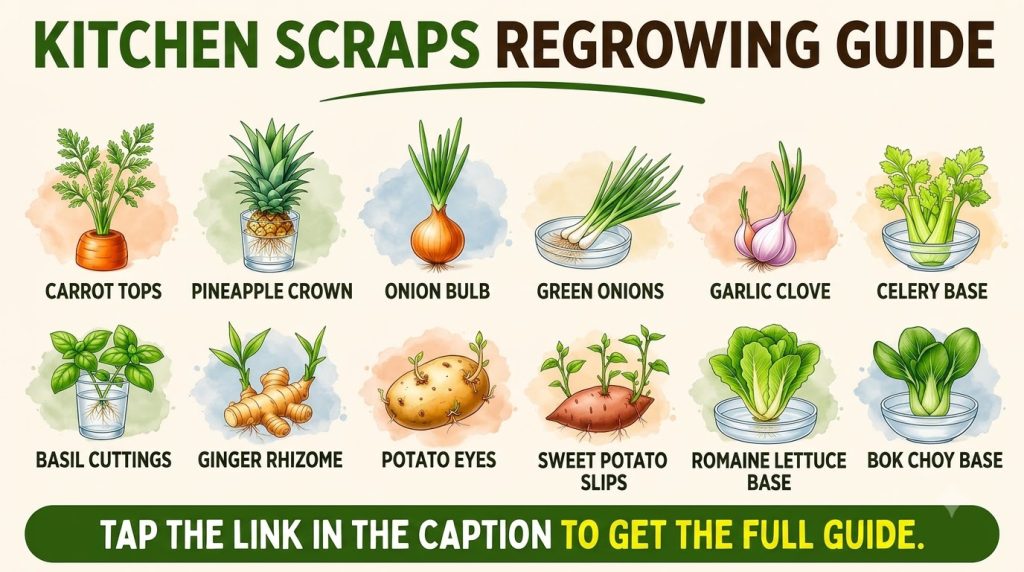
- Green onions: Place the root end with a little base in a glass of water on a sunny windowsill.
- Celery: Use the base with its root area intact and set it in shallow water.
- Lettuce and bok choy: Keep the bottom inch or two and place it in a shallow dish of water.
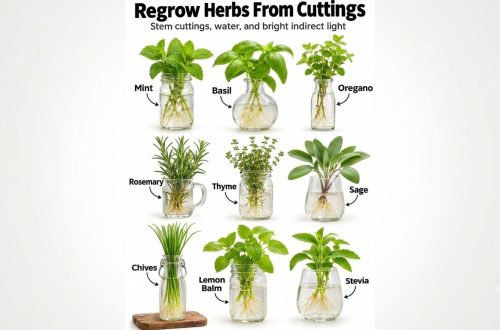
- Herbs such as basil and mint: Cut a healthy stem below a leaf node and root it in water.
- Carrot tops: Set the top in a shallow dish so the crown sits above the water, then move it to soil once leaves appear.
How to Regrow Scraps in Water
- Choose fresh scraps with a healthy base or root area and avoid any that are soft or rotting.
- Place the base in a clean glass or jar with about an inch of water, keeping the leaves above the rim.
- Set the container in bright, indirect light, such as a sunny windowsill.
- Change the water every two to three days to keep it fresh and reduce the risk of mold.
- Watch for new leaves and roots over the next one to two weeks, depending on the plant.
Moving Your Plants to Soil
Water rooting is a good start, but most plants eventually need soil to keep growing. When the roots are well established, transplant the scrap into a pot filled with well-draining potting mix. Choose a container with drainage holes, water gently, and keep the soil lightly moist while the plant adjusts. Many herbs and onions can then be harvested again and again by snipping outer leaves and leaving the base in place.
Tips for Success
- Use clean containers and fresh water to prevent rot.
- Give plants plenty of light, but avoid harsh direct heat through glass.
- Be patient, since growth speed varies by plant and season.
- Keep a small notebook or photo log to track your progress.
Start Your Own Kitchen Garden
Regrowing kitchen scraps is a simple way to bring more green into your home and kitchen. Start with one or two easy plants, observe how they respond, and expand from there. With a little care, your leftovers can become the beginning of a rewarding garden.