Most people lose their carrots and potatoes long before spring. The harvest is rarely the problem. The storage spot is: too warm, too dry, or too damp. This is the part most people skip, and it is the reason a buried trash can often outperforms a kitchen cabinet or garage shelf.
What It Is
A buried trash can root cellar is a container sunk into the ground so that the soil keeps the inside cool and steady. Root vegetables such as carrots, beets, and potatoes prefer cool temperatures and high humidity. Soil moderates temperature swings far better than a shed or basement shelf, so the vegetables stay firm for much longer.
Materials and Approximate Measurements
- One galvanized metal trash can, about 32 gallons (roughly 20 inches wide and 30 inches tall)
- A tight-fitting lid, plus a second lid or piece of plywood for insulation
- A shovel and a posthole digger or auger for the hole
- Gravel or sand, about 2 inches for drainage in the base
- Straw, dry leaves, or foam board for insulation
- A ventilation pipe, about 2 inches in diameter and 3 to 4 feet long
- Burlap or old towels to line the vegetable crates
Step-by-Step Method
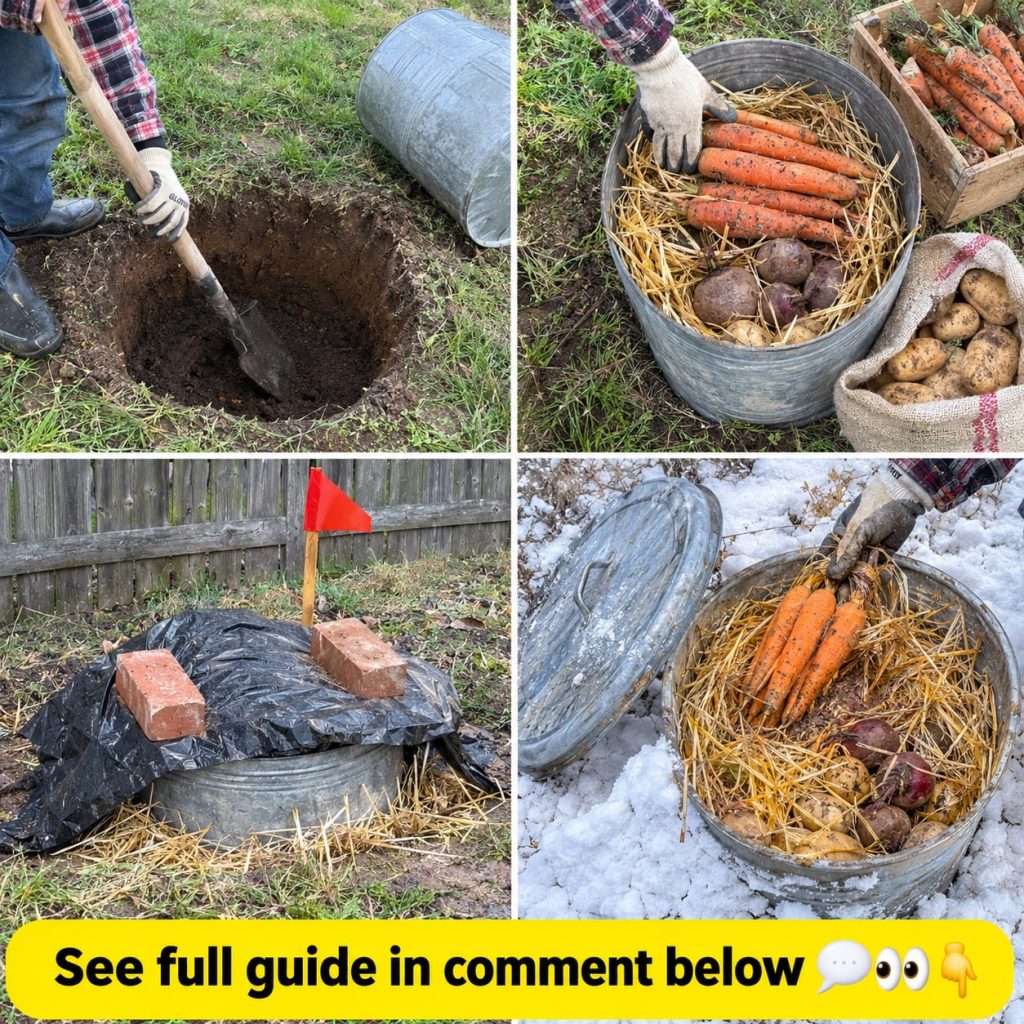
- Choose a shaded, well-drained spot away from downspouts. Dig a hole about 30 inches deep so the can sits with its rim 4 to 6 inches above ground level.
- Add 2 inches of gravel or sand to the base. This helps prevent standing water.
- Lower the can into the hole and check that it is level. Backfill around the sides and tamp the soil firmly.
- Drill or cut a few small holes near the bottom of the can for drainage, and fit the ventilation pipe through the lid so the top of the pipe sits above the soil line.
- Cover the rim with the insulated lid, then mound 8 to 12 inches of straw or leaves over the top. Add a tarp to keep the mound dry.
How to Use It
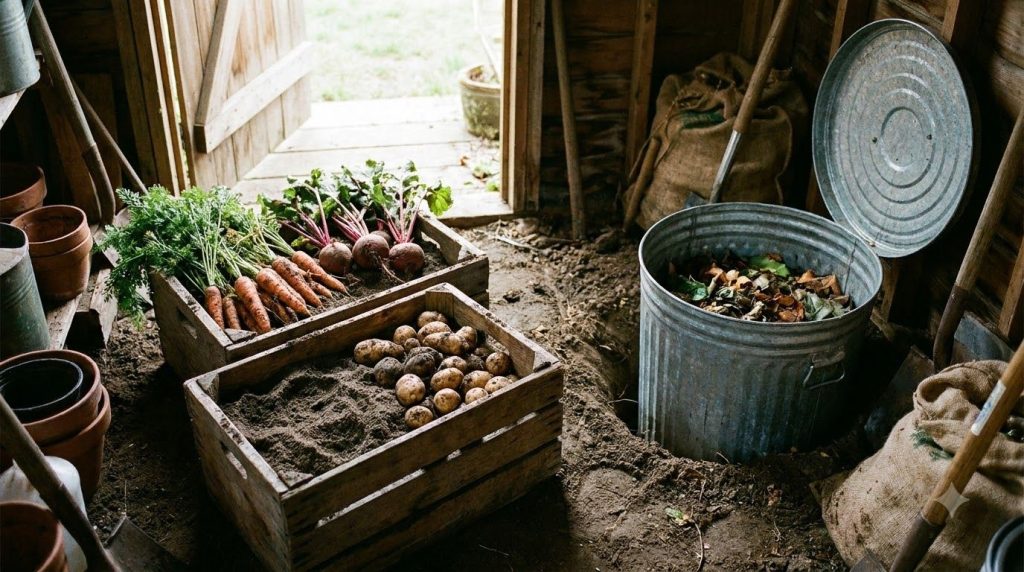
Harvest carrots, beets, and potatoes on a dry day. Brush off loose soil but do not wash them, since moisture on the skin encourages rot. Place the vegetables in crates or in a wire basket with layers of slightly damp sand or dry straw between them, so they do not touch.
How Often to Check
Check the cellar every two to three weeks during the first month, then monthly through winter. Remove any soft or sprouting vegetables immediately, because one bad potato can affect the rest of the batch.
Quick Reference: Storage by Vegetable
| Vegetable | Best Packing | Ideal Condition | Typical Storage Length |
|---|---|---|---|
| Carrots | Damp sand in crates | Cool, high humidity | 4 to 6 months |
| Beets | Damp sand or straw | Cool, high humidity | 3 to 5 months |
| Potatoes | Dry straw or burlap in crates | Cool, dark, slightly drier | 4 to 6 months |
How to Choose Vegetables for Storage
Pick firm, unbruised roots with no cracks. Carrots and beets should have their tops trimmed to about one inch. Choose potatoes that have cured for one to two weeks in a dark, airy place before going into the cellar. Varieties labeled as good keepers generally last longer than thin-skinned early types.
Storage Tips
Keep each vegetable type in its own crate, because potatoes release gases that can make carrots bitter. Keep the ventilation pipe open on mild days to let excess moisture escape, and close it during hard freezes to prevent frost from reaching the interior.
Practical Tips
- Quick Tip: Place a cheap thermometer inside the can to track temperatures without opening the lid repeatedly.
- Did You Know? Stored roots lose moisture faster in dry air, so check that the sand or straw is slightly damp rather than soaked.
- Before You Bury: Mark the spot with a stake so snow and leaves do not hide the entrance later in winter.
Common Mistakes
- Washing vegetables before storage, which leads to rot.
- Burying the can in a low spot where water collects after heavy rain.
- Storing damaged or bruised roots alongside healthy ones.
- Sealing the ventilation pipe completely, which traps moisture and encourages mold.
- Storing apples or onions with potatoes, since their gases can speed sprouting.
Cautions and Who Should Avoid This Method
This method is best suited to gardeners in cold climates with reliable frost. It is less useful where winters are mild or ground stays wet for long periods. Keep the lid secured so children and pets cannot climb inside, and never enter the can. Potatoes that turn green or show sprouting should be discarded, since green skin contains solanine, which can be harmful when eaten in large amounts.
Quick Summary
- Best preparation: Dry, unwashed, undamaged roots, with carrots and beets packed in damp sand and potatoes in dry straw.
- Best use case: Keeping a winter supply of root vegetables without electricity.
- Storage: Cool, humid, dark, and checked regularly.
- When to use: Once soil temperatures drop after the main harvest.
- What to avoid: Washing, bruised roots, wet containers, and mixing with ripening fruit.
Frequently Asked Questions
Can I use fresh or dried roots?
Use fresh roots that are firm and fully mature. Dried or shriveled vegetables do not store well and should be eaten first.
How long do carrots and beets last?
With good conditions, carrots often last four to six months and beets three to five months.
Can I refrigerate them instead?
A refrigerator works for short periods, but the buried can offers a larger, cooler space for bulk storage.
Can I freeze the vegetables?
Freezing changes the texture of raw roots. Blanch and freeze them if you plan to use them in cooked dishes.
Should I wash potatoes before storing them?
No. Brush off dirt only, then let them cure before storage.
Can I reuse the sand?
Yes, if it stays clean and dry. Replace it if it smells sour or looks moldy.
When should I avoid this method?
Avoid it in areas with flooding, very wet soil, or no reliable freezing winters, since conditions may be too damp or warm.
Conclusion
A buried trash can is one of the simplest ways to keep a winter harvest sound. With good drainage, proper packing, and regular checks, carrots, beets, and potatoes can last well into the cold season.
Read more: See the full guide to building raised beds for a stronger harvest from the start.
You may also like: Continue with our guide to storing garden herbs for winter cooking.