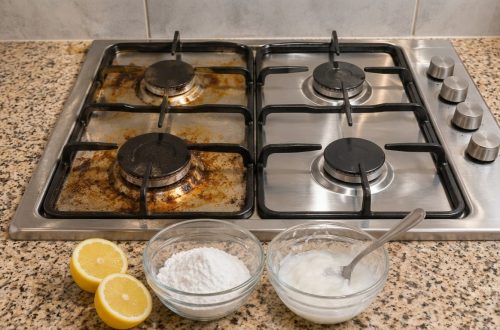
Grease, food splatter and burnt-on residue can make a gas stove look worn out long before it is truly dirty. The good news is that you do not need harsh chemicals to bring back the shine. Two everyday kitchen staples, lemon and baking soda, can lift grime, cut through grease and leave stainless steel looking bright again.
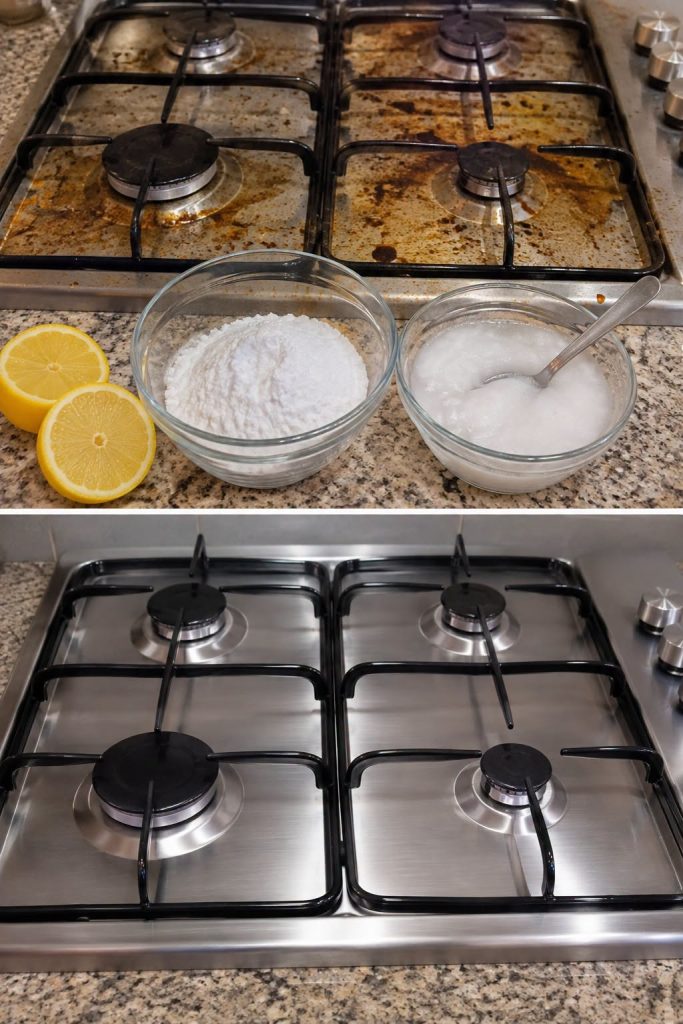 The same stove before and after a simple lemon and baking soda clean.
Why Lemon and Baking Soda Work Well Together
Baking soda is a mild alkaline powder that acts as a gentle abrasive. It loosens baked-on food and helps lift grease without scratching most surfaces when used with light pressure. Lemon juice contains citric acid, which helps break down mineral deposits and some stubborn discoloration. Combined into a paste, the two ingredients give you a cleaner that is practical, affordable and easy to prepare at home.
What You Will Need
- Half a fresh lemon or about two tablespoons of lemon juice
- Two to three tablespoons of baking soda
- A small glass bowl and a spoon for mixing
- A soft microfiber cloth or non-scratch sponge
- A soft-bristled brush for grates and burner caps
- Warm water and a clean, dry towel
Step-by-Step Guide to Cleaning Your Stove
- Turn off and cool the stove completely. Make sure all burners and grates are cool before you begin, and remove any loose debris with a dry cloth.
- Remove the grates and burner caps. Soak them in warm, soapy water while you clean the cooktop. This loosens baked-on grease and makes scrubbing easier.
- Make the paste. Mix baking soda with a small amount of lemon juice until you have a thick, spreadable paste. Add juice slowly so the mixture stays thick enough to cling to vertical surfaces.
- Apply and let it sit. Spread the paste over greasy areas and let it rest for about 10 to 15 minutes. This gives the ingredients time to work on stubborn residue.
- Scrub gently. Work in the direction of the brushed grain on stainless steel. Use a soft cloth or non-scratch sponge and light pressure to avoid marks.
- Clean the grates and burner caps. Scrub them with the soft brush, rinse with warm water and dry them fully before placing them back on the stove.
- Wipe and rinse. Remove all paste with a damp cloth, then wipe the surface with clean water to prevent residue from drying on the steel.
- Dry and buff. Polish the stainless steel with a dry microfiber cloth to bring out a streak-free shine.
Tips for Better Results
- Test the paste on a small hidden area first to make sure your stove finish reacts well.
- Clean spills while the stove is still slightly warm, but never while the burners are on.
- Use a stainless steel cleaner occasionally if you want extra shine, but avoid harsh abrasives.
- Do not mix baking soda with vinegar in the same cleaning step, since the reaction mainly produces water and salt and reduces the cleaning power of both ingredients.
- Wipe the stove after cooking each day to prevent grease from building up again.
How to Keep Your Stove Looking Clean
Regular maintenance is the easiest way to avoid heavy scrubbing. Wipe the cooktop after each meal, lift the grates occasionally to clean underneath, and deal with boil-overs quickly before they harden. A short weekly routine can keep your stove looking close to the bright result shown in the after photo.
Final Thoughts
A greasy gas stove does not need expensive products to look its best. With fresh lemon, baking soda and a little patience, you can remove stubborn grime and restore a clean, reflective finish in one session. Try this method on your next cleaning day and see how much of a difference a simple natural solution can make.