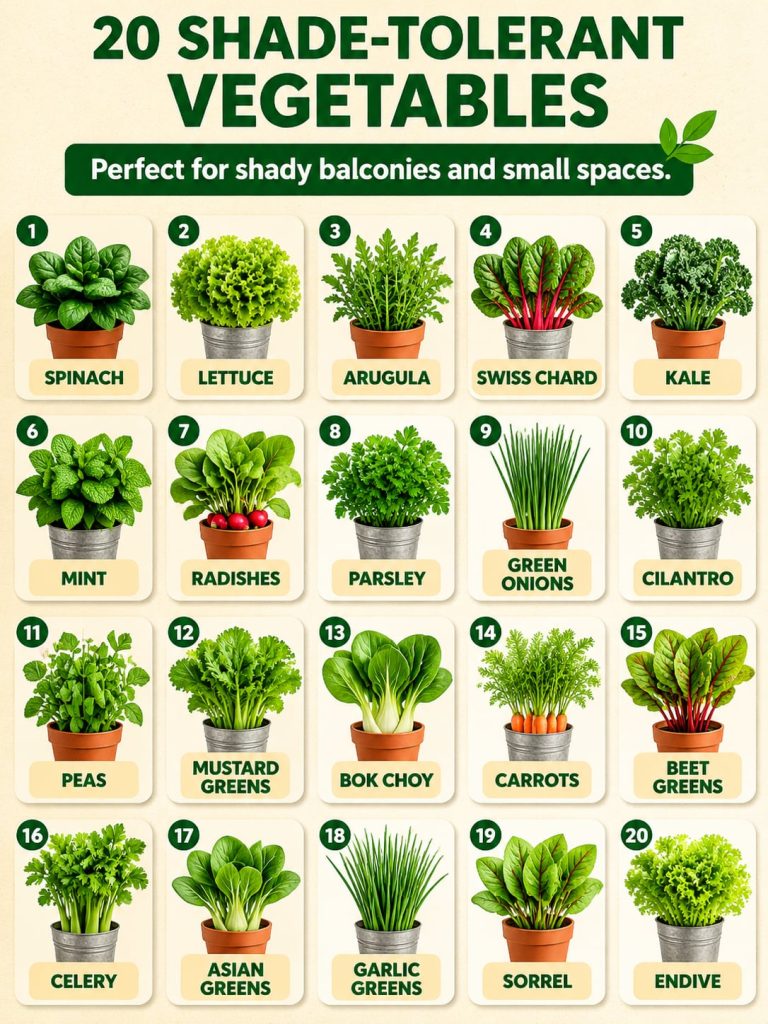
If your balcony only catches a few hours of direct sun, or your backyard bed sits beside a fence or under a tree canopy, you might think vegetable growing is off the table. It isn’t. Many crops keep producing when they receive three to six hours of direct light, especially leafy greens, culinary herbs, and some roots. The key is matching each crop to the light you actually have and setting up your space so every hour of sun counts.
In this guide, we’ll walk through 20 vegetables and herbs that handle partial shade well. You’ll find practical notes on light, soil, watering, spacing, and harvesting, along with the crops that will disappoint you if you expect them to behave like sun lovers.
What Partial Shade Really Means
Gardeners use partial shade to describe roughly three to six hours of direct sun per day. Full shade means less than three hours, and very few edibles produce well under those conditions. Morning sun is especially useful because it dries dew quickly and reduces fungal problems like downy mildew. Afternoon shade can be a real advantage in hot summers, since it keeps leafy crops cooler and slows bolting.
To measure your light, check the spot at 9 a.m., noon, and 3 p.m. on a clear day, and note when direct sun reaches it. Repeat this on a few different days. Light changes as leaves fill in and as the sun moves across the seasons, so a spot that looks sunny in April may be shady by July.
Leafy Greens for Lower Light
Leafy vegetables give the most reliable harvests in shade because you eat the leaves rather than the fruit or roots, which need more energy to develop.
1. Leaf Lettuce
Loose-leaf varieties tolerate shade far better than dense heading types. Sow seeds about one-quarter inch deep every two to three weeks for a steady supply. Harvest outer leaves when they reach about four inches and let the center keep growing. In warm climates, lettuce bolts (sends up a flower stalk and turns bitter), so plant it in spring and fall.
2. Spinach
Spinach handles cool weather and partial shade well. Sow seeds half an inch deep and thin seedlings to about three inches apart. Harvest the largest outer leaves and leave the crown intact. Spinach bolts quickly in long summer days, so choose slow-bolting varieties and sow again in late summer for fall crops.
3. Kale
Kale grows well with three to five hours of direct sun. Space plants 12 to 18 inches apart for good airflow. Pick the lower leaves first, stripping them from the stem, and leave at least five to six leaves on each plant so it keeps growing. Shade slows growth, so expect smaller plants than you would get in full sun.
4. Swiss Chard
Chard is one of the most shade-tolerant greens and produces colorful stalks in red, yellow, and rainbow varieties. Sow seeds in place or in containers at least 12 inches deep, spacing plants 8 to 10 inches apart. Harvest outer stalks at the base and avoid pulling the entire plant.
5. Arugula
Arugula is quick and forgiving, reaching harvest size in about 30 to 40 days. It tolerates light shade, and the leaves are often milder when grown in cooler, partly shaded spots. Sow every two weeks in small batches, because a single large sowing will bolt all at once.
6. Mustard Greens
Mustard greens take partial shade well and are excellent for cool-season harvests. Pick young leaves for a milder flavor, since older leaves become sharper. Keep the soil evenly moist to prevent tough, bitter growth.
7. Bok Choy
Bok choy grows quickly in partial shade and suits containers that are at least 8 inches deep. Space plants about 6 inches apart. Harvest whole plants when they are about 6 to 8 inches tall, or cut outer leaves to extend the season.
8. Collard Greens
Collards are slow but dependable in shade. They tolerate heat better than many greens and can produce leaves for months. Give each plant at least 18 inches of space and pick the lowest leaves first.
9. Watercress
Watercress needs consistently moist soil or shallow running water, making it a good fit for a tray or a shaded spot with steady moisture. It thrives in cool conditions and can become invasive in wet areas, so keep it contained in a dedicated container.
Herbs That Handle Less Sun
10. Parsley
Flat-leaf and curly parsley both grow well in partial shade. Parsley is a biennial, so it often produces leaves for two seasons. Sow seeds in early spring, since germination can be slow, and soak them overnight to speed it up. Cut stems from the outside of the plant.
11. Cilantro
Cilantro bolts quickly in heat and long days, but shade helps it stay leafy longer. Sow every three weeks in cool weather and choose slow-bolting varieties. Harvest leaves before the plant flowers, since the flowers produce coriander seed and fewer leaves.
12. Chives
Chives are hardy perennials in USDA zones 3 to 9 and handle partial shade with ease. Divide clumps every three to four years in spring or fall to keep them vigorous. Cut leaves about two inches above the soil.
13. Mint
Mint tolerates shade and produces abundant leaves, but it spreads aggressively by runners. Grow it in a container sunk into the soil or in a pot on its own. Pinch flowers to keep leaves tender, and divide the plant every year or two.
Roots, Bulbs, and Stems
Root crops need more light than leafy greens, so expect smaller roots in shade. Choose quick varieties and keep the soil loose.
14. Radishes
Radishes are among the fastest vegetables and are ready in about 25 to 30 days. Sow seeds half an inch deep and thin to two inches apart. In shade, they grow more leaves than roots, so use them for quick greens when roots stay small.
15. Beets
Beets tolerate partial shade but produce smaller roots. Sow seeds about half an inch deep and thin seedlings to three to four inches apart. Harvest the beet greens for a steady supply and pull roots when they reach about two inches across.
16. Carrots
Carrots need loose, deep soil at least 12 inches deep for straight roots. Shade slows their growth, so choose short varieties for containers. Sow thinly, since crowded carrots develop misshapen roots.
17. Green Onions
Green onions (scallions) grow well in partial shade and reward patient gardeners with a long harvest. Plant them 1 inch apart in a container at least 6 inches deep. Snip the green tops as needed and leave the bulb to regrow.
Brassicas and Climbers
18. Kohlrabi
Kohlrabi produces swollen stems in partial shade, though the bulbs are smaller than those grown in full sun. Space plants 6 to 8 inches apart and harvest when stems are about 2 to 3 inches across, since oversized bulbs become woody.
19. Broccoli
Broccoli needs at least six hours of direct sun for full heads. In shade, expect smaller, looser heads, but side shoots and leaves are still usable. Choose compact varieties and space plants 18 inches apart.
20. Snow Peas
Snow peas tolerate partial shade better than most fruiting crops, but they still produce best with six hours of direct sun. Grow them on a trellis at least 4 feet tall, and harvest pods while they are flat and crisp.
Setting Up Your Shady Garden
Start with the right container or bed. Most leafy crops need at least 8 to 12 inches of soil depth, and root crops need 12 inches or more. Use a potting mix that holds moisture but drains well, and avoid heavy garden soil in pots.
Water deeply when the top inch of soil feels dry. Shaded soil stays wet longer, so pushing a finger into the soil is more reliable than watering on a schedule. Yellowing leaves and soggy soil often point to overwatering, while wilting during dry spells signals too little water.
Space plants for airflow. Crowded plants in shade hold moisture on their leaves, which invites mildew and slugs. Thin seedlings early and keep the foliage from touching the ground.
Common Mistakes to Avoid
- Expecting tomatoes, peppers, or squash to fruit well in shade. These crops need at least six to eight hours of direct sun.
- Overcrowding containers, which limits airflow and light.
- Sowing an entire packet at once, which causes bolting and harvest gaps.
- Letting mint spread freely in the ground.
- Watering on a fixed schedule instead of checking soil moisture.
Adjusting for Your Region
Your climate shapes which crops you choose and when you plant them. In USDA zones 3 to 5, focus on cold-tolerant greens like spinach, kale, and mustard, and start seeds once the soil can be worked. In zones 6 to 8, plan spring and fall plantings so leafy greens avoid summer heat. In zones 9 to 11, many greens are best grown in the cooler months, and afternoon shade becomes especially valuable. USDA zones measure winter cold, not summer heat or humidity, so check frost dates and local conditions with your county extension service.
Start Small and Build From There
Choose three or four crops from this list, such as leaf lettuce, chard, parsley, and radishes. Set them up in containers with good drainage, track how many hours of sun they receive, and adjust as you learn. Within a season, you will know which spots in your garden are truly productive. Share your results in the comments and tell us which shady corner surprised you most.