Picture stepping into your backyard in early summer and filling a bowl with blueberries you grew yourself, then wandering over to a row of raspberries or a cluster of tart honeyberries. Berry bushes can be one of the most rewarding investments a home gardener makes, because a single planting can produce for many years with the right care. The promise of a berry patch that keeps giving is real, but it works best when you understand how each shrub really behaves, how long it stays productive, and what it needs from you.
In this guide, you will learn about eight long-lived berry shrubs that suit home gardens across much of the United States. You will find out where each one thrives, how much sun and soil it needs, when to prune, and which mistakes slow down harvests. Think of this as a practical planting roadmap rather than a set-it-and-forget-it promise. A little planning now means more fruit later.
Understanding Long-Term Berry Production
Berry plants are perennials, meaning their roots and woody structure survive winter and regrow each spring. However, the fruit usually comes from specific canes or branches, and those parts age out over time. Raspberries and blackberries are a good example. Each cane fruits once, then dies, while new canes replace it. The plant can live for well over a decade, but any single cane is only productive for about two years.
The term everbearing describes a plant that produces fruit more than once in a season, often in summer and early fall. It does not mean year-round harvests. Understanding the fruiting habit of each plant helps you plan pruning, pollination, and harvest timing.
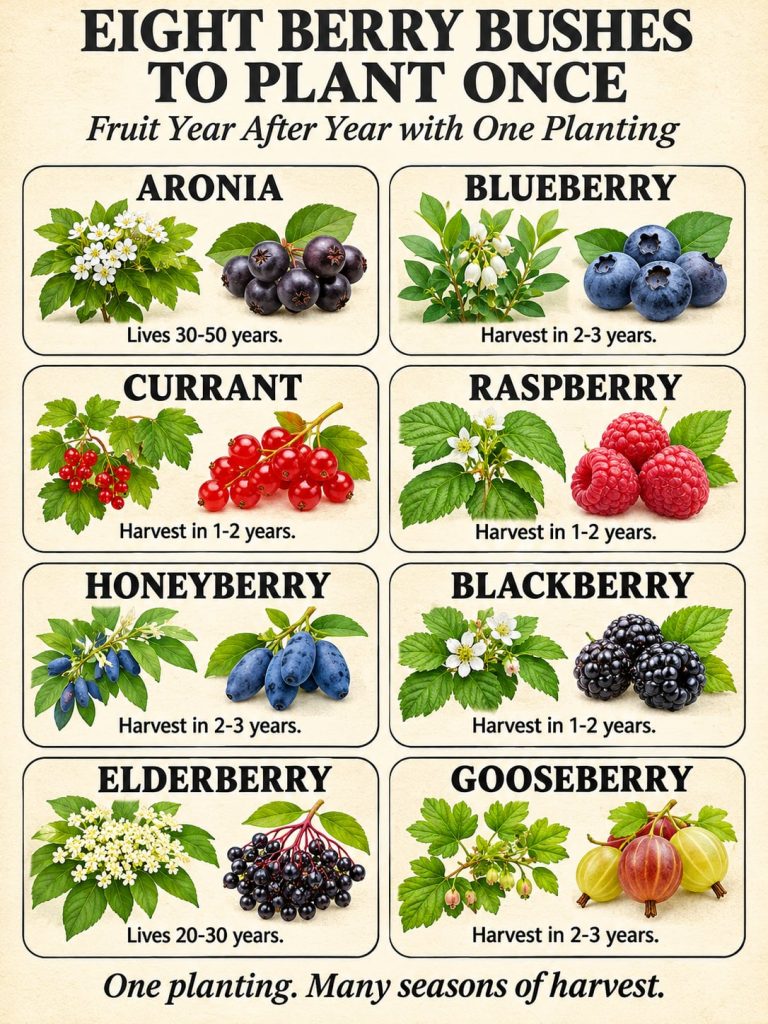
The Eight Berry Bushes
1. Highbush Blueberry
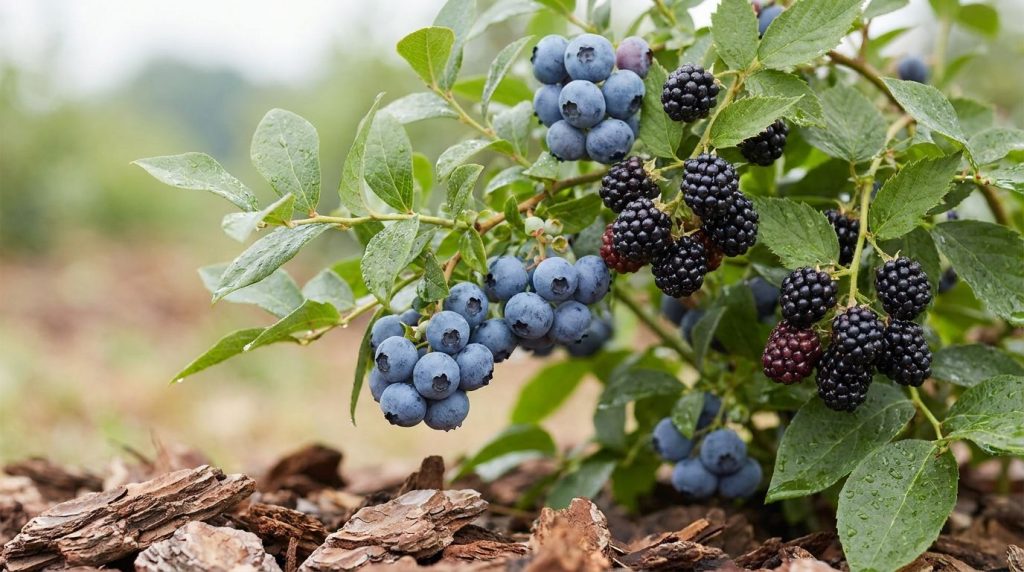
Highbush blueberries (Vaccinium corymbosum) are hardy in roughly USDA zones 4 through 7 and can be productive for 30 years or more. They need full sun, at least six to eight hours per day, and acidic soil with a pH of about 4.5 to 5.5. Plant two or more compatible cultivars to improve pollination and fruit set. Mulch with pine bark or fine pine needles to hold moisture and keep the root zone acidic. Expect a light crop in the second or third year and a full harvest around year five to seven.
2. Red Raspberry
Red raspberries are hardy in zones 3 through 8, depending on cultivar. Summer-bearing types fruit on two-year-old canes, so prune those canes to the ground after harvest and keep the strongest new canes spaced about six inches apart. Everbearing types fruit on current-season canes in late summer and can also produce a crop the following June. Give them full sun, well-drained soil, and a trellis to keep canes off the ground.
3. Thornless Blackberry
Thornless blackberries are typically hardy in zones 5 through 9. Trailing types need a support system, usually a two-wire trellis, while erect types can stand on their own. Prune floricanes, the two-year-old canes, right after they finish fruiting. In parts of the Pacific Northwest and other regions, some wild blackberry species have become invasive, so choose a cultivar and plant it where its spread can be managed.
4. Elderberry
Elderberries (Sambucus nigra and Sambucus canadensis) are hardy in zones 3 through 9 and can live for 20 years or more. They grow quickly and reach 6 to 12 feet tall, so leave at least 8 feet between plants and keep them away from walkways. Plant two cultivars for better yields. Prune in late winter by removing one or two of the oldest canes each year. Important: only ripe, cooked elderberries should be eaten. Raw stems, leaves, and unripe berries contain compounds that can cause stomach upset.
5. Honeyberry
Honeyberries (Lonicera caerulea var. edulis) are among the most cold-hardy fruiting shrubs, typically suited to zones 2 through 7. They bloom early, so a late frost can reduce the crop, and many plants benefit from a site that stays cool and avoids reflected heat. Plant at least two cultivars that bloom at the same time. The berries are tart and ripen quickly, so check plants every few days in early summer and net them before birds take the crop.
6. Red Currant
Red currants (Ribes rubrum) are hardy in zones 3 through 8. They tolerate partial shade better than most berries, which makes them useful in cooler gardens, though they need some afternoon shade in very hot regions. Currants fruit on spurs along older wood, so prune to maintain three- to four-year-old branches and remove crowded growth in winter. Before planting any Ribes species, check your state or local regulations. Some areas restrict currants and gooseberries because they can host white pine blister rust.
7. Gooseberry
Gooseberries (Ribes uva-crispa and related hybrids) are hardy in zones 3 through 8 and have a similar growth habit to currants. Choose mildew-resistant cultivars, since powdery mildew is the most common problem in humid climates. Give them good airflow by pruning out the center of the bush so that light and wind can reach the fruiting wood. Harvest when the berries are fully colored and slightly soft for the sweetest flavor, and wear gloves if the variety has thorns.
8. Serviceberry
Serviceberries (Amelanchier species) grow as large shrubs or small multi-stemmed trees, typically hardy in zones 3 through 9. They reach 15 to 25 feet, so they belong in a spot with room to grow, such as a side yard or along a property edge. The purple-black berries taste similar to blueberries and ripen in early summer. Birds will compete for the fruit, so netting or sharing the harvest is a good plan.
Planting and Setup Steps
Start with a soil test through your local extension service. Most berries prefer loose, well-drained soil with plenty of organic matter. Blueberries are the exception and need acidic conditions. Dig planting holes about twice as wide as the root ball, and set the crown at the same depth it grew in the nursery pot. Water deeply right after planting, and keep the soil evenly moist, roughly one inch of water per week, during the first season.
Spacing matters for airflow, which lowers disease pressure. Blueberries generally need 4 to 6 feet between plants, raspberries need 2 to 3 feet within a row, and elderberries need the most room. Mulch with a 2- to 3-inch layer, keeping it a few inches away from the stems.
Common Mistakes to Avoid
Many berry failures come from a few predictable habits. Planting only one blueberry or elderberry variety often leads to disappointing yields. Letting raspberry canes grow too thick creates a tangle that hides fruit and invites disease. Pruning at the wrong time removes next year’s flower buds, and planting in heavy clay without raised beds can drown roots. Finally, expecting immediate harvests is a common disappointment, since most berry bushes need two to five years to reach their best production.
Adjusting for Your Climate
In zones 3 through 5, choose cold-hardy choices such as honeyberry, red currant, and raspberry, and plant after the last spring frost when soil can be worked. In zones 6 through 8, heat and humidity become bigger concerns, so provide afternoon shade where needed and improve airflow. In zones 9 and warmer, blueberries may need extra chill hours and are better suited to selected low-chill cultivars, while blackberries often perform well. USDA zones measure winter cold, not summer heat, rainfall, or local microclimates, so check with your county extension office for local planting dates and recommended cultivars.
Start Your Berry Patch This Season
A long-lived berry patch rewards patience and smart planning. Choose two or three of these bushes that fit your zone and sunlight, plant them with good soil preparation, and commit to a simple pruning schedule. Within a few years, you will be picking fruit that tastes far better than anything from the store. If this guide helped you plan, save it for your next planting day and share your favorite berry with a gardening friend.