When you think of chili peppers, you probably picture a spicy kick in your favorite dish or a potent ingredient in a natural pain-relief rub. What you might not immediately connect them with, however, is cutting-edge skin cancer research. Yet, these fiery fruits are emerging as a surprising new frontier in the scientific quest for novel cancer treatments.
Recent early-stage lab findings are opening up exciting possibilities, hinting at how natural compounds could revolutionize our approach to preventing and treating certain cancers. Let’s delve into the science behind this unexpected connection and explore what these discoveries could mean for the future of skin health.
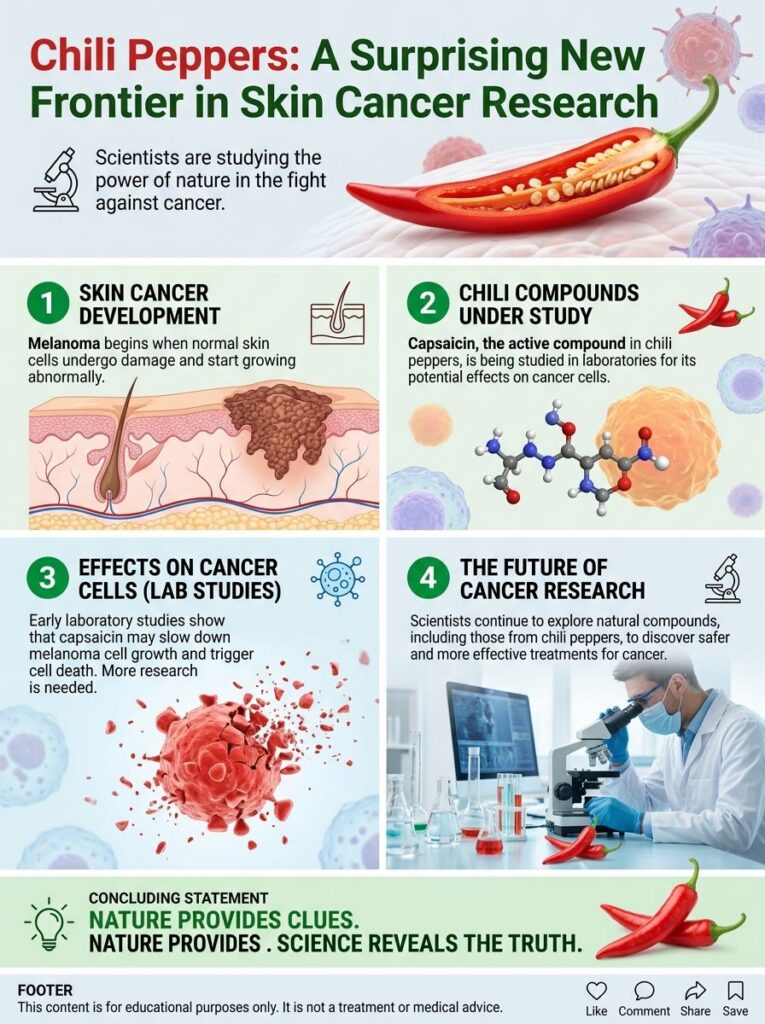
The Fiery Compound: What is Capsaicin?
At the heart of a chili pepper’s heat is a remarkable compound called capsaicin. This natural alkaloid is responsible for the burning sensation we experience when we eat chilies. Beyond its culinary appeal, capsaicin has long been studied for its analgesic (pain-relieving) and anti-inflammatory properties, making it a common ingredient in topical creams for muscle aches and arthritis.
However, scientists are now looking beyond these well-known uses, investigating capsaicin’s potential at a cellular level, particularly in the fight against diseases like cancer. Its complex molecular structure allows it to interact with biological pathways in ways that are still being fully understood.
Early Lab Findings: Capsaicin’s Role in Skin Cancer Research
Initial laboratory studies, primarily conducted on cell cultures and animal models, suggest that capsaicin may possess properties that inhibit the growth of skin cancer cells, including melanoma – one of the most aggressive forms of skin cancer. These findings, while preliminary, point to several promising mechanisms:
- Inhibiting Cancer Cell Proliferation: Capsaicin has shown the ability to slow down or even stop the uncontrolled division of cancer cells, which is a hallmark of tumor growth.
- Inducing Apoptosis: It appears to trigger programmed cell death (apoptosis) in cancer cells, essentially prompting them to self-destruct without harming healthy cells. This is a highly desirable characteristic for any anti-cancer agent.
- Blocking Signaling Pathways: Research indicates that capsaicin can interfere with specific molecular pathways that cancer cells rely on for survival and metastasis (spreading to other parts of the body).
- Anti-Angiogenic Effects: Some studies suggest capsaicin might inhibit angiogenesis, the process by which new blood vessels form to feed a growing tumor.
It’s crucial to remember that these are early-stage findings from controlled lab environments. The journey from lab bench to bedside is long and involves rigorous testing and clinical trials.
How Does Capsaicin Work Against Cancer? The Science Behind the Spice
The exact mechanisms by which capsaicin exerts its anti-cancer effects are still a subject of intensive research. Scientists are exploring how its molecular structure allows it to bind to specific receptors on cancer cells, altering their internal processes. For instance, some theories suggest it interacts with TRPV1 (Transient Receptor Potential Vanilloid 1) channels, which are expressed on certain cancer cells and play a role in their survival and growth.
By modulating these cellular targets, capsaicin may disrupt the energy supply of cancer cells, increase oxidative stress within them, or activate enzymes that lead to their demise. The goal is to precisely understand these interactions to develop targeted therapies that harness capsaicin’s power without causing adverse effects.
The Future Frontier: What’s Next for Chili Pepper Research?
The promising early results have paved the way for more in-depth investigations. Researchers are now focusing on:
- Optimizing Delivery Methods: Exploring ways to deliver capsaicin effectively and safely to cancerous tissues, whether through topical applications, nanoparticles, or other innovative drug delivery systems.
- Combination Therapies: Investigating if capsaicin can enhance the effectiveness of existing chemotherapy or radiation treatments, potentially reducing required dosages and side effects.
- Clinical Trials: The ultimate goal is to progress to human clinical trials to evaluate the safety and efficacy of capsaicin-based treatments in people with skin cancer.
- Understanding Specificity: Further research is needed to understand why capsaicin appears to target cancer cells while largely sparing healthy ones, a key characteristic of an effective anti-cancer drug.
Integrating Science and Nature
“NATURE PROVIDES CLUES. SCIENCE REVEALS THE TRUTH.”
This powerful statement encapsulates the essence of this research. Nature has always been a rich source of medicinal compounds, and the chili pepper is just one more example of its vast potential. Science, through dedicated research and rigorous experimentation, is the tool that allows us to unlock these natural secrets, understand their mechanisms, and translate them into effective solutions for human health.
Conclusion
While we’re still in the early stages, the research into chili peppers and their active compound, capsaicin, offers a fascinating and hopeful glimpse into future possibilities for skin cancer treatment. It underscores the incredible potential residing in natural compounds and reinforces the importance of continuous scientific inquiry. As research progresses, chili peppers might one day be celebrated not just for their heat, but for their cool potential in the fight against cancer, bringing us closer to a healthier future.