Raised beds are one of the most practical ways to grow vegetables, herbs, and flowers. The soil sits above ground level, so it tends to warm up earlier in spring, drains well after heavy rain, and is easier to reach without bending. But raised beds also lose nutrients and structure over time, which means they benefit from steady, seasonal attention. This guide walks you through a simple year of soil care so your garden stays productive from one season to the next.
Why Raised Bed Soil Needs Year-Round Care
Soil inside a raised bed is contained, so it does not receive the natural replenishment that open ground gets from surrounding earth. Plants draw nutrients out as they grow, rain can wash some of them away, and the soil gradually settles and compacts. A seasonal routine helps you notice these changes early, before plants begin to look stressed.
Winter: Plan and Protect the Soil
January and February
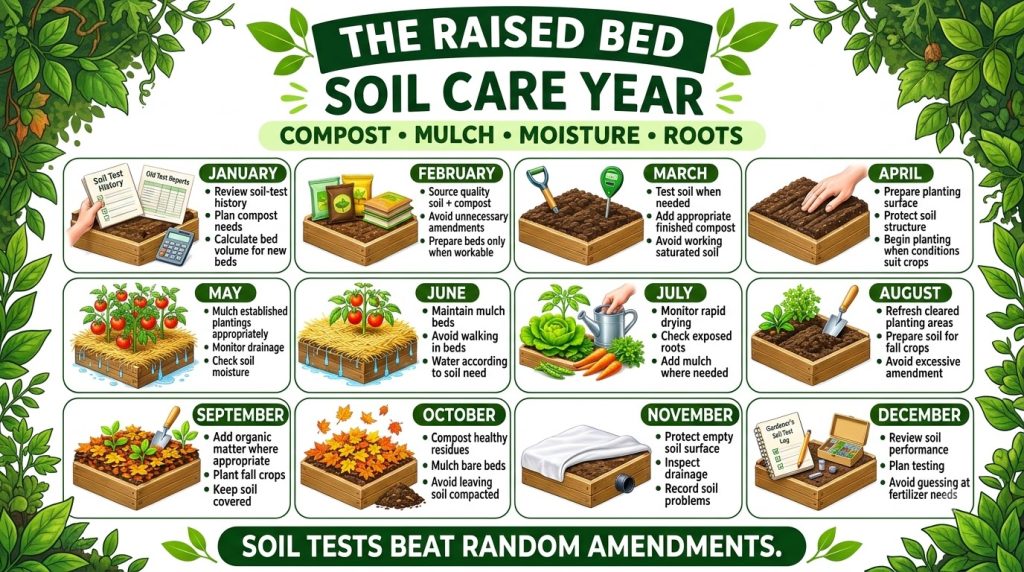
Winter is a quiet time for active gardening, but it is a good moment to review what happened last season. Walk around the bed and check whether the soil has shrunk or pulled away from the edges. If the surface is bare, consider spreading a light layer of compost or leaf mould in mild weather, or cover the bed with a breathable mulch to protect the soil structure from heavy rain.
March
As days lengthen, gently loosen the top few centimetres of soil with a hand fork. Avoid digging when the soil is wet, because compacting damp earth can damage its structure. This is also a good time to top up the bed with well-rotted compost and to test soil moisture before planting.
Spring: Build Fertility and Structure
April and May
Spring is the season to feed your soil. Mix a generous layer of compost into the top of the bed and rake it level. Organic matter improves drainage in heavy soil and helps sandy soil hold water. Once the soil has warmed, you can sow or transplant your crops, and mulching around young plants will help retain moisture and keep weeds down.
June
As plants grow, check the bed regularly for signs of nutrient needs, such as pale leaves or slow growth. Use organic fertilisers in measured amounts and follow the packaging directions. More is not always better, because excess feeding can unbalance the soil and affect plant health.
Summer: Protect Moisture and Life in the Soil
July and August
Hot weather dries raised beds quickly, so watering becomes a central task. Water deeply in the early morning, aiming at the soil rather than the leaves, and check the moisture a few centimetres down before watering again. A thick organic mulch such as straw, shredded leaves, or grass clippings keeps the surface cooler and reduces evaporation.
Late summer
Look for signs of compaction, crusting, or water running off the surface instead of soaking in. Loosen the top layer gently and add compost where the soil looks thin. Healthy soil is full of living organisms, so avoid heavy tilling that disturbs them and try to keep some plant cover on the bed whenever possible.
Autumn: Restore and Prepare
September to November
Once a crop finishes, do not leave the soil bare. Add compost, sow a cover crop such as clover or phacelia if you have space, or simply apply a layer of mulch. Remove diseased plant material rather than composting it, and clear out weeds before they set seed. Autumn is also a good time to check the bed edges and repair any boards or stones that have shifted.
Simple Habits That Make a Difference
- Keep a short garden journal with dates for compost, feeding, and planting.
- Rotate crops within the bed each season to reduce pest and disease build-up.
- Test soil from time to time to understand its texture and nutrient balance.
- Avoid walking on the bed, which compacts the soil and squeezes out air.
Final Thoughts
Caring for a raised bed does not need to be complicated. A calm, consistent routine of feeding, mulching, gentle loosening, and seasonal rest builds healthy soil that supports strong plants year after year. Start with one or two tasks each month, watch how your garden responds, and adjust as you learn what your soil needs.