Debloating foods are everywhere in gut health and digestion guides. Kiwi, banana, cucumber, ginger, green tea — all are known to help reduce bloating.
But here’s the part most people miss:
👉 Eating the right food at the wrong time can actually make bloating worse.
That’s why many people search things like “why am I still bloated after eating healthy foods” or “foods that cause bloating even though they’re healthy.”
The issue isn’t the food — it’s timing, digestion speed, and what your body is dealing with in that moment.
Bloating Isn’t One Thing — Timing Changes Everything
Bloating usually comes from one of these:
-
Gas buildup
-
Water retention
-
Slow digestion
-
Fermentation from fiber-heavy foods
Each type reacts very differently to the same food.
Foods That Help Bloating — But Only at the Right Time
1. Fast-Acting Debloat Foods (Best When You Feel “Puffed Up”)
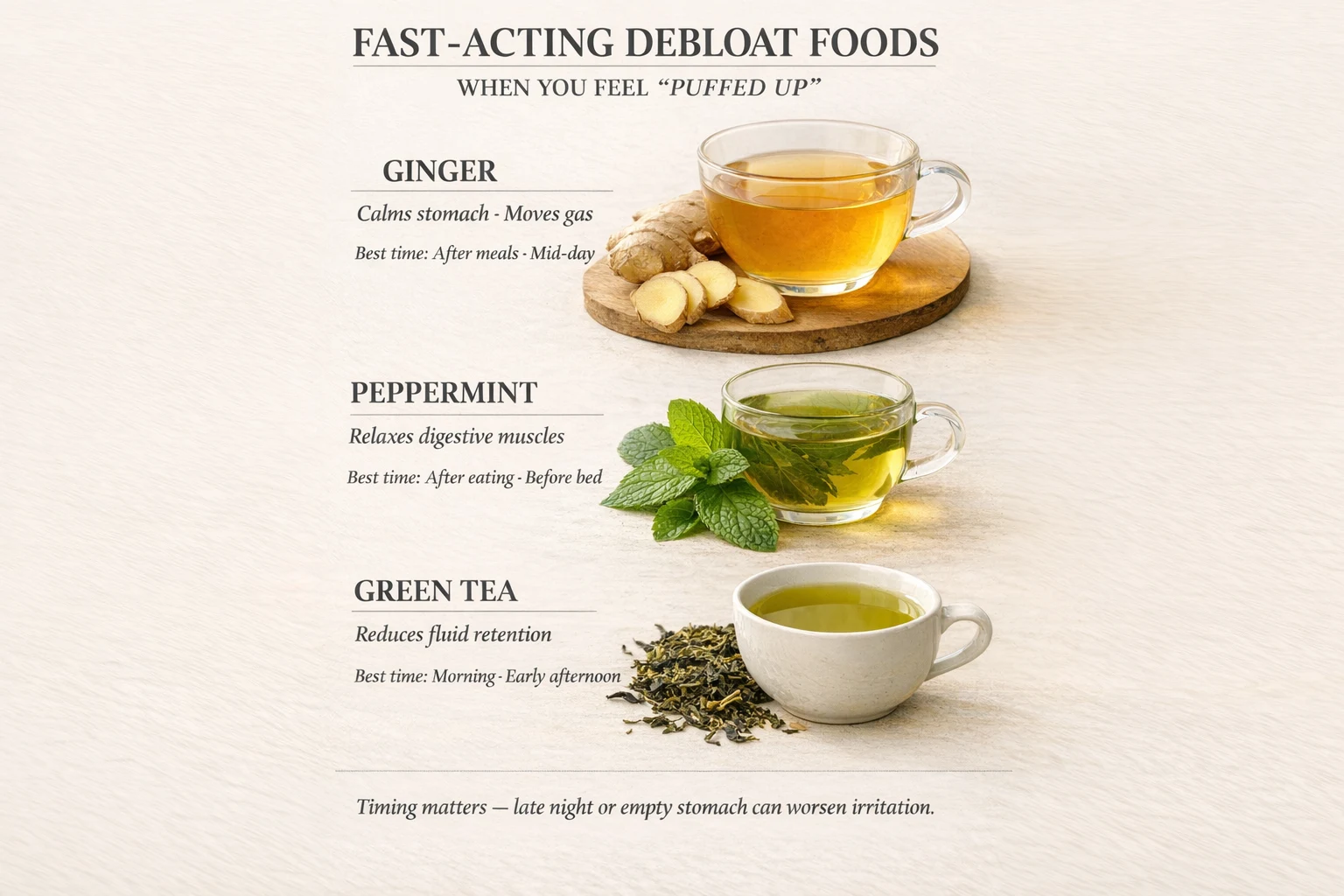
These work best when bloating feels tight, gassy, or uncomfortable right now.
-
Ginger – calms the stomach and helps gas move
Best time: after meals or mid-day
-
Peppermint – relaxes digestive muscles
Best time: after eating or before bed
-
Green tea – reduces fluid retention and supports digestion
Best time: morning or early afternoon
👉 Eating these late at night or on an empty stomach can sometimes cause irritation instead of relief.
2. Hydrating Foods That Reduce Water Bloat (Timing Is Critical)
These foods help with water retention, not gas.
-
Cucumber
-
Asparagus
-
Lemon water
Best time: morning or early afternoon
Many people searching “why am I bloated at night” don’t realize that eating high-water foods late can increase pressure and fullness while lying down.
3. Fiber-Rich Fruits That Backfire When Eaten Too Late
These are often listed as the best foods for digestion, but timing matters.
-
Kiwi
-
Banana
-
Cantaloupe
-
Pumpkin
-
Fennel
Best time: earlier in the day, when digestion is strongest.
At night, these can ferment more slowly, which is why people often experience bloating even after “healthy” dinners.
This explains searches like “why does fruit make me bloated at night.”
4. Healthy Fats That Slow Digestion (Helpful — But Not Always)
-
Avocado
Avocado supports gut health long-term, but it slows digestion.
Best time: midday meals, not when you already feel bloated.
This is why some people feel worse after eating avocado while bloated — it delays stomach emptying.
What to Eat Based on How Your Body Feels
-
Bloated + gassy: ginger, peppermint, green tea
-
Bloated + heavy/full: lemon water, cucumber
-
Bloated at night: avoid fruit + fiber, choose light herbal tea
-
Chronic bloating: rotate foods earlier in the day, not all at dinner
The Real Reason “Debloating Foods” Don’t Always Work
Most guides focus on what to eat, not when to eat.
But digestion slows at night, hormones change, and gut bacteria behave differently throughout the day.
That’s why understanding timing-based digestion is just as important as choosing healthy foods.
Still Feeling Bloated Even After Eating Right?
Ask yourself:
-
Am I eating fiber too late?
-
Am I drinking too much water with meals?
-
Am I choosing slow-digesting foods when digestion is already sluggish?
Small timing changes often reduce bloating faster than cutting foods entirely.
Sources
-
Cleveland Clinic – Digestive timing and bloating causes
-
Harvard Health – Fiber, fermentation, and gut discomfort
-
Mayo Clinic – Functional bloating and digestion patterns