Every day, your body is exposed to stress, pollution, inflammation, and internal wear and tear. What many people do not realize is that certain plant foods contain powerful protective compounds that quietly support your cells, organs, and immune defenses.
These compounds are not vitamins or minerals. They are plant chemicals like polyphenols, flavonoids, and sulfur compounds that help neutralize oxidative stress and support long-term health.
Why Protective Plant Compounds Matter
Protective plant compounds help your body in ways you can’t always feel immediately.
They support cellular repair, reduce chronic inflammation, and help the body respond better to daily stressors. Many people underestimate their importance because the benefits build gradually, not overnight.
The good news is that these foods are simple, accessible, and easy to add to meals.
Foods Rich in Protective Plant Compounds
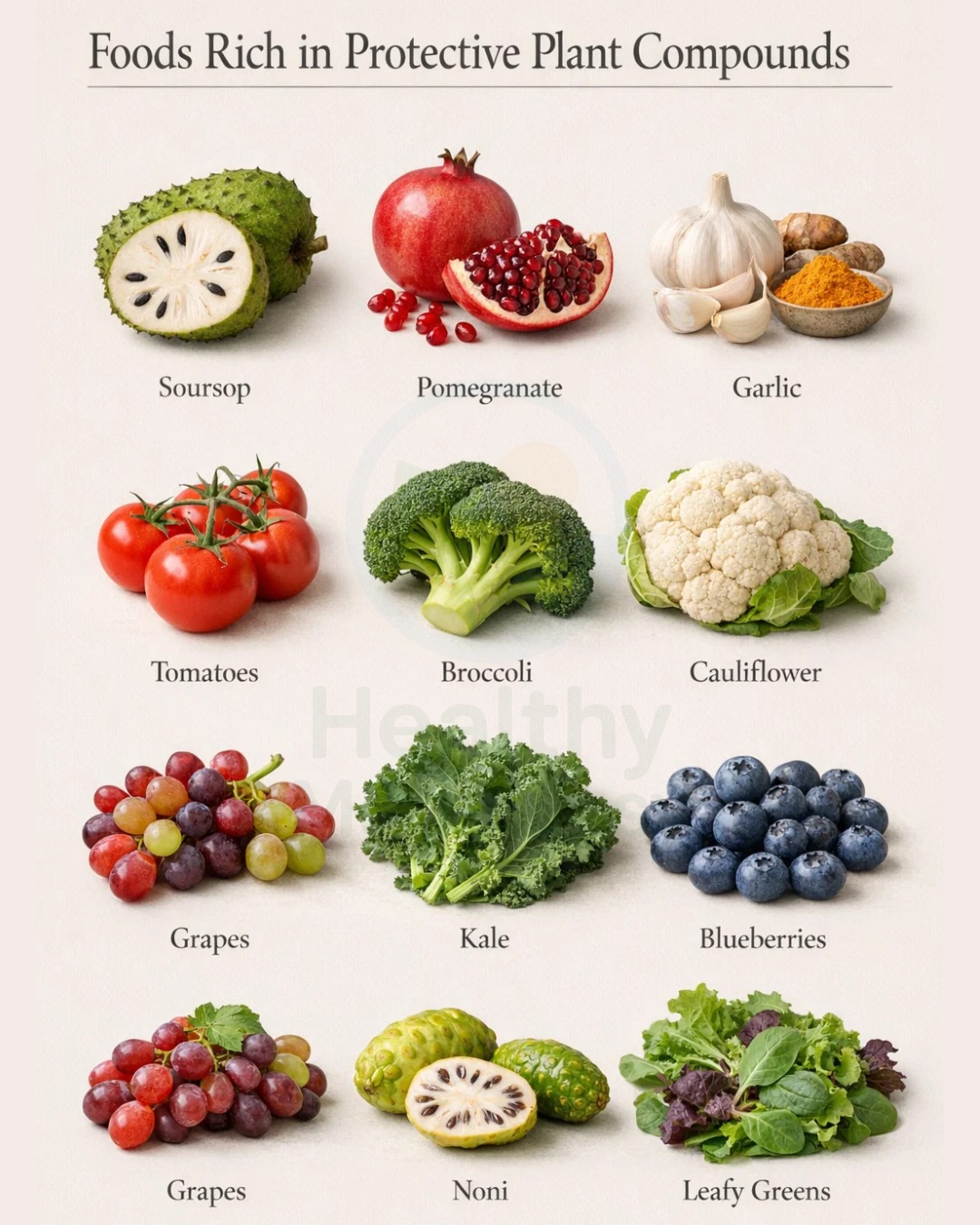
Soursop
Soursop contains acetogenins and polyphenols that help protect cells from oxidative damage. It also provides vitamin C, which supports immune resilience. You can enjoy it fresh, blended into smoothies, or lightly chilled as a snack.
Pomegranate
Pomegranate is rich in punicalagins and anthocyanins. These compounds support heart health and help combat inflammation. Sprinkle the seeds over yogurt, salads, or enjoy them plain for a refreshing antioxidant boost.
Garlic
Garlic contains sulfur compounds like allicin that support immune defense and circulation. Crushing or chopping garlic before cooking helps activate these compounds. Add it to soups, stir-fries, or roasted vegetables.
Tomatoes
Tomatoes are high in lycopene, a protective compound linked to cellular health and reduced oxidative stress. Cooking tomatoes gently with healthy fats improves lycopene absorption. Use them in sauces, stews, or roasted dishes.
Broccoli
Broccoli provides sulforaphane, a compound that supports natural detox pathways in the body. Light steaming preserves its protective benefits. Pair it with olive oil or lemon for better absorption.
Cauliflower
Cauliflower contains glucosinolates that help support liver function and cellular protection. It is versatile and works well roasted, mashed, or lightly sautéed as a nutrient-dense base.
Grapes
Grapes offer resveratrol and flavonoids that support heart and brain health. Both red and green grapes provide protective benefits. Enjoy them fresh, frozen, or added to salads.
Kale
Kale is packed with carotenoids and polyphenols that support eye health and inflammation balance. Light cooking or massaging raw kale helps improve nutrient absorption.
Blueberries
Blueberries are rich in anthocyanins that support brain health and cellular protection. They are easy to add to breakfast bowls, smoothies, or enjoyed on their own.
Grapes
This second grape listing reinforces how powerful grapes are as a source of protective plant compounds. Regular, moderate intake helps support long-term cardiovascular and metabolic health.
Noni
Noni contains iridoids and polyphenols that support cellular defense and immune response. It is commonly consumed as juice in small amounts due to its strong flavor.
Leafy Greens
Leafy greens provide chlorophyll, flavonoids, and carotenoids that help reduce oxidative stress. Rotate different greens like spinach, arugula, and mixed greens to maximize benefits.
How to Build a Daily Plate Using These Foods
A balanced plate does not need to be complicated.
Include one fruit rich in protective compounds, one cruciferous vegetable, and one leafy green daily. Rotate colors and textures to naturally increase variety and nutrient coverage.
When You’ll Notice Changes
Some people notice improved digestion and energy within one to two weeks. Deeper benefits like inflammation balance and cellular support build gradually over several weeks of consistent intake.
Tips to Combine Them Effectively
Eat protective plant foods with healthy fats like olive oil or avocado. Avoid overcooking delicate vegetables. Consistency matters more than large portions.
Final Takeaway
Protective plant compounds work quietly, but their impact is powerful over time. These foods help your body defend, repair, and adapt naturally when eaten regularly.