If you are trying to eat more protein, most people immediately think of chicken, eggs, or protein powder. But nuts can quietly help too, especially when you need a snack that feels satisfying and easy.
Here is the part many people miss. Nuts are not only about protein. They also bring healthy fats and fiber, which help you stay full longer and make cravings feel calmer. Most people never realize this works because they snack on “light” foods that digest fast, then feel hungry again an hour later.
These nutrition values are consistent with databases built from USDA FoodData Central.
Nut List: Approximate Protein per ¼ Cup
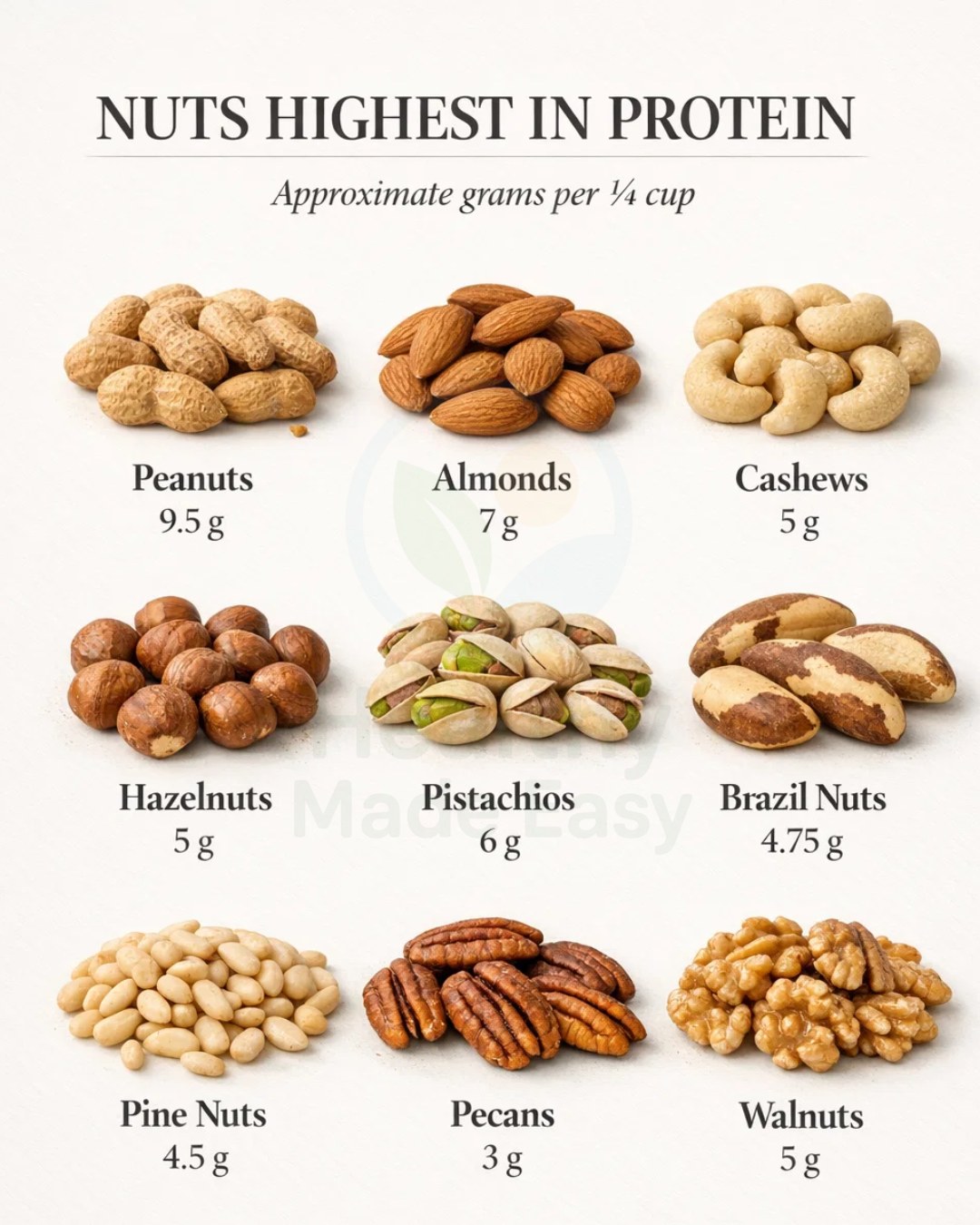
Peanuts — 9.5 g
Peanuts sit at the top for protein density in this list (even though they are botanically legumes, they are commonly grouped with nuts). They are a practical option when you want a higher-protein snack without cooking.
Easy ways to eat them: add to oats, yogurt bowls, or pair with fruit for a more filling snack.
Almonds — 7 g
Almonds are a steady, reliable protein choice and also contain fiber and vitamin E, which supports overall nutrition while you build better snack habits.
Easy ways to eat them: add to salads, blend into smoothies, or use sliced almonds on breakfast.
Pistachios — 6 g
Pistachios are one of the best “snackable” high-protein nuts. They are also included in the USDA MyPlate Protein Foods Group, which surprises many people.
Easy ways to eat them: keep a small container in your bag, or sprinkle on Greek yogurt.
Cashews — 5 g
Cashews are slightly lower than almonds but still a solid protein choice. They are also creamy and satisfying, which helps reduce the feeling of restriction.
Easy ways to eat them: blend into sauces, add to stir-fries, or snack with fruit.
Hazelnuts — 5 g
Hazelnuts land in the middle for protein but are very useful for variety, especially if you get bored easily with the same snack routine.
Easy ways to eat them: chop into oatmeal, add to homemade granola, or pair with yogurt.
Walnuts — 5 g
Walnuts are not the highest protein nut, but they are a strong option when you want a snack that also supports heart-friendly fats.
Easy ways to eat them: toss into salads, stir into oats, or snack with berries.
Brazil Nuts — 4.75 g
Brazil nuts have moderate protein, but they are most known for selenium. That is why portion control matters with them.
Easy ways to eat them: have a small amount occasionally, or chop into yogurt bowls.
Pine Nuts — 4.5 g
Pine nuts are a gentle protein source and work well for people who prefer softer textures. They are especially easy to use in meals.
Easy ways to eat them: blend into pesto, sprinkle on vegetables, or mix into salads.
Pecans — 3 g
Pecans are the lowest protein option in the image, but they can still be useful for satisfaction when eaten in the right portion.
Easy ways to eat them: add to oatmeal, snack with fruit, or use as a topping for salads.
How to Build a “High-Protein Nut Snack” That Actually Fills You Up
Nuts work best when you pair them with one more element:
- Nuts + yogurt (extra protein and staying power)
- Nuts + fruit (fiber + sweetness without feeling deprived)
- Nuts + whole grain (like oats or whole-grain toast for a balanced snack)
If most of your protein comes from plants, mixing sources across the day is a smart way to cover your needs.
When You’ll Notice Changes
You may notice better fullness and fewer cravings within 3–7 days if you swap low-protein snacks for a nut-based snack. Many people notice better snack control and steadier energy within 2–3 weeks when portions stay consistent.
Quick Notes and Safety Tips
- Nuts are calorie-dense. A small portion can be enough, and that is not a bad thing. It is what makes them satisfying.
- If you have a nut allergy, avoid entirely and follow your clinician’s guidance.
- Choose unsalted or lightly salted if you are monitoring blood pressure.
- Brazil nuts: do not overdo them. Too many too often can push selenium intake too high.
Final Takeaway
If you want a simple way to add more protein without cooking, these 9 nuts highest in protein are an easy win. Start small, stay consistent, and pair nuts with fiber or extra protein for the best results.
Source:
-
USDA FoodData Central
https://fdc.nal.usda.gov
(Primary database for nut protein values) -
Harvard T.H. Chan – Nuts & Health
https://www.hsph.harvard.edu/nutritionsource/nuts-for-the-heart/ -
Healthline – Nuts and Protein Comparison
https://www.healthline.com/nutrition/nuts-high-in-protein -
Cleveland Clinic – Nuts Nutrition Overview
https://health.clevelandclinic.org/are-nuts-good-for-you/