Hormonal balance is one of those things many people do not think about until it feels off. Low energy, irregular cycles, mood changes, poor sleep, or skin issues often trace back to subtle shifts in estrogen levels.
Here is what most people misunderstand. Supporting estrogen balance is not about forcing hormones higher. It is about nourishing the body with foods that gently interact with estrogen receptors and help the body regulate itself.
Most people never realize this works because phytoestrogen-rich foods act slowly and subtly, not like medication. Over time, they help create a more stable hormonal environment.
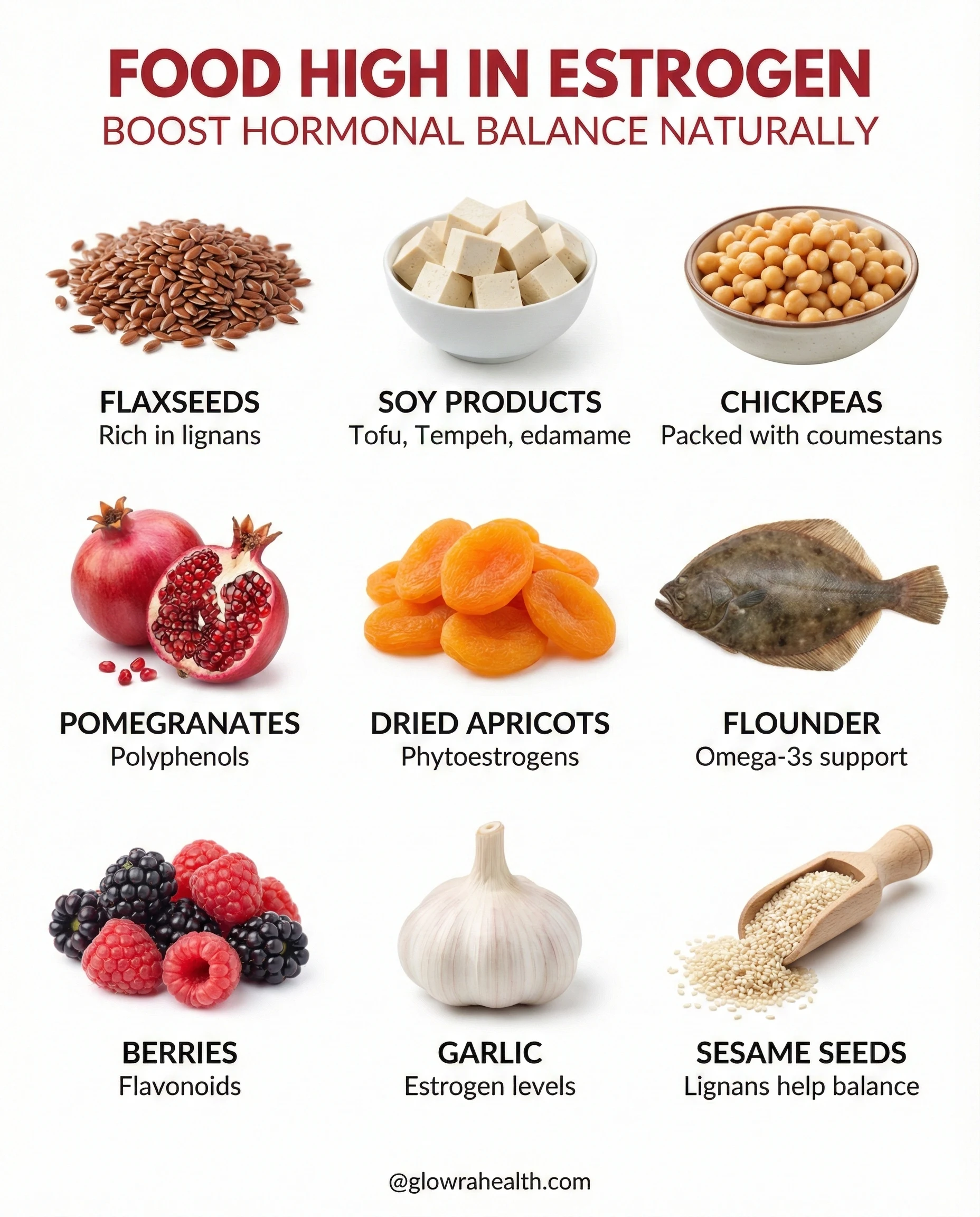
Flaxseeds
Flaxseeds are one of the richest dietary sources of lignans, a type of phytoestrogen.
Lignans can bind to estrogen receptors and help balance estrogen activity, especially in people with fluctuating or declining estrogen levels.
How to use them:
- Grind flaxseeds before eating for better absorption
- Add to oatmeal, yogurt, smoothies, or sprinkle over salads
They also provide fiber, which helps the body eliminate excess hormones through healthy digestion.
Soy Products (Tofu, Tempeh, Edamame)
Soy foods contain isoflavones, plant compounds that closely resemble human estrogen.
These compounds may gently support estrogen signaling, especially during perimenopause and menopause. Fermented soy products like tempeh are often easier to digest.
How to include soy:
- Tofu in stir-fries or soups
- Tempeh grilled or pan-seared
- Edamame as a snack or salad topping
Moderate intake is key. Whole soy foods are very different from isolated soy supplements.
Chickpeas
Chickpeas are packed with coumestans, another group of phytoestrogens.
They support hormonal balance while also providing plant protein, iron, and slow-digesting carbohydrates that stabilize blood sugar.
Easy ways to eat chickpeas:
- Hummus
- Roasted chickpea snacks
- Added to salads or grain bowls
Stable blood sugar indirectly supports healthier hormone regulation.
Pomegranates
Pomegranates are rich in polyphenols, powerful plant compounds linked to estrogen activity and antioxidant protection.
They may help protect estrogen-producing tissues and reduce oxidative stress, which can interfere with hormone signaling.
How to enjoy:
- Fresh seeds as a snack
- Added to salads or yogurt
- Unsweetened pomegranate juice in small amounts
Dried Apricots
Dried apricots contain natural phytoestrogens and are also a good source of potassium and iron.
They are particularly helpful for people experiencing low energy or iron deficiency alongside hormonal changes.
Best tips:
- Choose unsweetened, sulfur-free dried apricots
- Pair with nuts or seeds to balance blood sugar
Flounder
Flounder does not contain phytoestrogens, but it supports estrogen balance indirectly through omega-3 fatty acids.
Omega-3s help reduce inflammation and support hormone receptor sensitivity, which allows estrogen to work more efficiently.
How to eat flounder:
- Baked or pan-seared
- Paired with vegetables and healthy fats
This is a gentle protein option that supports overall hormonal health.
Berries
Berries are rich in flavonoids, which may help regulate estrogen metabolism in the liver.
They also reduce inflammation and oxidative stress, both of which can disrupt hormone balance.
Good options include:
- Blueberries
- Raspberries
- Blackberries
Eat them fresh, frozen, or blended into smoothies.
Garlic
Garlic supports estrogen balance by influencing how estrogen is processed and utilized in the body.
It also supports liver health, which is critical for hormone detoxification and balance.
How to use garlic:
- Raw or lightly cooked for maximum benefit
- Added to soups, sauces, and stir-fries
Consistent intake matters more than large amounts.
Sesame Seeds
Sesame seeds contain lignans similar to flaxseeds, which help modulate estrogen activity.
They also provide zinc and healthy fats that support hormone production.
Easy ways to add them:
- Sprinkle on salads or vegetables
- Use tahini in dressings or sauces
- Add to baked goods
How to Build a Daily Plate Using These Foods
You do not need all nine foods every day. Instead, rotate them.
A simple approach:
- One phytoestrogen-rich seed or legume daily
- One fruit source (berries or pomegranate)
- One clean protein like flounder or tofu
- Plenty of fiber-rich vegetables
Consistency matters more than quantity.
When You’ll Notice Changes
- 1–2 weeks: Improved digestion, energy stability, and reduced bloating
- 3–6 weeks: Subtle improvements in mood, sleep, and cycle regularity
- 2–3 months: More noticeable hormonal balance when combined with good sleep and stress management
Hormones move slowly. Gentle support works best.
Tips to Combine Them Effectively
- Pair phytoestrogen foods with fiber to support hormone clearance
- Avoid ultra-processed foods that disrupt insulin and hormone signaling
- Prioritize sleep and stress reduction alongside diet
Food works best when lifestyle supports it.
Final Takeaway
These 9 estrogen-supporting foods do not force hormonal changes. They gently guide the body back toward balance. When eaten consistently, they help support energy, mood, reproductive health, and long-term hormonal stability.
Related Source Science
- Phytoestrogens and hormonal balance research
- Dietary lignans and estrogen metabolism
- Soy isoflavones and menopause support
- Omega-3 fatty acids and hormone receptor function
National Institutes of Health (NIH). Phytoestrogens: Fact Sheet for Health Professionals
https://ods.od.nih.gov/factsheets/Phytoestrogens-HealthProfessional/
Harvard T.H. Chan School of Public Health. Soy and Health
https://www.hsph.harvard.edu/nutritionsource/soy/