If your energy, appetite, mood, and digestion seem to change week to week, you are not imagining it. Your menstrual cycle shifts hormones in a predictable rhythm, and your body often asks for different types of support across the month.
That is where “cycle foods” come in. This is not about eating perfectly or following strict rules. It is about using food as a gentle tool to support what your body is already doing.
Most people never realize this works because they try to eat the same way every day, even when their needs are changing.
1. Follicular Phase: The Garden Wakes
This phase begins after your period ends and leads up to ovulation. Many people feel lighter, more motivated, and more open to fresh foods.
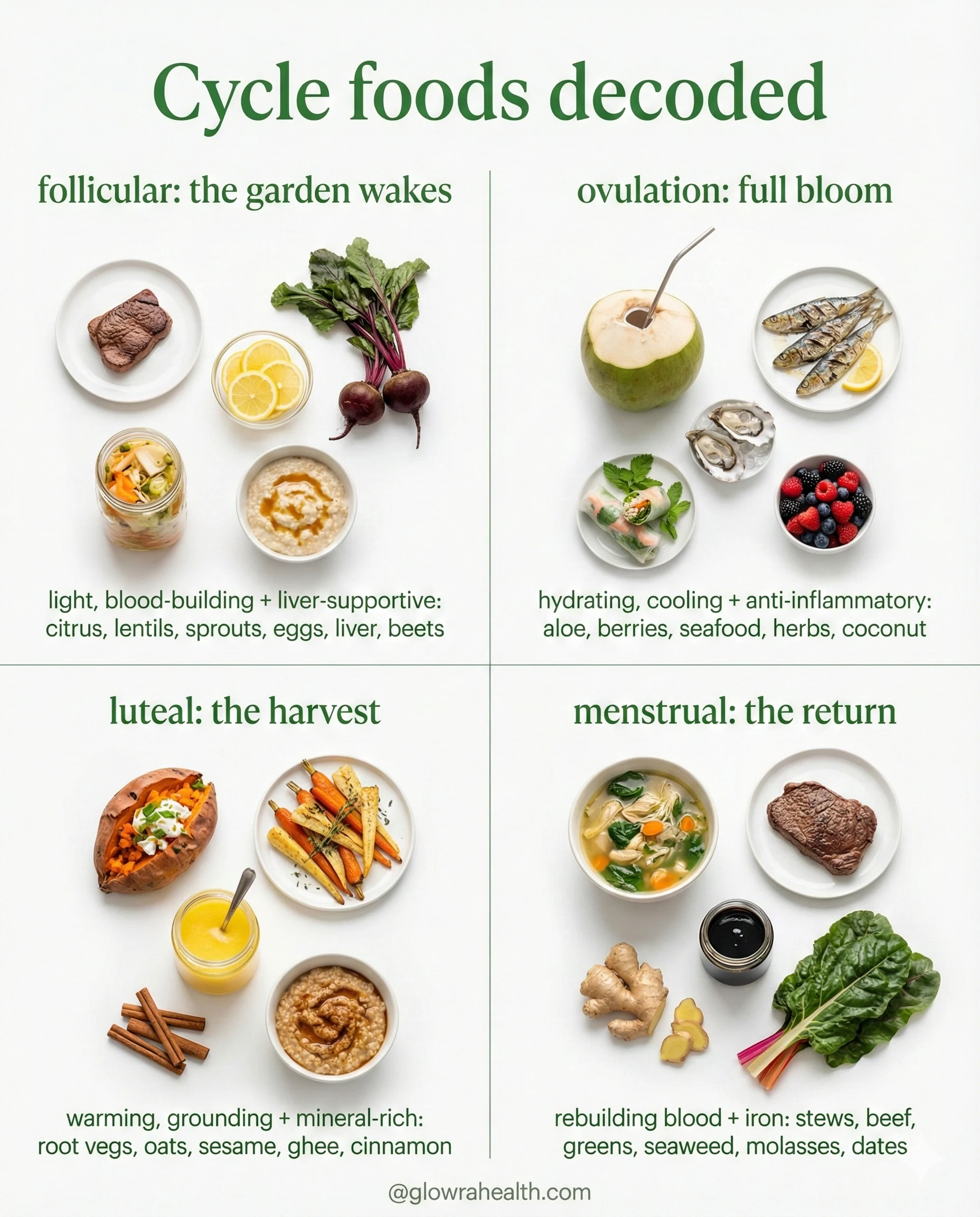
The image describes follicular foods as: light, blood-building + liver-supportive.
Why these foods fit this phase
- citrus can support hydration habits and adds vitamin C, which pairs well with iron-rich foods.
- lentils are a steady, fiber-rich carb that helps keep energy stable.
- sprouts feel “fresh” and can be an easy crunchy add-on to bowls and salads.
- eggs are a simple protein that supports steadier mood and appetite.
- liver is nutrient-dense and traditionally used for “blood-building.”
- beets are often used in routines that support circulation and overall vitality.
Easy ways to eat them
- Lentil salad with sprouts and citrus dressing.
- Eggs with beets on the side.
- Add citrus to water or to a simple sauce for lentils.
Safety note: Liver is very high in vitamin A. If you are pregnant, trying to conceive, or could be pregnant, keep liver portions small and occasional, and follow clinician guidance.
2. Ovulation Phase: Full Bloom
Ovulation is often the “high energy” phase, but it can also bring heat, inflammation, headaches, or skin flare-ups for some people.
The image describes ovulation foods as: hydrating, cooling + anti-inflammatory.
Why these foods fit this phase
- aloe is commonly used for digestive soothing, though it needs smart selection.
- berries provide antioxidants that support recovery and calm inflammation signals.
- seafood adds protein and healthy fats that many people find supportive for hormone balance.
- herbs bring freshness and can make meals feel lighter and more hydrating.
- coconut can be a helpful “cooling” base in smoothies or simple snacks.
Easy ways to eat them
- Berry bowl with coconut.
- Seafood with fresh herbs and a simple side.
- Add herbs to salads, soups, or rice bowls.
Safety note: Use only food-grade aloe products. Avoid strong aloe “cleanses,” especially if you have diarrhea, pregnancy, breastfeeding, or a sensitive gut.
3. Luteal Phase: The Harvest
This phase comes after ovulation and before your period. It is the time when cravings rise, mood can feel more tender, and energy may drop. Many people do best with meals that feel warm and grounding.
The image describes luteal foods as: warming, grounding + mineral-rich.
Why these foods fit this phase
- root vegs provide steady carbs that feel calming and help reduce “snack panic.”
- oats are gentle on digestion and support steadier energy.
- sesame adds minerals and healthy fats in a small amount.
- ghee adds richness and satisfaction, which can reduce cravings for ultra-processed snacks.
- cinnamon makes meals feel comforting and can support a steadier appetite rhythm.
Easy ways to eat them
- Oats with cinnamon and sesame.
- Roasted root vegs finished with a little ghee.
- Warm bowl meals that prioritize carbs + fat + protein together.
Simple tip: If PMS cravings hit hard, focus less on restriction and more on making meals more complete.
4. Menstrual Phase: The Return
During your period, the body is rebuilding. Many people feel best with warming foods, extra fluids, and iron-supportive meals.
The image describes menstrual foods as: rebuilding blood + iron.
Why these foods fit this phase
- stews are warm, hydrating, and easy to digest.
- beef is a classic iron-rich option for rebuilding.
- greens provide minerals and support overall replenishment.
- seaweed adds trace minerals that many traditional diets use during recovery.
- molasses is often used as a mineral-rich sweetener, especially when cravings hit.
- dates provide quick energy and can be soothing when appetite feels low.
Easy ways to eat them
- Beef stew with greens.
- Add seaweed to soups or broths.
- Snack on dates, or use a small amount of molasses in warm oats.
Safety note: If periods are extremely heavy, painful, or you feel dizzy or faint, food support is helpful—but it is also worth speaking with a healthcare professional to rule out anemia or other issues.
How to Build a Simple “Cycle Plate” Without Overthinking
You do not need a brand-new diet every week. Try this gentle approach:
- Keep your protein consistent (eggs, seafood, beef).
- Adjust the “feel” of your plate:
- Lighter and fresher in follicular/ovulation.
- Warmer and more grounding in luteal/menstrual.
When You’ll Notice Changes
Set realistic expectations. Cycle syncing is subtle, but it can be noticeable.
- This week: You may feel fewer cravings and less meal stress when your foods match your phase.
- Within 1 cycle (3–5 weeks): Many people notice steadier energy and fewer “surprise” mood dips.
- After 2–3 cycles: This is when patterns become clearer, because you have repeated the rhythm enough to compare.
Quick Notes and Safety
- Cycle syncing should never feel restrictive. If it increases stress, simplify.
- If you are pregnant, postpartum, breastfeeding, or have a medical condition, adapt the plan with professional guidance.
- If you have IBS or a sensitive gut, introduce changes slowly (especially aloe, seaweed, and high-fiber foods).
Final Takeaway
Your cycle is not random. When you support each phase with the right “style” of food—light and fresh when energy rises, warm and mineral-rich when the body needs grounding—you can make the month feel smoother and more predictable.
Related Source Science
- The menstrual cycle naturally shifts estrogen and progesterone across phases, which influences energy, appetite, temperature regulation, and fluid balance.
- Nutrient needs often feel higher in the luteal and menstrual phases due to cravings, sleep changes, and replenishment after bleeding.
- Warm, protein-rich, fiber-supportive meals are commonly recommended as practical foundations for steadier mood and energy throughout the month.