If you’ve ever saved a viral skincare graphic and thought, “I should actually try that,” this is your sign. These homemade face masks for wrinkles and glow are simple, pantry-friendly, and designed to help skin look more hydrated, brighter, and smoother-looking without complicated steps.
A quick note before we start: DIY masks won’t “erase” lines overnight, but they can support a softer-looking finish by boosting hydration, gently exfoliating, and calming the look of dryness.
Homemade face masks for wrinkles: what they can (and can’t) do
Fine lines often look deeper when skin is dehydrated, irritated, or rough-textured. DIY masks can help by:
-
Adding temporary hydration and a plumper look
-
Gently smoothing texture (think yogurt/oats instead of harsh scrubs)
-
Supporting a healthy-looking glow
They can’t replace consistent basics like sunscreen, a gentle cleanser, and a moisturizer that fits your skin type. Think of these as add-ons to your routine, not a full routine on their own.
Before you apply any DIY mask
Do these three things and you’ll avoid most “DIY skincare regrets.”
1) Patch test first
Apply a tiny amount behind your ear or along your jawline. Wait 24 hours. If you feel burning, stinging, or see redness, skip it.
2) Start with clean, slightly damp skin
Wash with a gentle cleanser. Pat dry so skin is damp, not wet. Masks spread better and feel less tight.
3) Avoid active irritation zones
Skip broken skin, freshly shaved areas, or spots that are already inflamed.
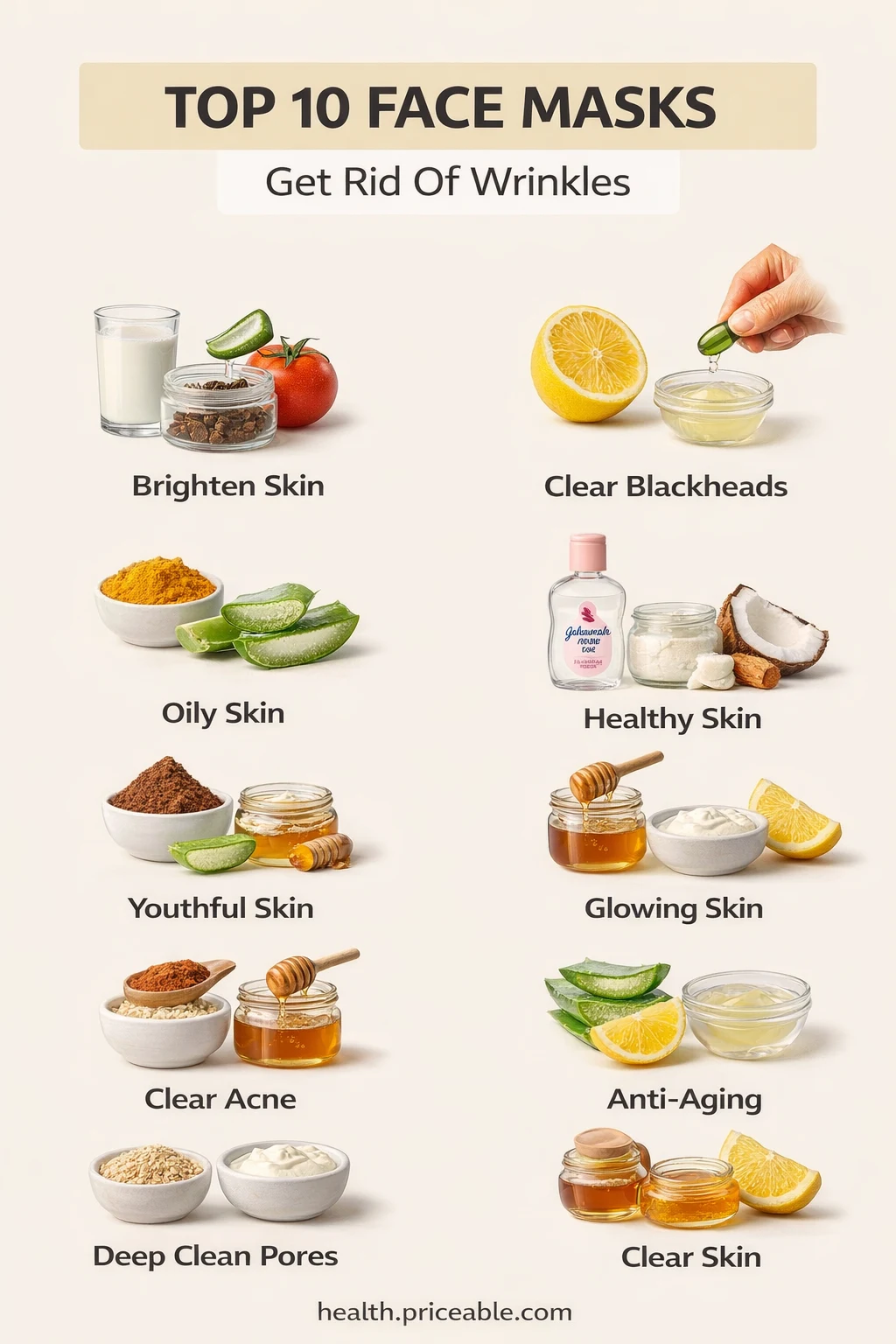
The Top 10 DIY Face Masks (with exact ratios)
Each recipe makes about 1–2 uses. Use a clean bowl and spoon. Apply a thin, even layer and avoid the eye area.
1) Brighten Skin Mask (milk + coffee + aloe + tomato)
Best for: dull-looking skin that needs a “wake up” glow
Time: 8–10 minutes
Mix:
-
1 tbsp milk or plain yogurt
-
1 tsp very finely ground coffee (not coarse grounds)
-
1 tsp aloe vera gel
-
1 tsp tomato puree (or skip if you’re sensitive)
How to use:
Apply a thin layer. Rinse with lukewarm water. Follow with moisturizer.
Tip: Coffee grounds can be scratchy. If it feels gritty, swap coffee for 1 tsp cocoa powder.
2) Clear Blackheads Mask (cucumber + clay + a touch of lemon)
Best for: T-zone congestion and visible blackheads
Time: 6–8 minutes (don’t let it fully crack)
Mix:
-
1 tbsp kaolin or bentonite clay
-
1 tbsp cucumber juice (blend and strain)
-
1/8–1/4 tsp lemon juice (optional)
How to use:
Apply only to nose, chin, and forehead. Mist with water if it dries too fast. Rinse and moisturize.
Important: Lemon can sting and increases sun sensitivity for some people. If you’re prone to irritation, skip lemon and use cucumber + clay only.
3) Oily Skin Mask (aloe + turmeric)
Best for: oily shine and “greasy by noon” days
Time: 8–10 minutes
Mix:
-
1 tbsp aloe vera gel
-
1/4 tsp turmeric powder
-
1 tsp clay (optional for extra oil control)
How to use:
Apply a thin layer. Rinse well.
Stain warning: Turmeric can tint light towels and temporarily stain skin. Use a tiny amount and rinse thoroughly.
4) Healthy Skin Softening Mask (coconut + a few drops of baby oil)
Best for: very dry, rough-feeling skin
Time: 8 minutes
Mix:
-
1 tsp melted coconut oil
-
2–3 drops baby oil or squalane
-
1 tbsp plain yogurt (helps it spread and rinse clean)
How to use:
Apply thinly. Rinse with lukewarm water. Follow with moisturizer.
If you’re acne-prone: Skip this one. Oils can feel too heavy and may clog pores for some people.
5) Youthful-Looking Skin Mask (aloe + honey + cocoa)
Best for: dry-looking fine lines and dullness
Time: 10 minutes
Mix:
-
1 tbsp aloe vera gel
-
1 tsp honey
-
1/2 tsp cocoa powder
How to use:
Apply, relax, rinse. Finish with a hydrating moisturizer.
6) Glowing Skin Mask (yogurt + honey + lemon)
Best for: glow and smoother-looking texture
Time: 6–8 minutes
Mix:
-
1 tbsp plain yogurt
-
1 tsp honey
-
1/8 tsp lemon juice (optional)
How to use:
Apply a thin layer. Rinse gently.
Sensitive skin swap: Replace lemon with 1/2 tsp mashed banana for a softer feel.
7) Clear Acne-Calm Mask (oats + honey)
Best for: calming the look of redness and irritation
Time: 10 minutes
Mix:
-
1 tbsp finely ground oats (oat flour)
-
1 tsp honey
-
1–2 tsp warm water or plain yogurt to make a paste
How to use:
Press on gently. Don’t scrub. Rinse and moisturize.
Skip cinnamon: It’s common in DIY posts, but cinnamon can irritate a lot of people.
8) Anti-Aging Hydration Mask (aloe + glycerin)
Best for: a plumper, smoother-looking finish
Time: 10 minutes
Mix:
-
1 tbsp aloe vera gel
-
1/4 tsp vegetable glycerin (very small amount)
-
1 tsp water (to thin)
How to use:
Apply thinly. Rinse well and moisturize.
Why this works for “anti-aging” vibes: Hydration can make fine lines look less noticeable, especially around the mouth and cheeks.
9) Deep Clean Pores Mask (oats + yogurt + clay)
Best for: textured skin and clogged pores
Time: 8 minutes
Mix:
-
1 tbsp plain yogurt
-
1 tbsp ground oats
-
1 tsp clay
How to use:
Apply thinly. Rinse before it gets stiff. Moisturize.
10) Clear Skin Mask (clay + honey)
Best for: an all-around “reset” when skin feels blah
Time: 6–8 minutes
Mix:
-
1 tbsp clay
-
1 tsp honey
-
Water (a few drops at a time) until it becomes spreadable
How to use:
Apply to face or just the T-zone. Rinse. Follow with a fragrance-free moisturizer.
How often should you use these masks?
Most people do best with 1–3 times per week.
-
Dry or sensitive skin: 1 time per week
-
Oily or congested skin: 2 times per week
-
Clay-based masks: start once weekly and increase only if skin stays comfortable
Always moisturize afterward, and use sunscreen the next day, especially if you used lemon or yogurt.
Common mistakes (and how to fix them)
Mistake: Leaving clay masks on until they crack
Fix: Rinse when it feels “set” but not tight. If it dries too fast, lightly mist with water.
Mistake: Using harsh scrubs to “deep clean”
Fix: Choose finely ground oats, not coarse sugar or large coffee grounds. Texture should feel creamy, not sandpaper.
Mistake: Overdoing acids like lemon
Fix: Use tiny amounts or skip completely. If you want brightening, yogurt (lactic acid) is usually gentler.
Mistake: Not sealing in hydration after
Fix: Finish with a barrier-friendly moisturizer. If you’re very dry, add a thin layer of a simple face oil on top.
Simple “after-mask” routine for smoother-looking skin
-
Rinse with lukewarm water
-
Pat dry (don’t rub)
-
Apply a hydrating serum if you use one (think hyaluronic acid)
-
Moisturize
-
Morning after: sunscreen
Buying Guide: what to look for in a store-bought face mask
If DIY isn’t your thing (or you want something travel-friendly), store-bought masks can be great. Here’s how to shop smart without getting overwhelmed.
Pick the mask type that matches your goal
-
Hydrating mask (cream/gel): best for dryness and fine lines
-
Clay mask: best for oil control and congested pores
-
Sheet mask: best for quick hydration and glow
-
Overnight mask: best for a plumper look by morning (especially in winter)
Ingredients many people look for
-
For hydration: hyaluronic acid, glycerin, ceramides
-
For glow: niacinamide, gentle acids (PHA/lactic), vitamin C derivatives
-
For oil/pores: kaolin, bentonite, charcoal (not daily)
-
For breakouts: salicylic acid (BHA) in rinse-off masks, sulfur, zinc
Ingredients to be cautious with
-
Strong fragrance (especially if you’re sensitive)
-
High alcohol content (can feel tight and dry)
-
Very abrasive exfoliants (large “scrub” particles)
-
Essential oils if you’re reactive
Packaging and hygiene matters
If you’re acne-prone, a tube or pump is often cleaner than a wide-mouth jar. If you do buy a jar, use a clean spatula.
Price range reality check
-
Drugstore masks: great for basics like clay and hydration
-
Mid-range: often better textures, more elegant formulas
-
Premium: sometimes worth it for sensitive-skin formulas or specialized actives, but not required
Where to buy
Big-box stores, drugstores, beauty retailers, and reputable online shops are usually safer than random marketplace listings. Look for clear ingredient lists and recent reviews from people with your skin type.
FAQ: quick answers people search for
Do homemade face masks for wrinkles actually work?
They can help skin look smoother temporarily by hydrating and softening texture. They won’t permanently remove wrinkles, but they can support a healthier-looking glow.
What’s the best DIY mask for dry, crepey-looking skin?
Try aloe + glycerin (Mask #8) or aloe + honey + cocoa (Mask #5), then moisturize well afterward.
Can I use lemon on my face?
Some people tolerate tiny amounts, but many get irritation. If you try it, use very little, avoid broken skin, rinse well, and wear sunscreen the next day. When in doubt, skip it.
What’s the best mask type to buy for wrinkles?
Many people prefer hydrating cream masks or overnight masks with glycerin, ceramides, and hyaluronic acid for a plumper look.
How do I deep clean pores without wrecking my skin barrier?
Use gentle clay masks briefly and avoid over-drying. Mask #9 (oats + yogurt + clay) is a balanced option.
Can I store leftover DIY mask in the fridge?
It’s best fresh. If it contains yogurt, store it in a sealed container up to 24 hours and discard if it smells off. Don’t store mixtures with lemon.
Should I moisturize after a clay mask?
Yes. Clay can strip moisture. A simple, fragrance-free moisturizer helps reduce tightness and flaking.
How often should I use a face mask?
Most people do well with 1–3 times per week, depending on dryness, sensitivity, and how strong the mask is.
If you want, I can turn these into a tighter “choose your mask by skin type” version (dry, oily, sensitive, combination) while keeping the same 10 recipes.