If you eat a carnivore style diet (or very low carb), you might notice something frustrating in the first days or weeks: headaches, low energy, dizziness, muscle cramps, and “flat” workouts.
Most people assume they just need more willpower. But very often, it’s an electrolyte issue. When carbs drop, your body tends to release more water and sodium. That can shift other electrolytes too especially potassium and magnesium which are involved in muscle contraction, hydration balance, and nerve signaling. Discover Carnivore Electrolyte Foods to Help Cramps, Fatigue, and “Keto Flu” Symptoms.
Sodium Foods
Sodium is usually the first electrolyte people run low on during low-carb phases. Low sodium can feel like headaches, lightheadedness, and low stamina.
Salt
Salt is the simplest sodium “tool” on carnivore.
How to use
- Add a pinch to water (especially in the morning)
- Salt your meat more generously than you did before
Why it matters
Sodium helps maintain fluid balance and supports normal nerve and muscle function.
Bone Broth
Bone broth can be a gentle sodium source that also feels soothing when appetite is low.
How to use
- Sip 1 mug between meals
- Use as a base for meat soups
Quick note
Sodium content varies widely by brand and recipe, so taste it and adjust.
Sardines
Sardines naturally contain minerals and are often salty (especially canned varieties).
How to use
- Add to meals 2–3 times per week
- Pair with broth on days you feel “draggy”
Calcium Foods
Calcium is about more than bones. It supports muscle contraction and nerve signaling too.
Eggshells
Eggshells are mostly calcium carbonate, but they’re not a standard food for most people.
If someone uses eggshells
- They must be cleaned and properly prepared to reduce contamination risk
- It’s usually easier and safer to get calcium from foods like dairy and fish with bones
Parmesan Cheese
Parmesan is a concentrated calcium source because it’s aged and dense.
How to use
- Shave onto burgers or eggs
- Add to ground beef bowls for flavor and minerals
Quick note
It’s also high in sodium, so it can “double dip” for electrolytes.
Sardines
Sardines (especially if you eat the soft bones) are one of the most carnivore-friendly calcium foods.
How to use
- Mash into a simple salad with salt and lemon
- Eat with eggs for an easy high-protein meal
Potassium Foods
Potassium supports muscle function and fluid balance. On carnivore, potassium can be trickier because many high-potassium foods are plants.
Bacon
Bacon contains potassium, but it’s not usually a “high-potassium” food compared to fruits and potatoes.
How to use
- Think of bacon as a sodium-heavy food with some potassium
- Use it as a flavor booster, not your main potassium strategy
Wild Salmon
Salmon is a more helpful potassium food than many people realize, and it also supports recovery with protein and omega-3 fats.
How to use
- 2–4 times per week if you can
- Bake or pan-sear and salt to taste
Beef
Beef provides potassium, protein, iron, and zinc—making it a steady foundation food.
How to use
- Rotate cuts (ground beef + steak + slow-cooked roasts)
- Salt after cooking for best flavor and control
Magnesium Foods
Low magnesium can show up as tight muscles, cramps, sleep issues, and stress sensitivity.
Salmon Roe
Salmon roe is nutrient-dense and often included in “nose-to-tail” style carnivore eating.
How to use
- Small serving as a topper (it’s rich and salty)
- Add to eggs or fish meals
Sardines
Sardines show up again because they’re a true mineral “multi-tasker.”
How to use
- A few times a week for steady mineral intake
- Easy backup food when you don’t want to cook
Bacon
Bacon contains some magnesium, but it’s not the most reliable magnesium strategy.
How to use
- Use bacon as a support food, not a fix-all
- If cramps persist, consider magnesium-rich fish more often (and speak with a clinician if needed)
How to Use This List as a Simple Daily Plan
If you want an easy, repeatable structure:
- Morning: salted water or bone broth
- Lunch: beef + parmesan (or sardines)
- Dinner: wild salmon + salt
- A few times per week: sardines and/or salmon roe
This keeps sodium consistent while layering in calcium, potassium, and magnesium.
When You’ll Notice Relief
Electrolyte changes can happen fast, but don’t expect perfection overnight.
- Within 24–48 hours: fewer headaches, less dizziness (often sodium-related)
- Within 3–7 days: fewer cramps and better sleep (often magnesium + overall hydration)
- Within 2–4 weeks: steadier energy and workouts as your body adapts
Quick Safety Notes
- If you have high blood pressure, kidney disease, heart failure, or take diuretics/ACE inhibitors, do not aggressively increase salt or potassium without medical guidance.
- Bacon and parmesan can be high in sodium. If you swell easily or feel “puffy,” adjust portions.
- If you choose eggshells, be careful with preparation for food safety. Many people do better using dairy or fish with bones instead.
Final Takeaway
On a carnivore diet, electrolytes are not a small detail. They often decide whether you feel strong… or miserable.
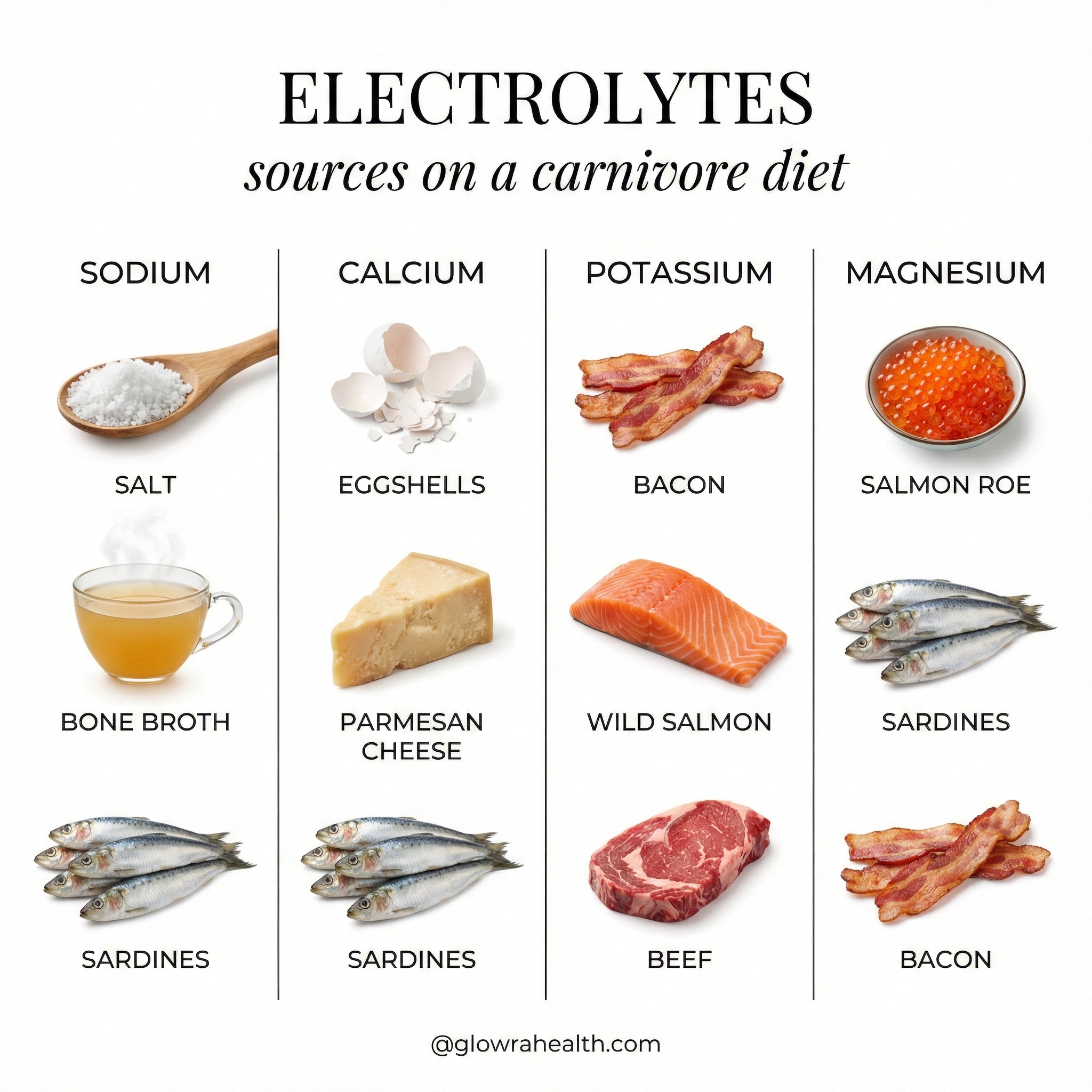
Use the image list as your foundation:
- Sodium: salt, bone broth, sardines
- Calcium: eggshells, parmesan cheese, sardines
- Potassium: bacon, wild salmon, beef
- Magnesium: salmon roe, sardines, bacon
Start simple, stay consistent, and adjust based on how your body feels.
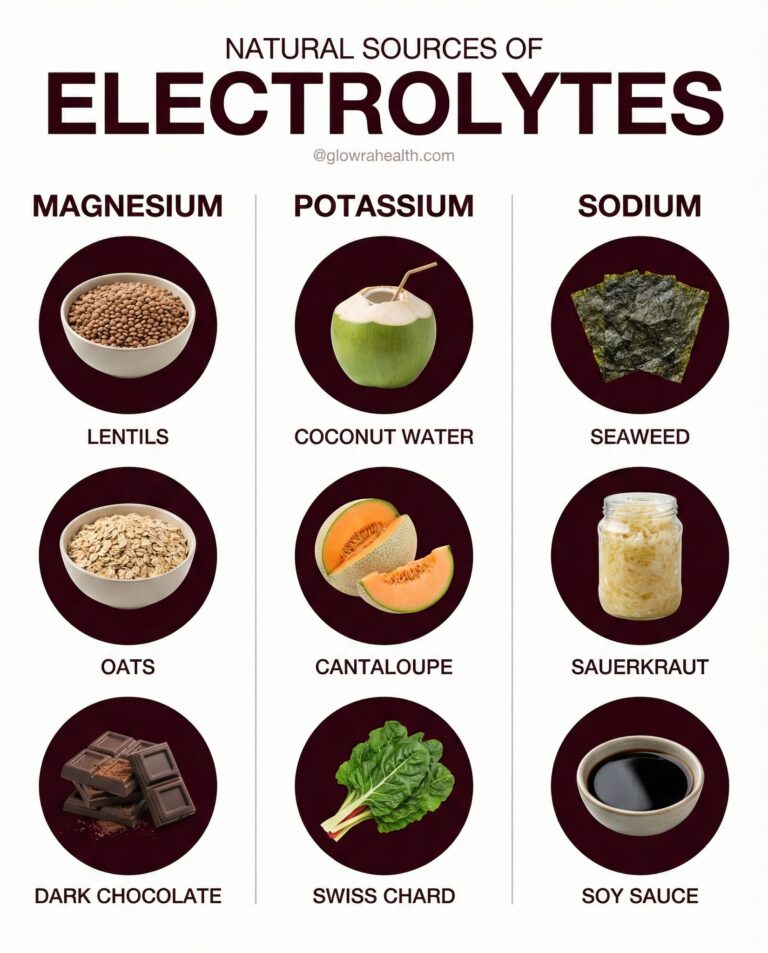
Read more ” 19 Best Natural Electrolyte Foods That Rehydrate You Better Than Plain Water”