Inflammation is not always a bad thing. It is part of your body’s natural defense system.
However, chronic, low-grade inflammation is linked to joint discomfort, slow recovery, fatigue, and many metabolic concerns.
The good news is that daily food choices strongly influence inflammation balance. You do not need extreme diets or supplements to start supporting your body. Instead, focusing on a few well-studied whole foods can make a meaningful difference over time.
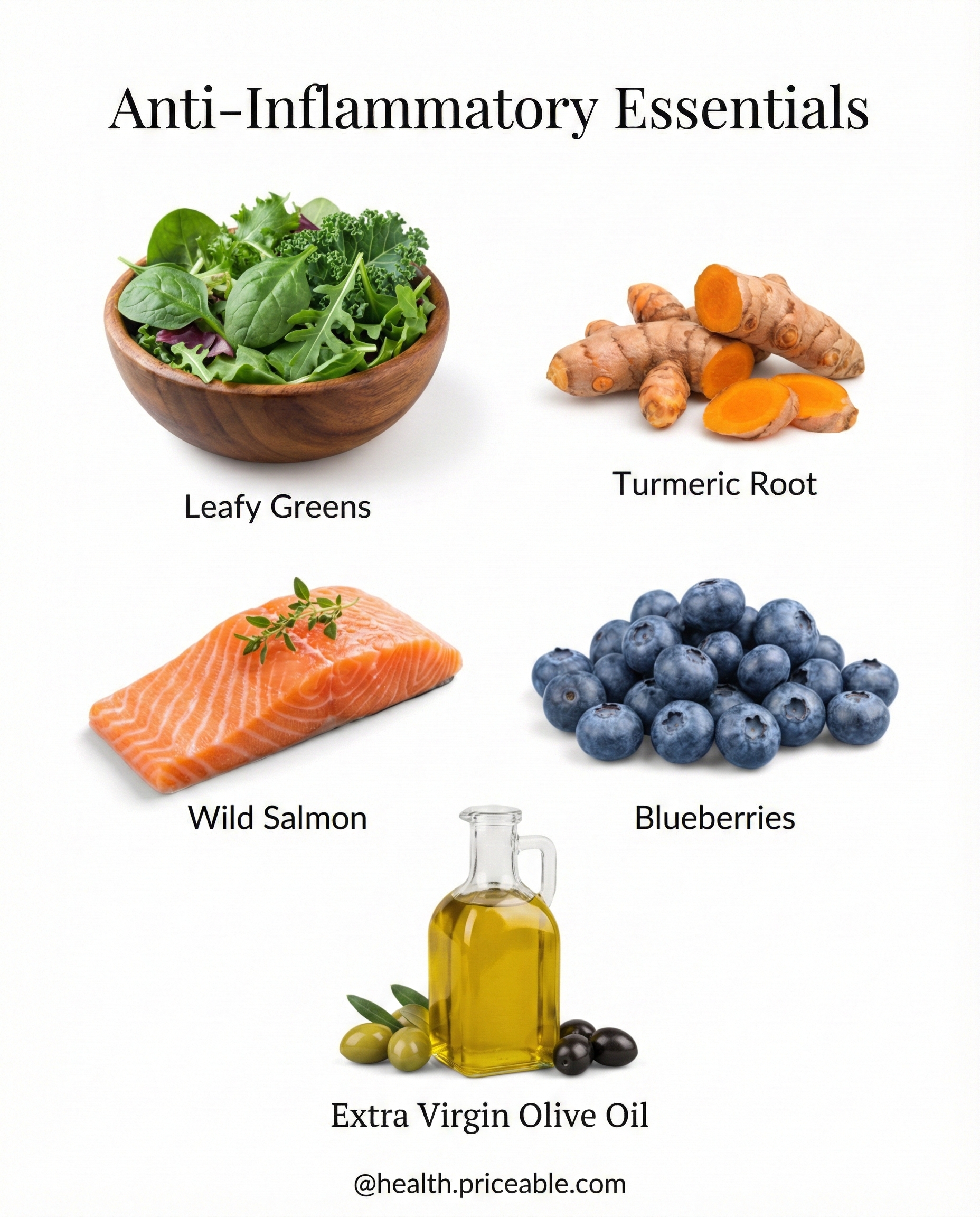
Leafy Greens (Spinach, Kale, Mixed Greens)
Why leafy greens help inflammation
Leafy greens are rich in vitamins A, C, and K, along with magnesium and plant polyphenols. These nutrients support antioxidant defenses and help regulate immune signaling.
Their fiber content feeds beneficial gut bacteria, and gut health plays a major role in inflammation balance throughout the body.
Leafy greens do not act like medication, but regular intake is associated with lower oxidative stress markers and better metabolic health.
Key nutrients
- Vitamin C for antioxidant protection
- Vitamin K for normal inflammatory signaling
- Magnesium for muscle and nerve function
- Dietary fiber for gut support
Easy ways to use
- Toss into salads with olive oil
- Lightly sauté with garlic
- Add to soups or smoothies
Turmeric Root
Why turmeric helps inflammation
Turmeric contains curcumin, a bioactive compound studied for its role in inflammation pathways such as NF-κB signaling. Curcumin helps modulate inflammatory responses rather than shutting them down completely.
Curcumin has low absorption on its own, which is why traditional use combines turmeric with fat and black pepper to enhance bioavailability.
Turmeric does not eliminate pain instantly. Benefits are gradual and cumulative with consistent intake.
Key compounds
- Curcumin (polyphenol)
- Small amounts of manganese and iron
Easy ways to use
- Add fresh turmeric to soups or stews
- Make golden milk with milk or plant milk + black pepper
- Use in roasted vegetables with olive oil
Wild Salmon
Why salmon helps inflammation
Salmon provides high-quality protein plus omega-3 fatty acids (EPA and DHA). These fats are among the most researched nutrients for inflammation balance.
A 2024 systematic review of randomized controlled trials examined omega-3 intake and outcomes related to post-exercise inflammation, muscle damage, and recovery. Results suggest omega-3s help regulate inflammatory markers over time.
This does not mean salmon eliminates soreness overnight, but consistent intake supports a recovery-friendly diet.
Key nutrients
- Omega-3 fats (EPA & DHA)
- Complete protein
- Vitamin D and selenium
Easy ways to use
- Bake salmon and pair with leafy greens
- Add to grain bowls for a balanced meal
- Use leftover salmon in omelets or salads
Blueberries
Why blueberries help inflammation
Blueberries are rich in anthocyanins, antioxidant compounds that help reduce oxidative stress. Physical activity, illness, and chronic stress all increase free-radical production.
Antioxidant-rich fruits like blueberries support the body’s natural recovery systems, especially when consumed regularly.
They do not “turn off” inflammation but help maintain a healthier balance.
Key nutrients
- Anthocyanins
- Vitamin C
- Fiber for digestive health
Easy ways to use
- Add to yogurt or oatmeal
- Blend into smoothies
- Eat fresh as a snack
Extra Virgin Olive Oil
Why olive oil helps inflammation
Extra virgin olive oil is high in monounsaturated fats and contains polyphenols such as oleocanthal, which has been shown to influence inflammation pathways.
The benefit comes when olive oil replaces refined seed oils or trans fats, not when simply added on top of excess calories.
Mediterranean-style eating patterns consistently associate olive oil intake with lower inflammation markers.
Key compounds
- Oleic acid (monounsaturated fat)
- Oleocanthal and hydroxytyrosol (polyphenols)
Easy ways to use
- Drizzle over salads and vegetables
- Use as a finishing oil on fish
- Mix with lemon for a simple dressing
How to Build an Anti-Inflammatory Plate Using These Foods
You do not need perfection. Focus on combination and consistency.
A simple anti-inflammatory meal could include:
- Wild salmon
- Leafy greens dressed with olive oil
- Turmeric used in cooking
- Blueberries as a side or dessert
This pattern supplies protein, healthy fats, antioxidants, and fiber in one meal.
When Will You Notice Changes?
Set realistic expectations:
- Short term (days): improved digestion and meal satisfaction
- 2–4 weeks: steadier energy and recovery
- Long term: improved inflammation balance as part of an overall healthy lifestyle
Food supports the body. It does not replace medical care.
Safety Notes
- Turmeric supplements may interact with blood-thinning medications.
- Omega-3 intake should be balanced if you have bleeding disorders.
- Anti-inflammatory foods support health but do not treat disease.
Final Takeaway
Anti-inflammatory eating is not about one superfood.
It is about regular intake of nutrient-dense foods that support immune balance, gut health, and recovery.
Leafy greens, turmeric, wild salmon, blueberries, and extra virgin olive oil form a simple, science-supported foundation you can build on daily.