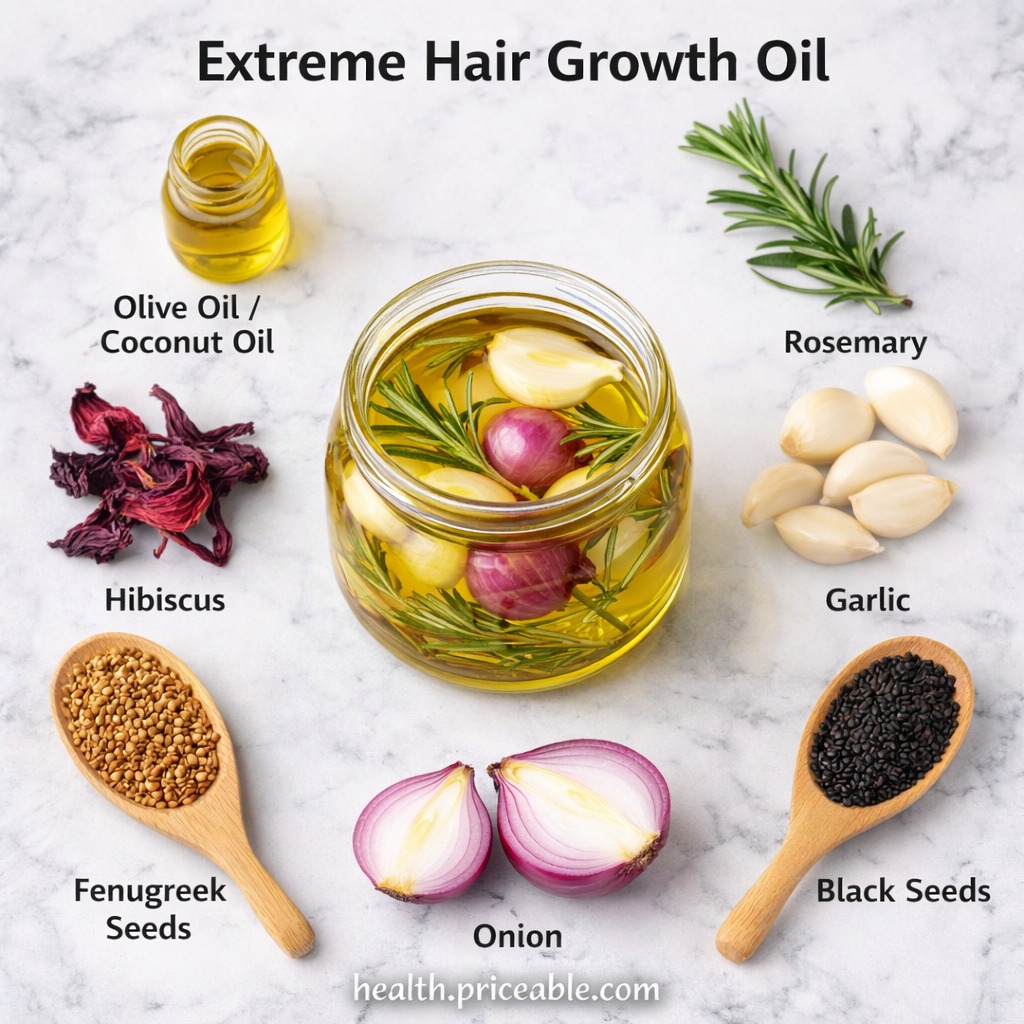
If you’ve ever tried hair oiling and felt like it “did nothing,” the issue is usually the formula or the routine, not you. This DIY hair growth oil combines rosemary, onion, fenugreek, hibiscus, garlic, and black seeds in a carrier oil to support a healthier scalp and reduce breakage over time. Below you’ll get the exact ratios, two infusion options, how to apply it without greasiness, what to avoid, and what to look for if you’d rather buy a ready-made oil.
DIY hair growth oil recipe: ingredients, ratios, and options
What you’ll need
Carrier oil (choose 1 or blend)
-
1 cup (240 mL) olive oil (great slip, scalp-friendly)
-
or 1 cup (240 mL) coconut oil (more sealing, heavier feel)
-
Optional blend: 1/2 cup olive + 1/2 cup coconut for a balanced texture
Infusion ingredients
-
2 tbsp dried rosemary (or 3–4 tbsp fresh, fully dried)
-
1 tbsp fenugreek seeds
-
1 tbsp black seeds (nigella/black cumin seeds)
-
1 tbsp dried hibiscus petals
-
1 tsp dried onion flakes (or 1 tbsp onion powder)
-
1 tsp dried garlic flakes (or 1/2 tsp garlic powder)
Fresh onion/garlic warning (important)
Fresh onion and garlic contain water. Water + oil can spoil faster and may cause irritation for some scalps. If you insist on using fresh pieces (like in the infographic), only do it if they’re fully dehydrated first, and plan to refrigerate and use within 5–7 days. For most people, dried forms are safer and more stable.
Tools
-
Small saucepan or double boiler setup
-
Heat-safe glass jar with lid
-
Fine strainer or cheesecloth
-
Funnel (optional)
-
Dark glass bottle or jar for storage
How to make it: 2 infusion methods
Method 1: Warm infusion (fastest)
-
Add your carrier oil to a heat-safe jar or bowl.
-
Stir in rosemary, fenugreek, black seeds, hibiscus, onion flakes, and garlic flakes.
-
Place the jar in a saucepan with a few inches of water (double boiler style).
-
Warm on low heat for 45–60 minutes. The oil should feel warm, not hot.
-
Turn off heat and let it sit for 2–12 hours to deepen the infusion.
-
Strain through cheesecloth or a fine strainer.
-
Bottle the oil in a clean, dry container.
Best for: people who want to start using it the same day.
Method 2: Slow infusion (stronger scent, lowest heat)
-
Combine everything in a clean, dry jar.
-
Seal tightly and store in a dark cabinet for 10–14 days.
-
Shake gently once per day.
-
Strain and bottle.
Best for: people who prefer no heat and don’t mind waiting.
How to use hair growth oil without looking greasy
For scalp support (the main routine)
-
Part hair into sections.
-
Apply 1–2 teaspoons total to the scalp (less for fine hair).
-
Massage with fingertips for 3–5 minutes.
-
Leave on 30–60 minutes, then shampoo.
-
Optional: leave overnight 1–2x/week if your scalp tolerates it, but protect your pillow and don’t overdo the amount.
For lengths and ends (breakage support)
-
Rub 2–4 drops between palms.
-
Smooth over mid-lengths and ends only.
-
This is especially helpful if you heat-style or have dry ends.
How often to use it
-
Normal to oily scalp: 1–2x per week
-
Dry scalp or protective styles: 2–4x per week (use smaller amounts)
-
If you get buildup easily: start at once weekly and adjust.
Storage and shelf life
-
Store in a dark glass bottle away from heat and sunlight.
-
If you used only dried ingredients and everything stayed dry: typically up to 6–8 weeks.
-
If you used any fresh ingredients: refrigerate and use within 5–7 days.
-
Discard immediately if you notice cloudiness (beyond normal oil thickening), off smell, fizzing, or scalp stinging that wasn’t there before.
Common mistakes that make DIY hair oil “not work”
-
Using fresh onion/garlic in oil (raises spoilage risk and irritation)
-
Overheating the oil (can create a “cooked” smell and reduce quality)
-
Skipping the strain (bits can irritate the scalp and make the oil go rancid faster)
-
Applying too much (more oil doesn’t mean better results—just more buildup)
-
Oiling a dirty scalp (product + sweat + oil can feel itchy)
-
Inconsistent use (most routines need a few weeks to judge fairly)
Safety notes (patch test and sensitivity)
-
Patch test behind the ear or on inner arm for 24 hours before scalp use.
-
Avoid using on broken skin, fresh scratches, or active scalp flare-ups.
-
Onion/garlic can be “hot” ingredients for sensitive scalps—if you’re prone to redness, use half the amount or skip them.
-
If you’re pregnant, nursing, or using prescription scalp treatments, it’s smart to check with a clinician before adding new topicals.
Buying guide: what to look for if you’d rather purchase one
Not everyone wants to simmer herbs in a kitchen jar. If you’re shopping for a ready-made hair oil, here’s what matters most.
Ingredients and formula checklist
-
A clear carrier oil base you tolerate (olive, coconut, jojoba, grapeseed, argan)
-
Rosemary extract or rosemary oil listed clearly (not hidden under “fragrance”)
-
Optional boosts: black seed oil, hibiscus, fenugreek
-
Minimal extras if you’re sensitive: fragrance-free or lightly scented
-
No heavy fillers if you hate buildup: avoid overly thick blends, waxy feel, or lots of silicones (unless you specifically want slip)
Packaging and quality cues
-
Dark glass bottle or opaque container
-
A clean ingredient list you can understand
-
A dropper or nozzle for easy scalp application
Price range (what’s typical)
-
Budget: basic carrier + rosemary blend
-
Mid-range: multi-oil blend with extracts
-
Higher-end: cold-pressed oils + standardized botanical extracts in better packaging
Where people typically buy
-
Drugstores and big-box retailers for simple scalp oils
-
Health food stores for cold-pressed options
-
Online retailers when you want specific ingredients and bottle size options
FAQ
Does rosemary really help with hair growth?
Some people find rosemary-based scalp routines support a healthier scalp environment and less shedding over time. Results vary, and consistency matters more than intensity.
Can I use coconut oil if my scalp gets oily?
You can, but coconut oil is heavier. If you’re prone to buildup, use olive oil, grapeseed oil, or a lighter blend, and apply smaller amounts.
Can I leave this oil on overnight?
Many people do, but start with 30–60 minutes first. If your scalp feels itchy or you wake up with buildup, switch to shorter wear times.
How long until I notice results?
You might notice softer hair and less breakage sooner. For scalp-related changes, give a consistent routine 4–8 weeks before judging.
Will onion and garlic make my hair smell?
They can. Using dried forms helps, and a double shampoo usually removes most odor. You can also add a few drops of a scalp-friendly essential oil only if you tolerate fragrance (patch test first).
Is this okay for colored or chemically treated hair?
Generally, oiling the lengths can support dryness and shine. Keep the strongest infusion mostly on the scalp and avoid saturating freshly colored hair for the first few days after coloring.
Can this clog pores or cause scalp acne?
It can if you use too much or don’t cleanse well. Use less oil, focus on massage, shampoo thoroughly, and reduce frequency if bumps appear.
Can I use this with other hair growth products?
Often yes, but layering too many actives can irritate the scalp. If you use medicated treatments, consider spacing them out and ask a professional if you’re unsure.