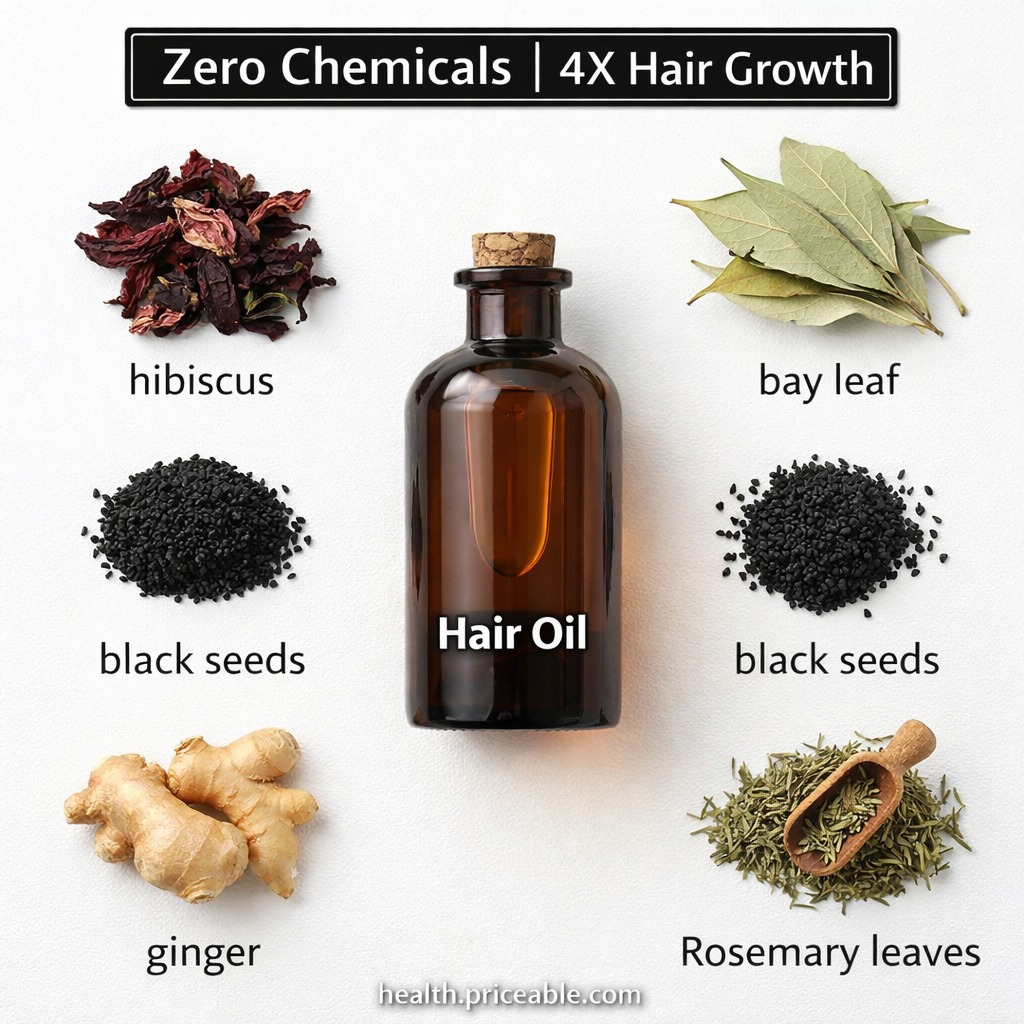
If you’ve been seeing “zero chemicals” hair oil posts all over social media, you’re not alone. While everything is technically made of chemicals, what most people really mean is: no harsh additives, no mystery fragrance, and no heavy buildup ingredients. This DIY hair growth oil uses a simple herbal infusion with hibiscus, rosemary, bay leaf, black seeds, and ginger to support a healthier-feeling scalp and stronger-looking hair over time.
Results vary, but a consistent routine (plus gentle hair care) is where most people notice the biggest difference.
DIY hair growth oil recipe (hibiscus, rosemary, bay leaf, black seed, ginger)
This makes about 8 oz (1 cup) of infused oil.
What you’ll need
Herbs and seeds (dried is best)
-
2 tbsp dried hibiscus petals
-
1 tbsp dried rosemary leaves
-
4 dried bay leaves, lightly crushed
-
1 tbsp black seeds (see note below)
-
1 tsp dried ginger pieces or dried ginger powder
Carrier oil (choose one or blend)
-
1 cup jojoba oil (great for most scalps), or
-
3/4 cup jojoba oil + 1/4 cup castor oil (thicker, great for very dry hair), or
-
1 cup olive oil (budget-friendly, heavier feel)
Tools
-
Small saucepan + heat-safe bowl (double-boiler setup)
-
Fine mesh strainer + cheesecloth
-
Clean, dry amber glass bottle (dropper or flip-top)
-
Optional: funnel, label
Quick note on “black seeds”
The graphic shows “black seeds” twice. In hair DIYs, people usually mean black seed (nigella/black cumin), but some also use black sesame. If you’re shopping, look for whole seeds with a fresh aroma (not stale or dusty). Either can work in an infusion.
Method A: Quick warm infusion (same day)
-
Add your dried herbs/seeds to a heat-safe bowl.
-
Pour in 1 cup carrier oil.
-
Place the bowl over a saucepan with a few inches of simmering water (low heat).
-
Warm gently for 60–90 minutes, stirring occasionally. You want it warm, not frying hot.
-
Remove from heat and let it cool completely.
-
Strain through a mesh strainer lined with cheesecloth. Squeeze gently.
-
Bottle it in a clean, dry amber container and label the date.
Method B: Slow cold infusion (best for minimal heat)
-
Put dried herbs/seeds in a clean, fully dry jar.
-
Cover with 1 cup carrier oil (herbs fully submerged).
-
Close tightly and store in a dark cabinet for 2–3 weeks.
-
Shake gently every couple of days.
-
Strain and bottle.
Storage and shelf life
-
Keep it in a cool, dark place.
-
Use dry tools and dry herbs to reduce spoilage risk.
-
For most home infusions, aim to finish within 3–4 months. If it smells “off,” toss it.
-
Optional: add a few drops of vitamin E oil to slow oxidation (not a preservative, but can help the oil stay fresher).
Why these ingredients are popular for scalp oil
These aren’t magic—but they’re common in traditional hair routines because they can support comfort, softness, and the look of thicker hair.
-
Hibiscus: often used to help hair feel softer and more manageable
-
Rosemary: popular for scalp massage routines and a “revived” scalp feel
-
Bay leaf: used in herbal hair care for cleansing-feeling routines
-
Black seed (nigella) or black sesame: rich, nourishing feel in oils
-
Ginger (dried): warming, used in scalp massage blends
If you have a sensitive scalp, start with a lighter carrier oil (jojoba) and use less ginger.
How to use this oil for best results
Simple routine (2–4 times per week)
-
Part hair in sections.
-
Apply a small amount to the scalp (think: light sheen, not dripping).
-
Massage for 3–5 minutes using fingertips or a soft scalp massager.
-
Leave on for at least 30 minutes (or overnight if your scalp tolerates it).
-
Shampoo thoroughly, then condition as usual.
How much should you use?
-
Fine hair: 1–2 teaspoons total
-
Thick/coily hair: 1–2 tablespoons total
If your hair gets greasy fast, use less oil and shorten the leave-on time.
Common mistakes (and easy fixes)
-
Using fresh ginger in oil → Water increases spoilage risk. Use dried ginger, or fully dehydrate fresh slices first.
-
Overheating the infusion → Scorched herbs can smell burnt and irritate the scalp. Keep heat low and gentle.
-
Not straining well → Tiny particles can make the oil feel gritty. Use cheesecloth for a cleaner finish.
-
Applying too much → More isn’t better. Start small to avoid buildup and extra shampooing.
-
Skipping consistency → Most routines take weeks of steady use to judge whether you like the results.
Safety notes (don’t skip)
-
Do a patch test: apply a drop behind your ear or on your inner arm and wait 24 hours.
-
Avoid use on broken skin or an irritated, inflamed scalp.
-
Stop if you get itching, burning, or more shedding.
-
If you’re pregnant, breastfeeding, or managing a scalp condition, check with a clinician before using strong herbal blends.
Buying guide: what to look for before you spend money
Even a DIY recipe works better when the ingredients are good quality.
Best carrier oil for your hair type
-
Jojoba oil: lightweight, scalp-friendly, minimal greasiness
-
Castor oil: very thick; best diluted for easier wash-out
-
Olive oil: budget option; heavier feel, can be too rich for fine hair
-
Fractionated coconut oil: lighter than regular coconut oil and stays liquid
Herb and seed quality checklist
-
Choose organic dried hibiscus and food-grade rosemary when possible.
-
Buy whole bay leaves (not powder) for cleaner straining.
-
For black seeds, choose a reputable seller with sealed packaging and a clear “best by” date.
Packaging that’s actually worth it
-
An amber glass bottle helps protect oils from light.
-
A dropper top is helpful for controlled scalp application (less waste, less mess).
-
Cheesecloth and a small funnel make straining/bottling easier and cleaner.
FAQ
Does DIY hair growth oil actually grow hair?
Some people find scalp oils support the look and feel of healthier hair, but results vary and depend on consistency, scalp health, and genetics.
How often should I use this oil?
Most people do well with 2–4 times per week. If your scalp is oily or sensitive, start at 1–2 times weekly.
Can I leave it on overnight?
Yes, if your scalp tolerates it. Start with 30–60 minutes first to see how your skin responds.
Which “black seeds” should I buy?
If you see “black seed (nigella/black cumin),” that’s the most common for hair oil DIYs. Black sesame is another option. Choose fresh, sealed seeds from a reputable source.
Will rosemary irritate my scalp?
It can for some people, especially in strong blends. Use a gentle carrier oil, keep proportions moderate, and patch test.
How do I wash it out without drying my hair?
Apply shampoo to dry hair first (before water), massage, then rinse and shampoo again if needed. Follow with conditioner.
Can I add essential oils?
You can, but it’s optional and not ideal for sensitive scalps. If you do, keep it very low and patch test carefully.
How long does infused hair oil last?
If everything stays dry and clean, aim to use it within 3–4 months and store it away from heat and sunlight.
If you want, I can adapt this into a version for fine/oily hair (lighter blend, easier wash-out) or very dry/coily hair (richer blend, more slip).