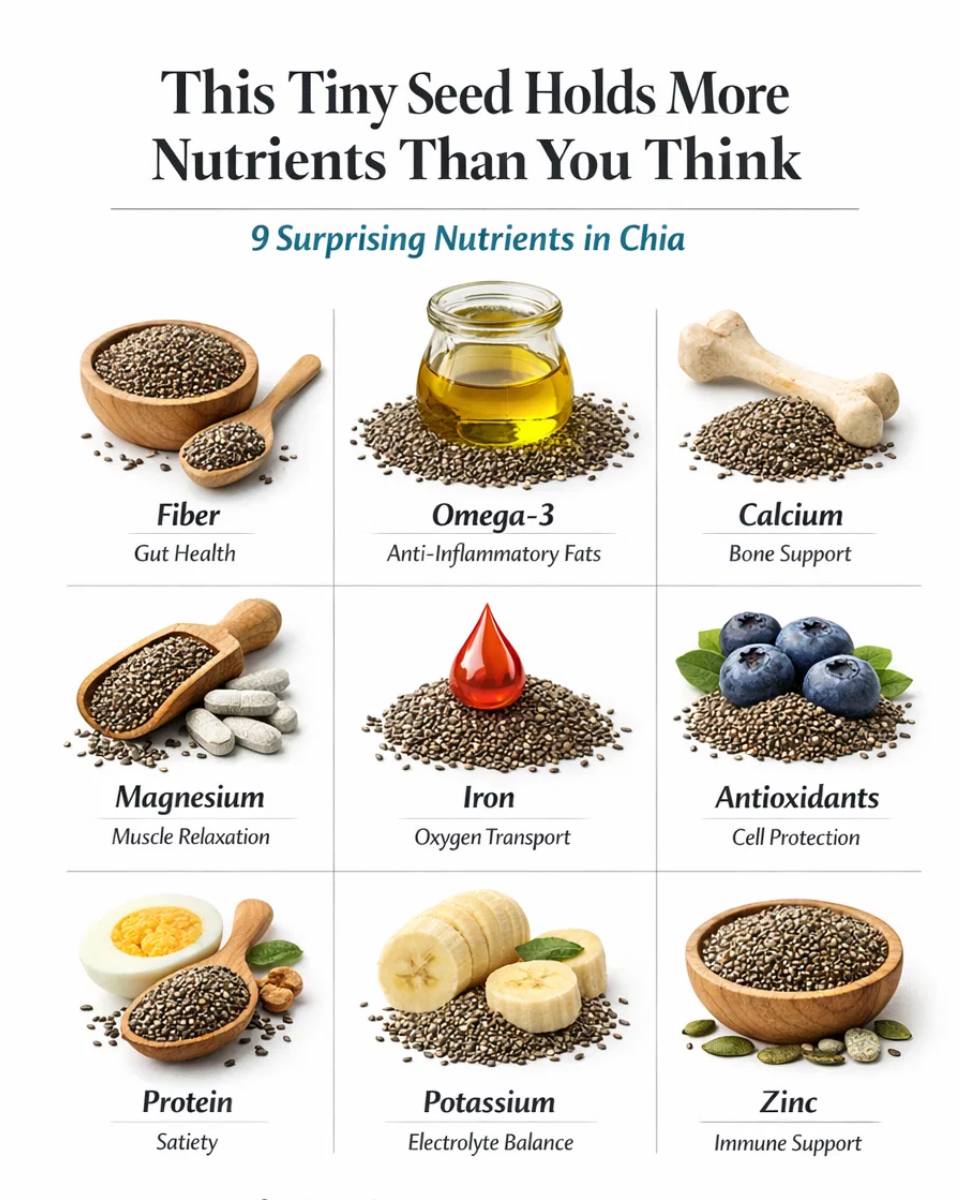
Most people know chia seeds are packed with nutrients. That’s easy to see from any nutrition chart.
But the real reason chia seeds are interesting isn’t just what they contain — it’s how they behave inside the body.
These tiny seeds act very differently from most foods once they interact with water and digestion.
Chia Seeds Form a Natural “Gel” in Your Digestive System
When chia seeds absorb liquid, they expand and create a gel-like fiber layer.
This gel slows down digestion and changes how nutrients are absorbed.
Instead of sugar entering the bloodstream quickly, digestion becomes more gradual. That’s why many people feel longer-lasting fullness and steadier energy after eating chia.
This effect is similar to what researchers call viscous fiber, which can help moderate blood sugar spikes.
They Feed Gut Bacteria (Not Just Your Body)
A large portion of chia seeds’ fiber is soluble fiber, which functions as food for beneficial gut bacteria.
Your gut microbiome turns this fiber into short-chain fatty acids, compounds that support:
• gut lining health
• inflammation control
• metabolic balance
In other words, chia seeds don’t just nourish you — they nourish the bacteria that help regulate your health.
Portion Size Matters More Than People Realize
Because chia seeds absorb 10–12 times their weight in water, eating too many dry seeds can cause digestive discomfort.
A practical amount for most people is:
1–2 tablespoons per day
More than that usually doesn’t add extra benefit and may cause bloating if the body isn’t used to high fiber intake.
Hydration Makes a Big Difference
Chia seeds work best when they are soaked or mixed into liquid foods like:
• yogurt
• smoothies
• oatmeal
• overnight chia pudding
This allows the seeds to expand before digestion and makes the fiber easier for the body to handle.
Consistency Beats Quantity
The biggest benefits of chia seeds come from regular consumption, not large amounts at once.
Small daily amounts provide steady fiber and healthy fats that gradually support:
• digestion
• appetite regulation
• metabolic balance
Think of chia seeds less as a “superfood fix” and more as a daily support ingredient.
Chia seeds aren’t powerful just because of their nutrients. Their real advantage is the way their fiber structure interacts with digestion, gut bacteria, and energy regulation.
That’s what makes this tiny seed surprisingly useful in everyday diets.