A good DIY face toner can help your skin feel refreshed, lightly hydrated, and cleaner after washing. Many people use toner to remove leftover residue, prep for serum or moisturizer, and support a smoother-looking finish without relying on harsh alcohol-based formulas.
The best part is that a simple DIY face toner does not need a long ingredient list. With a few kitchen staples, distilled water, and a clean glass spray bottle, you can make a fresh, alcohol-free toner at home that fits your skin goals.
Below are four easy toner recipes inspired by popular natural skincare ideas: one for soft-feeling skin, one for the look of large pores, one for brighter-looking skin, and one for mature-looking skin.
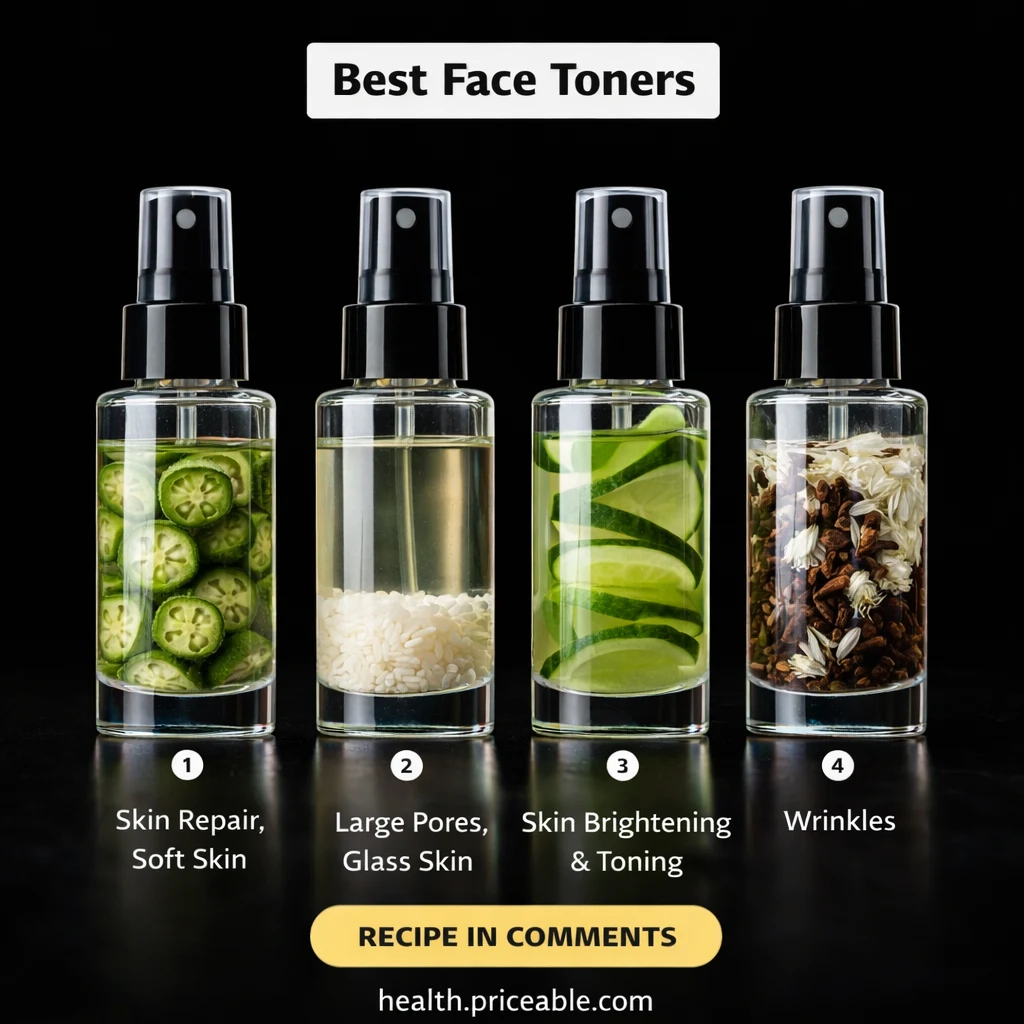
DIY Face Toner Recipes for Different Skin Goals
Before you start, wash your hands, use clean tools, and sterilize your bottle with hot water and soap. Because these are preservative-free toner recipes, make small batches and keep them refrigerated.
1) Okra Toner for Soft-Feeling, Smoother-Looking Skin
Okra creates a naturally slippery liquid that some people find soothing on dry or rough-feeling skin. It can leave behind a soft, cushioned feel that works well before moisturizer.
You’ll need:
-
4 fresh okra pods
-
1 cup distilled water
-
1 small fine-mist spray bottle or glass jar
How to make it:
-
Wash the okra well and slice it into small rounds.
-
Add the okra and distilled water to a small saucepan.
-
Simmer on low for 8 to 10 minutes.
-
Let it cool slightly, then strain the liquid.
-
If the mixture feels too thick, add 2 to 4 tablespoons of extra distilled water.
-
Pour into a clean bottle and refrigerate.
How to use it:
Spray lightly onto clean skin or apply with a cotton pad once a day. Follow with a fragrance-free moisturizer.
Storage:
Use within 3 days.
Best for:
Dry, dull, or rough-feeling skin.
2) Rice Water Toner for the Look of Large Pores and Smooth “Glass Skin”
Rice water is one of the most searched natural skincare recipes for a reason. It feels lightweight, easy to apply, and can leave skin looking fresh and smooth when used consistently.
You’ll need:
-
1/2 cup uncooked rice
-
1 cup distilled water
-
1 tablespoon food-grade rose water (optional)
-
1 clean bottle or jar
How to make it:
-
Rinse the rice quickly to remove surface dust.
-
Place the rice in a bowl with 1 cup of distilled water.
-
Let it soak for 30 minutes.
-
Swirl the rice gently, then strain the liquid.
-
Stir in rose water if you want a softer scent.
-
Transfer to a clean bottle and chill.
How to use it:
Apply with reusable toner pads or a cotton round after cleansing. Let it dry, then add serum and moisturizer.
Storage:
Use within 3 to 4 days.
Best for:
Normal to oily skin, or anyone who wants a smoother-looking finish.
Beginner tip:
Start with plain soaked rice water, not fermented rice water. It is usually the gentler option for first-time use.
3) Cucumber Toner for Bright-Looking, Refreshed Skin
Cucumber is one of the easiest ingredients for a cooling toner. It feels fresh, light, and simple, especially in warm weather or after cleansing.
You’ll need:
-
1/2 medium cucumber, peeled if waxed
-
1/2 cup distilled water
-
2 tablespoons aloe vera gel
-
1 tablespoon rose water (optional)
How to make it:
-
Chop the cucumber into chunks.
-
Blend it with distilled water until smooth.
-
Strain well through a fine mesh strainer or cheesecloth.
-
Stir in aloe vera gel and rose water.
-
Pour into a clean bottle and refrigerate.
How to use it:
Apply after washing your face, morning or night. This works especially well under a lightweight gel moisturizer.
Storage:
Use within 3 days.
Best for:
Skin that feels warm, tired, or looks a little dull.
Important note:
Some viral recipes use lemon or lime in brightening toners. For many people, citrus can sting and may increase sun sensitivity. A cucumber-and-aloe version is usually a safer everyday choice.
4) Clove and Chamomile Toner for Mature-Looking Skin
This recipe is a stronger option, so it is best for occasional use. Chamomile feels calming to many people, while clove is often used in natural beauty recipes for a more invigorating feel.
You’ll need:
-
1 cup hot distilled water
-
1 chamomile tea bag or 1 tablespoon dried chamomile
-
2 whole cloves
-
1 teaspoon vegetable glycerin (optional)
-
1 small bottle
How to make it:
-
Add the chamomile and cloves to hot distilled water.
-
Cover and steep for 8 to 10 minutes.
-
Strain and let it cool completely.
-
Stir in glycerin if you want a slightly more hydrating finish.
-
Pour into a clean bottle and refrigerate.
How to use it:
Apply 2 to 3 nights per week after cleansing. Follow with a simple night cream or barrier-support moisturizer.
Storage:
Use within 2 to 3 days.
Best for:
Mature-looking skin that needs a refreshing step in the evening.
Patch test reminder:
Clove can be irritating for sensitive skin. Test this on a small area first and stop if you notice burning, redness, or discomfort.
How to Use Homemade Toner in a Simple Routine
A DIY toner works best when you keep the rest of your routine simple.
Morning routine:
-
Gentle cleanser
-
DIY toner
-
Vitamin C serum or hydrating serum
-
Moisturizer
-
Broad-spectrum sunscreen
Evening routine:
-
Gentle cleanser
-
DIY toner
-
Moisturizer or overnight cream
For most people, toner once a day is enough. If your skin feels tight, dry, or reactive, cut back to a few times a week.
Common Mistakes to Avoid
Homemade skincare can be simple, but a few small mistakes can make a recipe less effective or more irritating.
1. Making a batch that is too large
Fresh toner has no preservative system. Small batches are safer and easier to finish on time.
2. Using tap water instead of distilled water
Distilled water is a better option for homemade skincare because it is cleaner and more consistent.
3. Storing toner at room temperature
Most fresh recipes should go straight into the fridge.
4. Adding too many ingredients
A toner does not need essential oils, perfume, or multiple acids to work. Simpler is often better.
5. Using harsh ingredients too often
Even natural ingredients can be irritating. Clove, citrus, and strong herbal infusions should be used carefully.
6. Applying toner to broken or freshly exfoliated skin
Wait until your skin barrier feels calm again.
Buying Guide: What to Look for Before You Make or Buy Toner
Even if you like DIY skincare, the right supplies make a big difference. If you are shopping for ingredients or comparing ready-made products, here is what to look for.
Best supplies for homemade toner
Choose a glass spray bottle or BPA-free fine-mist bottle that is easy to wash. A dark bottle is helpful if you store herbal blends in the fridge.
Pick distilled water instead of tap water, and look for food-grade rose water, pure aloe vera gel, and organic cucumber when possible. These are simple upgrades that can make your toner feel cleaner and more consistent.
For application, many people like reusable toner pads instead of disposable cotton rounds.
What to look for in a store-bought toner
If you decide to buy instead of make, look for an alcohol-free toner, a fragrance-free toner for sensitive skin, and a formula that fits your skin type. Many shoppers also prefer a pH-balanced toner, a non-comedogenic toner, or a hydrating toner with glycerin or aloe.
Ingredients to avoid if your skin is easily irritated
Watch out for strong fragrance, high amounts of denatured alcohol, and aggressive exfoliating acids if your skin is already dry or reactive.
Price range
A basic homemade toner usually costs very little per batch, especially if you already have rice, cucumber, or chamomile at home. Store-bought toners can range from budget drugstore options to premium skincare lines, so ingredient quality and bottle size matter more than branding alone.
Safety Notes Before You Try Any DIY Toner
Always do a patch test on your jawline or inner arm before applying a new toner to your full face.
Do not use these recipes on broken skin, active irritation, or right after a strong peel.
Keep every batch refrigerated and throw it out if it smells off, changes color, or looks cloudy in an unusual way.
If you have very sensitive skin, eczema-prone skin, or a history of reactions, a minimal store-bought formula may be a better option than fresh DIY skincare.
FAQ
What is the best DIY face toner for beginners?
Rice water toner is one of the easiest places to start. It uses very few ingredients, feels lightweight, and is simple to apply.
How often should I use a homemade face toner?
Once a day is enough for many people. If your skin is sensitive, start with 2 to 3 times a week.
How long does DIY toner last?
Most homemade toner recipes last about 2 to 4 days in the fridge because they do not contain preservatives.
Can I put homemade toner in a spray bottle?
Yes, as long as the bottle is very clean. A fine-mist spray bottle works well for watery toners like rice water or cucumber toner.
Is rice water toner good for oily skin?
Some people with oily or combination skin like rice water because it feels light and dries down quickly.
Can I use lemon juice in a DIY toner?
It is usually better to avoid it for daily use. Lemon juice can sting and may make skin more sensitive to sunlight.
What is the best toner for mature-looking skin?
A gentle toner that supports hydration is usually the better choice. A chamomile-based toner can be a simple option, while stronger ingredients should be used carefully.
Should I make toner every week or buy one instead?
That depends on your routine. Homemade toner is a good low-cost option if you do not mind small batches and refrigeration. A store-bought toner may be more convenient if you want longer shelf life, a preservative system, and travel-friendly packaging.
A DIY face toner can be a simple, affordable step if you want a fresh formula with ingredients you recognize. Keep the recipe small, stay consistent, and pay attention to how your skin responds. In many cases, the best toner is not the strongest one. It is the one your skin can use comfortably and regularly.