When people think about calming the nervous system, they often focus on meditation, sleep, or breathing exercises. But one factor that is frequently overlooked is nutrition.
The nervous system depends heavily on nutrients that regulate neurotransmitters, control inflammation, and stabilize blood sugar. Without these signals, the body stays in a constant stress response mode, making anxiety, fatigue, and brain fog more likely.
Certain foods naturally provide the compounds the brain and nerves need to maintain balance.
Why Food Matters for Nervous System Regulation
Your nervous system constantly switches between two states:
• Fight-or-flight (stress response)
• Rest-and-digest (recovery state)
Chronic stress, unstable blood sugar, and inflammation can keep the body stuck in a heightened alert mode. Nutrients such as magnesium, omega-3 fatty acids, vitamin C, and healthy fats help bring the system back to equilibrium.
This is why many people searching for foods for anxiety, nervous system support, or stress-reducing diet often end up focusing on specific nutrient-dense foods.
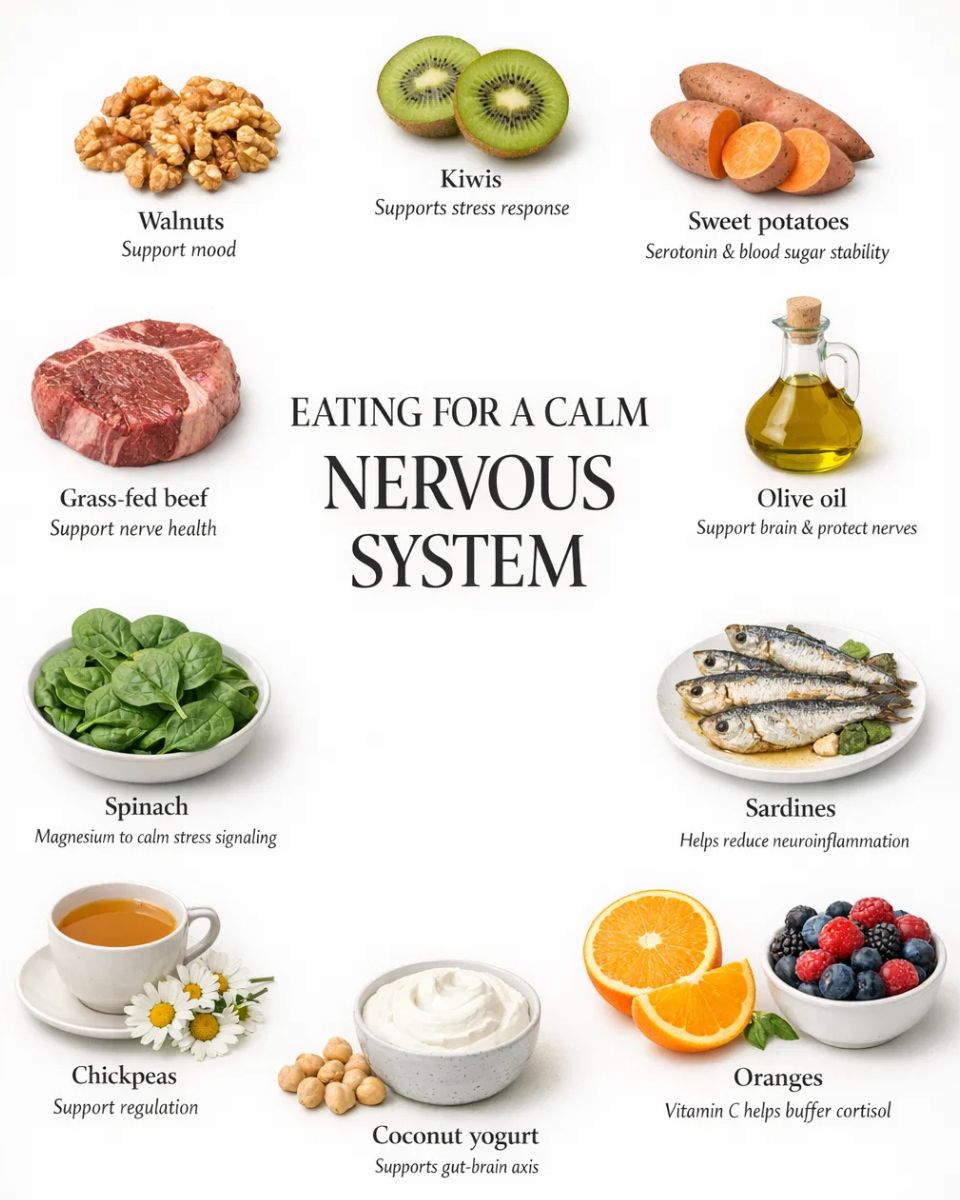
10 Foods That Support a Calm Nervous System
1. Walnuts
Walnuts are rich in omega-3 fatty acids and polyphenols, which help regulate mood and support brain health. Healthy fats are essential for maintaining stable communication between nerve cells.
They are often recommended in diets aimed at improving mood and reducing stress-related inflammation.
2. Kiwi
Kiwi is surprisingly powerful for stress regulation because it provides vitamin C and antioxidants, both linked to reduced cortisol levels.
Research has shown that regular kiwi consumption may support sleep quality and stress recovery.
3. Sweet Potatoes
Sweet potatoes provide complex carbohydrates that help the body produce serotonin, a neurotransmitter associated with relaxation and emotional balance.
They also help stabilize blood sugar, preventing the energy crashes that can trigger stress responses.
4. Grass-Fed Beef
High-quality beef provides vitamin B12, iron, and zinc, nutrients critical for nerve health and brain function.
Deficiencies in B vitamins are often associated with fatigue, irritability, and poor concentration.
5. Olive Oil
Extra virgin olive oil contains anti-inflammatory compounds and healthy monounsaturated fats that support brain health and protect nerve cells.
It is a key component of the Mediterranean diet, which has been linked to improved cognitive function and reduced stress-related inflammation.
6. Spinach
Spinach is a rich source of magnesium, a mineral known for its role in calming the nervous system and regulating stress signals.
Magnesium helps regulate neurotransmitters and may reduce muscle tension and nervous system overactivation.
7. Sardines
Sardines provide high levels of omega-3 fatty acids, vitamin D, and B12, nutrients that help reduce neuroinflammation and support cognitive health.
Omega-3s are particularly important for maintaining flexible and healthy nerve cell membranes.
8. Chickpeas
Chickpeas contain vitamin B6, which is necessary for producing neurotransmitters such as serotonin and dopamine.
They also provide fiber, helping stabilize blood sugar and prevent stress-triggering glucose spikes.
9. Coconut Yogurt
Fermented foods like coconut yogurt support the gut-brain axis, the communication pathway between the digestive system and the brain.
A healthy gut microbiome is increasingly linked to improved mood and reduced anxiety.
10. Oranges
Oranges are rich in vitamin C, which plays an important role in regulating cortisol, the body’s primary stress hormone.
Regular vitamin C intake has been associated with improved resilience to physical and emotional stress.
The Bigger Picture: Nervous System Health Is a Daily Pattern
No single food can “calm” the nervous system on its own. What matters most is the overall pattern of nutrition.
A balanced diet that includes healthy fats, minerals, fiber, and antioxidants helps the body maintain stable energy and emotional resilience.
Small, consistent choices—like including omega-3s, magnesium-rich greens, and vitamin C foods—can gradually shift the body away from chronic stress mode and toward a more balanced nervous system.