When people think about strong bones, the first nutrient that usually comes to mind is calcium. While calcium is important, bone health is actually much more complex than a single mineral.
Bones are living tissues that constantly break down and rebuild. This process—called bone remodeling—requires a combination of nutrients including protein, vitamin D, magnesium, potassium, collagen, and healthy fats.
In other words, strong bones depend on a network of nutrients working together, not just calcium alone.
Here are several foods that support bone health from multiple angles.
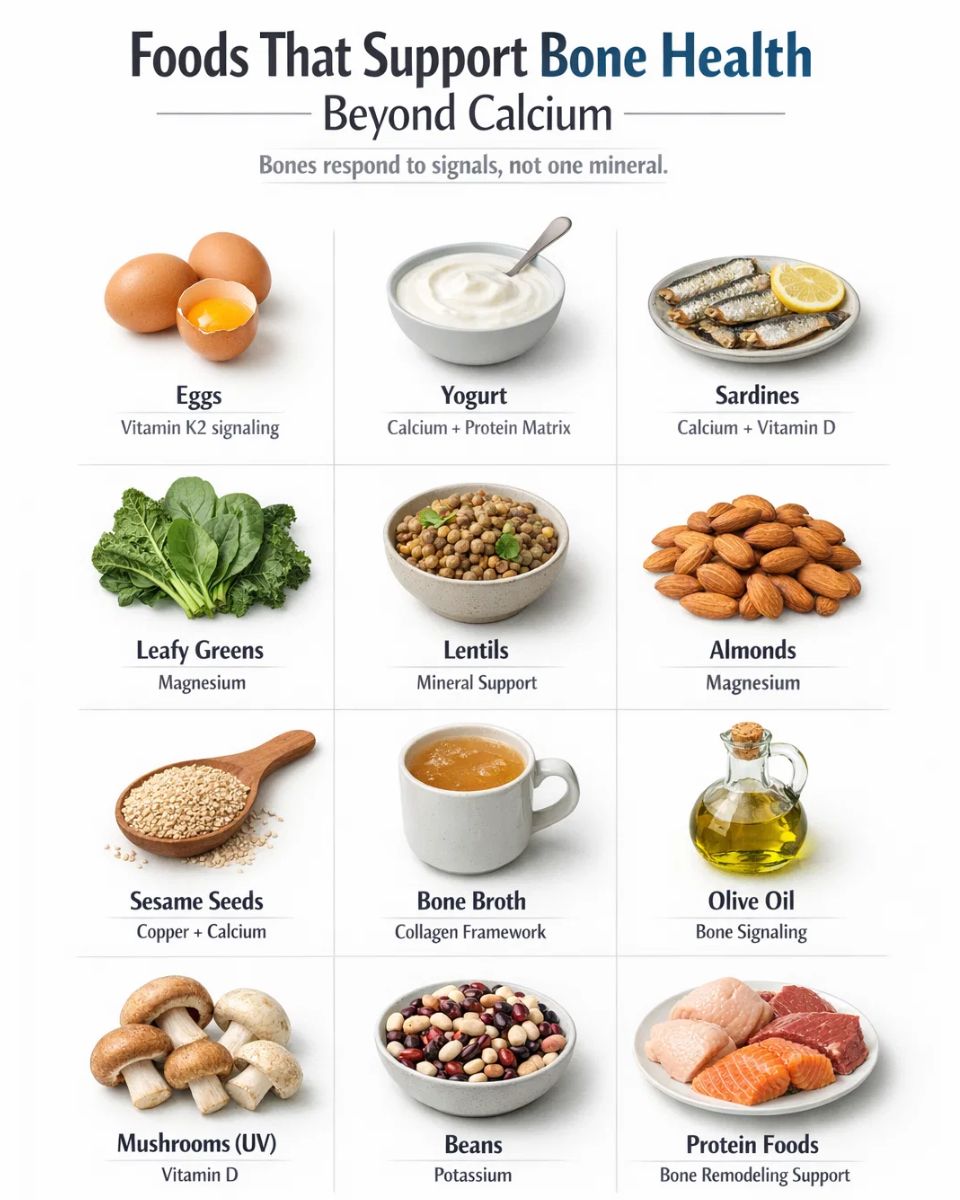
12 Foods That Help Strengthen Bones Naturally
1. Eggs
Eggs contain vitamin K2 and vitamin D, two nutrients that help regulate how calcium is used in the body.
Vitamin K2 helps direct calcium into bones instead of letting it accumulate in arteries or soft tissues.
2. Yogurt
Yogurt is rich in calcium, protein, and probiotics.
Protein forms the structural matrix of bones, while probiotics may improve mineral absorption in the gut.
3. Sardines
Sardines are one of the best natural sources of calcium and vitamin D.
Because they are eaten with the bones, they provide highly bioavailable calcium that the body can absorb efficiently.
4. Leafy Greens
Vegetables such as spinach, kale, and collard greens provide magnesium, calcium, and vitamin K.
Magnesium plays a key role in activating vitamin D, which helps the body absorb calcium properly.
5. Lentils
Lentils supply minerals like magnesium, phosphorus, and iron, which support bone density and metabolic health.
They also provide plant-based protein that contributes to bone structure.
6. Almonds
Almonds are rich in magnesium and healthy fats, both important for maintaining bone strength.
Magnesium supports the balance between calcium and vitamin D metabolism.
7. Sesame Seeds
Sesame seeds contain calcium, copper, and zinc, all important minerals involved in bone formation.
Just a small portion can significantly contribute to daily mineral intake.
8. Bone Broth
Bone broth provides collagen, amino acids, and minerals that help support connective tissue and the framework of bones.
Collagen acts like scaffolding that gives bones flexibility and resilience.
9. Olive Oil
Olive oil contains polyphenols and anti-inflammatory compounds that may help reduce bone loss associated with aging.
Studies of Mediterranean diets often show better bone health among people who regularly consume olive oil.
10. Mushrooms (Especially UV-Exposed)
Certain mushrooms contain vitamin D, which plays a critical role in calcium absorption and bone mineralization.
Vitamin D deficiency is one of the most common risk factors for weak bones.
11. Beans
Beans provide potassium, magnesium, and plant protein, all of which contribute to maintaining bone density.
Potassium may help reduce calcium loss through urine.
12. Protein-Rich Foods
Protein from sources like fish, poultry, eggs, or legumes is essential for bone remodeling.
Without adequate protein intake, bones may lose strength and structural support.
Why Bone Health Is More Than Calcium
The idea that calcium alone builds strong bones is outdated. In reality, bone health depends on a nutrient network that includes:
• Calcium
• Vitamin D
• Vitamin K2
• Magnesium
• Protein
• Collagen
• Potassium
A balanced diet that includes these nutrients helps the body build stronger bones and maintain bone density over time.
Strong bones come from consistent nutrition, not just calcium supplements. A diet rich in whole foods—especially leafy greens, healthy fats, quality proteins, and mineral-rich foods—provides the signals your body needs to maintain healthy bones.