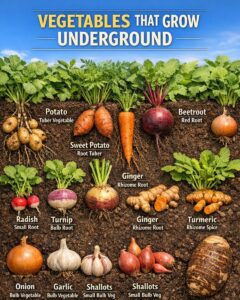
Vegetables That Grow Underground: Nutrient-Rich Roots Beneath the Soil
Many vegetables that grow underground are among the most nutritious foods in the plant world. Unlike leafy vegetables that grow above the soil, root vegetables, bulbs, and rhizomes develop beneath the surface where plants store energy and nutrients.
Because of this natural storage function, many vegetables that grow underground contain concentrated amounts of fiber, minerals, antioxidants, and complex carbohydrates.
Understanding the different types of vegetables that grow underground can help you add more variety and nutritional value to your diet.
What Are Underground Vegetables?
Underground vegetables are plant parts that grow below the soil surface. They are typically classified into four main groups:
• Root vegetables – the edible root of the plant
• Tubers – thick underground stems that store starch
• Bulbs – layered storage organs of plants
• Rhizomes – horizontal underground stems
These structures help plants survive harsh conditions by storing energy. For humans, they provide a rich source of vitamins, minerals, fiber, and plant compounds.
1. Potato – A Classic Tuber Vegetable
Potatoes are one of the most widely consumed vegetables in the world. They grow as tubers, which are underground stems that store starch.
Nutritional highlights:
-
complex carbohydrates for energy
-
potassium
-
vitamin C
-
dietary fiber
When prepared in healthy ways, potatoes can be a satisfying and nutrient-dense food.
2. Sweet Potato – A Fiber-Rich Root Vegetable
Sweet potatoes grow as root tubers and are known for their vibrant orange color.
They contain:
-
beta-carotene (a precursor to vitamin A)
-
fiber
-
vitamin C
-
potassium
Their natural sweetness and nutrient density make them a popular ingredient in many cuisines.
3. Carrot – A Nutrient-Dense Root
Carrots grow underground as taproots and are well known for their high beta-carotene content, which the body converts into vitamin A.
Carrots also provide:
-
antioxidants
-
fiber
-
vitamin K
Regular consumption of carrots is often associated with eye health and overall nutrition.
4. Beetroot – A Mineral-Rich Root Vegetable
Beetroot grows beneath the soil as a swollen root and contains naturally occurring plant compounds called betalains.
Beets are also a source of:
-
folate
-
manganese
-
dietary nitrates
Dietary nitrates found in beets have been studied for their potential role in supporting cardiovascular health.
5. Ginger – A Rhizome Root
Ginger is technically a rhizome, which means it is a horizontal underground stem rather than a true root.
Ginger contains bioactive compounds such as gingerols, which have been widely studied for their potential antioxidant and anti-inflammatory properties.
It is commonly used in teas, cooking, and traditional remedies.
6. Turmeric – A Rhizome Spice
Like ginger, turmeric grows underground as a rhizome.
Turmeric contains curcumin, a compound that has been studied for its potential effects on inflammation and cellular health.
Turmeric is widely used in cooking, herbal drinks, and traditional medicine systems.
7. Radish – A Small Root Vegetable
Radishes grow quickly underground and are known for their crisp texture and slightly spicy flavor.
They contain:
-
vitamin C
-
antioxidants
-
fiber
Radishes are often eaten raw in salads or used as a garnish.
8. Turnip – A Traditional Root Vegetable
Turnips are bulbous root vegetables that have been cultivated for centuries.
They provide:
-
vitamin C
-
fiber
-
potassium
Both the root and the leafy greens of turnips are edible and nutritious.
9. Onion – A Layered Bulb Vegetable
Onions grow underground as bulbs, which are layered storage organs.
They contain plant compounds such as quercetin, a flavonoid with antioxidant properties.
Onions are widely used around the world as a base ingredient for cooking.
10. Garlic – A Powerful Bulb Vegetable
Garlic also grows as a bulb made of multiple cloves.
It contains sulfur compounds such as allicin, which has been studied for its potential role in supporting immune function and cardiovascular health.
Garlic is both a culinary ingredient and a traditional medicinal food.
11. Shallots – A Mild Bulb Vegetable
Shallots are closely related to onions but have a milder, sweeter flavor.
They contain many of the same beneficial plant compounds found in onions and garlic, including flavonoids and antioxidants.
Shallots are commonly used in sauces, dressings, and gourmet dishes.
Why Underground Vegetables Are Nutrient-Dense
Underground vegetables store nutrients to support plant growth. Because of this role, they often contain concentrated levels of:
-
carbohydrates for energy
-
minerals such as potassium and magnesium
-
antioxidants and plant compounds
-
dietary fiber
Including a variety of root and bulb vegetables in meals can help increase nutrient diversity in the diet.
How to Include More Root Vegetables in Your Diet
There are many simple ways to incorporate vegetables that grow underground into everyday meals:
• roasting root vegetables like carrots and sweet potatoes
• adding onions and garlic to soups or sauces
• blending ginger or turmeric into teas or smoothies
• using beets in salads or roasted dishes
Combining different types of vegetables helps create balanced and nutrient-rich meals.
Final Thoughts
Vegetables that grow underground play an important role in many traditional diets around the world.
From potatoes and sweet potatoes to garlic, onions, and turmeric, these vegetables offer a wide range of nutrients and plant compounds that support overall health.
Adding a variety of root vegetables, bulbs, and rhizomes to your diet can help increase fiber intake, provide essential nutrients, and create more diverse and flavorful meals.