When your stomach feels off — bloated, irritated, or uncomfortable — the instinct is often to avoid certain foods. But what matters just as much is what you choose to eat instead.
Stomach care isn’t about restriction alone. It’s about reducing irritation while supporting digestion at the same time.

Why Some Foods Irritate the Stomach
Foods commonly avoided for stomach issues tend to share similar traits. They are often:
-
high in fat (fried or processed foods)
-
highly acidic or spicy
-
loaded with refined sugar or carbonation
These types of foods can:
• increase stomach acid
• slow down digestion
• irritate the stomach lining
For people already experiencing discomfort, this can make symptoms like burning, bloating, or heaviness worse.
What Your Stomach Actually Needs
Instead of focusing only on what to avoid, it helps to understand what supports digestion.
Your stomach generally handles foods better when they are:
-
easy to break down
-
rich in fiber (but not overly harsh)
-
hydrating
-
supportive of gut balance
This is where the “foods to eat” side becomes important.
The Role of Gentle, Easy-to-Digest Foods
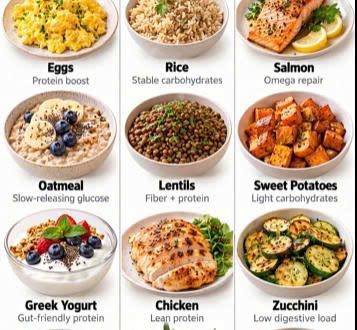
Foods like bananas, apples, yogurt, and oatmeal are often recommended because they are gentle on the digestive system.
They help by:
• providing fiber that supports digestion
• reducing irritation compared to heavy meals
• promoting smoother movement through the gut
Yogurt, in particular, can support gut bacteria balance, which plays a role in overall digestion.
Why Light Plant Foods Help
Vegetables and fruits such as cucumber, bell peppers, and cherries tend to be:
-
hydrating
-
lower in fat
-
easier for the stomach to process
They don’t overload digestion and can help the stomach recover when it feels irritated.
The Importance of Balance
It’s not necessary to completely eliminate all “avoid” foods forever.
The key is timing and frequency:
-
heavy or spicy foods may be fine occasionally
-
but repeated intake during periods of stress or poor digestion can worsen symptoms
Balancing heavier meals with lighter, easier-to-digest foods helps maintain stomach comfort.
A Practical Approach to Stomach Care
If your stomach feels sensitive, a simple approach is:
✔ temporarily reduce irritating foods
✔ focus on lighter, fiber-rich, and hydrating options
✔ eat in smaller, more regular meals
✔ avoid overeating late at night
These steps allow your digestive system to reset and function more efficiently.
Conclusion
Stomach health isn’t just about avoiding certain foods — it’s about choosing foods that support digestion while reducing unnecessary strain.
By combining both approaches, you can help your stomach feel more comfortable and function more smoothly over time.