Gut health advice can get confusing fast.
One post tells you to eat more yogurt. Another says focus on fiber. Then someone mentions fermented foods, kefir, kimchi, chicory root, and “feeding your microbiome,” and suddenly it feels like you need a science degree just to build breakfast.
The truth is much simpler: prebiotics and probiotics do different jobs, and your gut usually benefits most when you include both.
Think of it this way. Probiotics are the live beneficial microbes, while prebiotics are the fibers and compounds that help feed them. One brings in helpful bacteria. The other helps nourish the good bacteria already living in your gut.
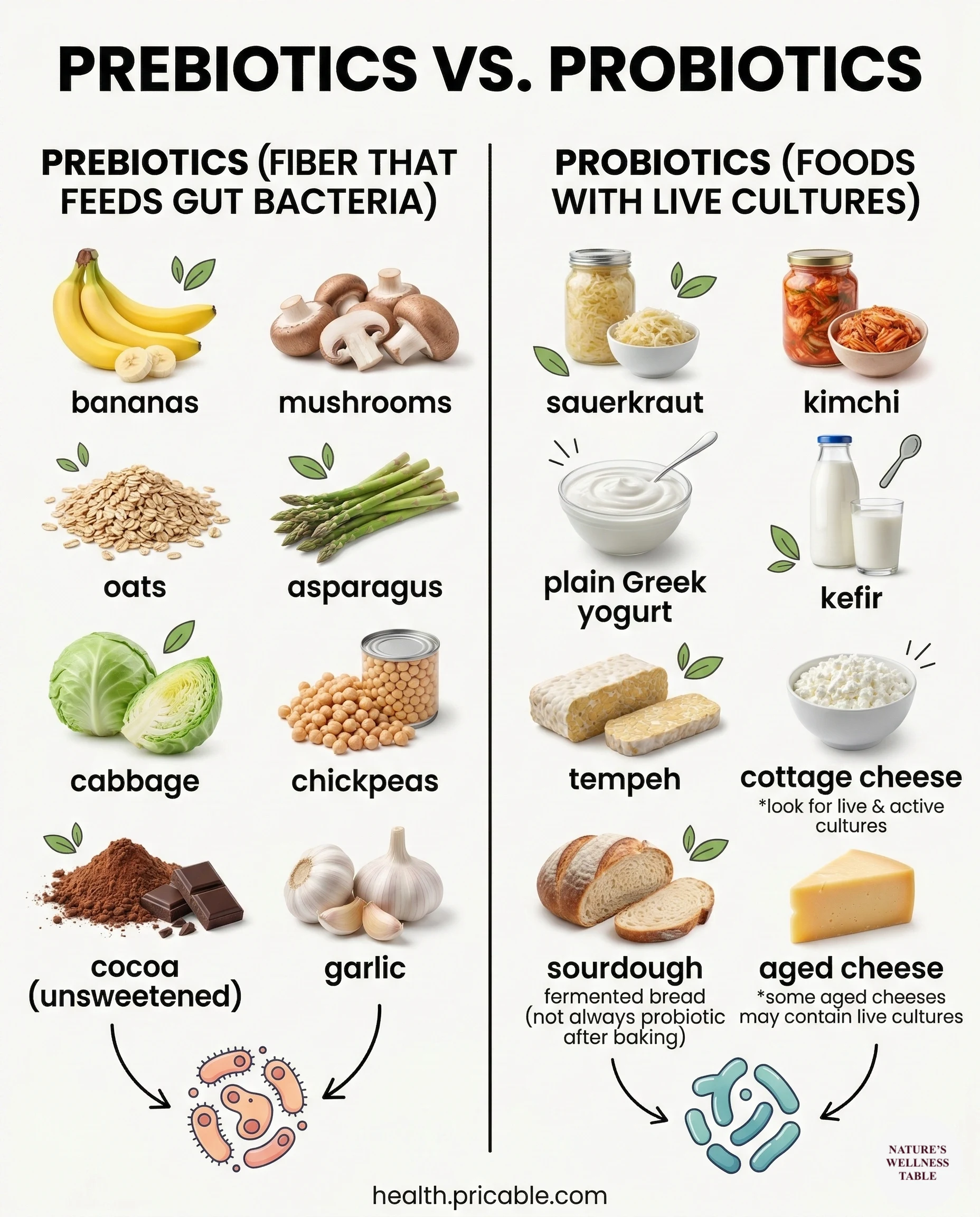
That is why this image is so useful. It separates the two clearly and gives you practical food examples on both sides.
What Are Prebiotics?
Prebiotics are types of fiber and plant compounds that your body does not fully digest. Instead, they travel down to the gut, where they help nourish beneficial bacteria.
That matters because a well-fed microbiome can support:
- better digestion
- more regular bowel movements
- steadier appetite
- better short-chain fatty acid production
- a healthier gut environment overall
Prebiotics do not work overnight, but they can make a noticeable difference when eaten regularly.
1. Bananas
Bananas are one of the easiest prebiotic foods to use daily. Slightly less ripe bananas tend to provide more resistant starch, while ripe bananas are often easier to digest. They are simple, affordable, and easy to add to breakfast.
2. Mushrooms
Mushrooms bring fiber-like compounds and help increase plant diversity in the diet. They are underrated for gut support and easy to add to savory meals.
3. Oats
Oats are a microbiome-friendly staple because they provide fiber that supports fullness and helps nourish the gut environment. They are one of the easiest “repeat foods” for everyday gut support.
4. Asparagus
Asparagus is often mentioned in gut-health conversations because it contains prebiotic fibers and fits well into simple whole-food meals.
5. Cabbage
Cabbage gives you fiber plus volume and crunch. It also works raw, cooked, fermented, or added to soups, which makes it very flexible.
6. Chickpeas
Chickpeas help on two levels: they provide prebiotic-supportive fiber and also make meals more filling because of their fiber-protein combination.
7. Cocoa (unsweetened)
Unsweetened cocoa is one of the more surprising foods on the list. It contains polyphenols and compounds that can support a healthier gut environment when used without a lot of added sugar.
8. Garlic
Garlic is one of the strongest true prebiotic foods in the image. It contains compounds that help feed beneficial gut bacteria, although some people with sensitive digestion may need smaller amounts.
What Are Probiotics?
Probiotics are foods that contain live microorganisms, usually bacteria, that may help support the balance of your gut microbiome.
They are often discussed for digestion, stool regularity, and recovery after antibiotics, although effects can vary depending on the person and the specific strains involved.
The key idea is simple: probiotics add live cultures, while prebiotics feed them.
1. Sauerkraut
Sauerkraut can be a strong probiotic food when it is traditionally fermented and sold with live cultures. It adds tang, crunch, and a fermented boost to meals.
2. Kimchi
Kimchi is another fermented food with live cultures, plus strong flavor. It is often easier to keep using regularly because a small serving adds a lot of taste.
3. Plain Greek Yogurt
Plain Greek yogurt is one of the most practical probiotic foods because it also gives you protein. It is usually easier to build into a daily routine than more intense fermented foods.
4. Kefir
Kefir is a fermented dairy drink that can provide live cultures and is often one of the strongest probiotic staples in everyday diets.
5. Tempeh
Tempeh is a fermented soy food. It is a great option for people who want a probiotic-style food with more structure and protein in savory meals.
6. Cottage Cheese
Cottage cheese only fits here if it contains live and active cultures, which is why label-reading matters.
7. Sourdough
Sourdough is fermented bread, but the image rightly notes that it is not always probiotic after baking. The fermentation process may benefit digestion and flavor, but baking can reduce or eliminate live cultures.
8. Aged Cheese
Some aged cheeses may contain live cultures, but not all do. Again, it depends on the product.
So Which Is Better: Prebiotics or Probiotics?
This is where many people get stuck, but it does not have to be an either-or choice.
If you only eat probiotic foods but your diet is low in fiber, you may not be creating the best environment for beneficial bacteria to thrive. On the other hand, if you only focus on prebiotics and never eat fermented foods, that can still be helpful, but you may miss out on the variety probiotics can add.
For most people, the strongest gut-supportive pattern looks like this:
- eat prebiotic foods often
- add probiotic foods regularly if tolerated
- keep the overall diet rich in plants and minimally processed foods
That is how you build a gut routine that actually lasts.
Easy Ways to Combine Prebiotics and Probiotics
A few simple combinations work really well:
- oats + plain Greek yogurt + banana
- cabbage + kimchi + eggs or rice
- chickpeas + garlic + sauerkraut in a bowl or salad
- kefir + banana + unsweetened cocoa in a smoothie
- tempeh + asparagus + mushrooms for a savory meal
These combinations help you stop thinking in “gut health theory” and start eating in a practical way.
When Will You Notice a Difference?
Gut changes are usually gradual.
- Within a few days, some people notice better meal satisfaction and improved regularity
- Within 2 to 3 weeks, digestion can feel more stable when fiber increases slowly and consistently
- Longer-term benefits depend on your full eating pattern, not just one probiotic food
If your digestion is very sensitive, increase fiber slowly and give your gut time to adapt.
Final Takeaway
Prebiotics and probiotics are not the same, but they work beautifully together.
Prebiotics feed beneficial gut bacteria.
Probiotics add live cultures.
If you want the simplest place to start, do this: eat more oats, bananas, garlic, chickpeas, and cabbage, then add plain Greek yogurt, kefir, sauerkraut, or kimchi if they work for your body.
That kind of routine is far more useful than chasing the latest gut-health trend.