You can eat clean, avoid junk food, and still feel constantly stressed, tired, or mentally overwhelmed.
That’s because stress isn’t just psychological — it’s deeply tied to nutrient balance, brain chemistry, and hormonal regulation.
If your body lacks the right building blocks, it simply can’t switch off stress mode — no matter how “healthy” your diet looks.
Here’s what actually matters.
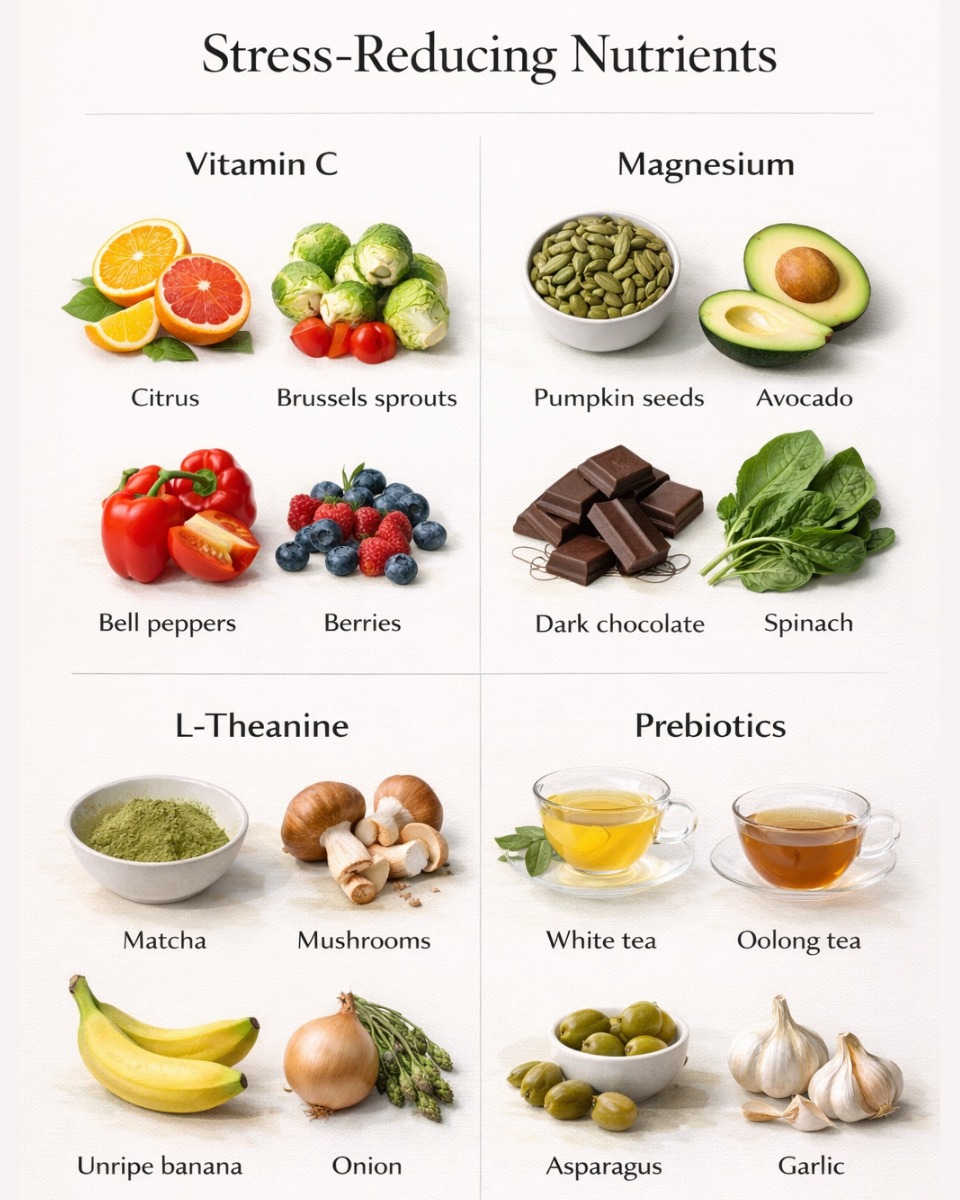
Vitamin C – The Overlooked Cortisol Regulator
Vitamin C doesn’t just support immunity — it plays a direct role in regulating cortisol, the main stress hormone. When you’re under pressure, your body burns through vitamin C faster, which can prolong stress and delay recovery.
Sources: citrus fruits, kiwi, strawberries, blueberries, bell peppers, broccoli, Brussels sprouts.
Magnesium – The Mineral That Helps You Calm Down
Magnesium supports the nervous system by helping your body shift from a stressed state to a relaxed one, improving sleep quality and reducing muscle tension at the same time.
Sources: pumpkin seeds, almonds, cashews, spinach, kale, avocado, dark chocolate (70%+), whole grains.
L-Theanine – Calm Focus Without Fatigue
L-theanine promotes a unique state of calm alertness, helping reduce anxiety while maintaining focus — which is why tea feels smoother than coffee.
Sources: matcha, green tea, black tea, certain mushrooms.
Prebiotics – The Gut-Brain Connection You Can’t Ignore
Your gut produces a large portion of your serotonin, meaning your mood is directly influenced by gut health. Prebiotics feed beneficial bacteria, supporting emotional balance and stress resilience.
Sources: garlic, onions, leeks, asparagus, oats, bananas (especially slightly unripe), apples.
Omega-3 – The Brain’s Anti-Stress Fat
Omega-3 fatty acids reduce inflammation in the brain and support stable mood and emotional regulation, making them essential for long-term stress control.
Sources: salmon, sardines, mackerel, walnuts, chia seeds, flaxseeds.
Protein – The Foundation of Mental Stability
Protein provides amino acids that your brain uses to produce neurotransmitters like dopamine and serotonin, directly affecting mood, focus, and energy.
Sources: eggs, chicken, turkey, Greek yogurt, lentils, chickpeas, tofu, beans.
Potassium – The Silent Nervous System Supporter
Potassium helps regulate nerve signals and muscle function while balancing sodium levels, which is crucial for maintaining a stable stress response.
Sources: bananas, sweet potatoes, avocados, coconut water, spinach, beans.
Vitamin D – The Mood-Regulating Hormone
Vitamin D plays a key role in mood regulation and energy levels, and low levels are strongly linked to anxiety and depression.
Sources: sunlight exposure, eggs, fatty fish, fortified dairy or plant milk.
Polyphenols – Natural Stress Protection Compounds
Polyphenols protect brain cells from oxidative stress and help improve resilience against mental fatigue and burnout.
Sources: dark chocolate, green tea, berries, olives, olive oil, red grapes.
The Real Problem Most People Don’t See
It’s not about eating “clean.”
It’s about whether your diet actually supports:
-
your nervous system
-
your hormones
-
your gut health
-
your brain chemistry
You can eat healthy — but still be nutritionally unbalanced.
A Simple Way to Eat for Less Stress
A balanced anti-stress day doesn’t need to be complicated.
Morning meals rich in protein and fiber, lunches with healthy fats and vegetables, and small nutrient-dense snacks like nuts or dark chocolate can make a noticeable difference in how your body handles stress.
Final Thought
You don’t just need better habits.
You need the right nutrients — because a calm mind starts with a well-supported body.