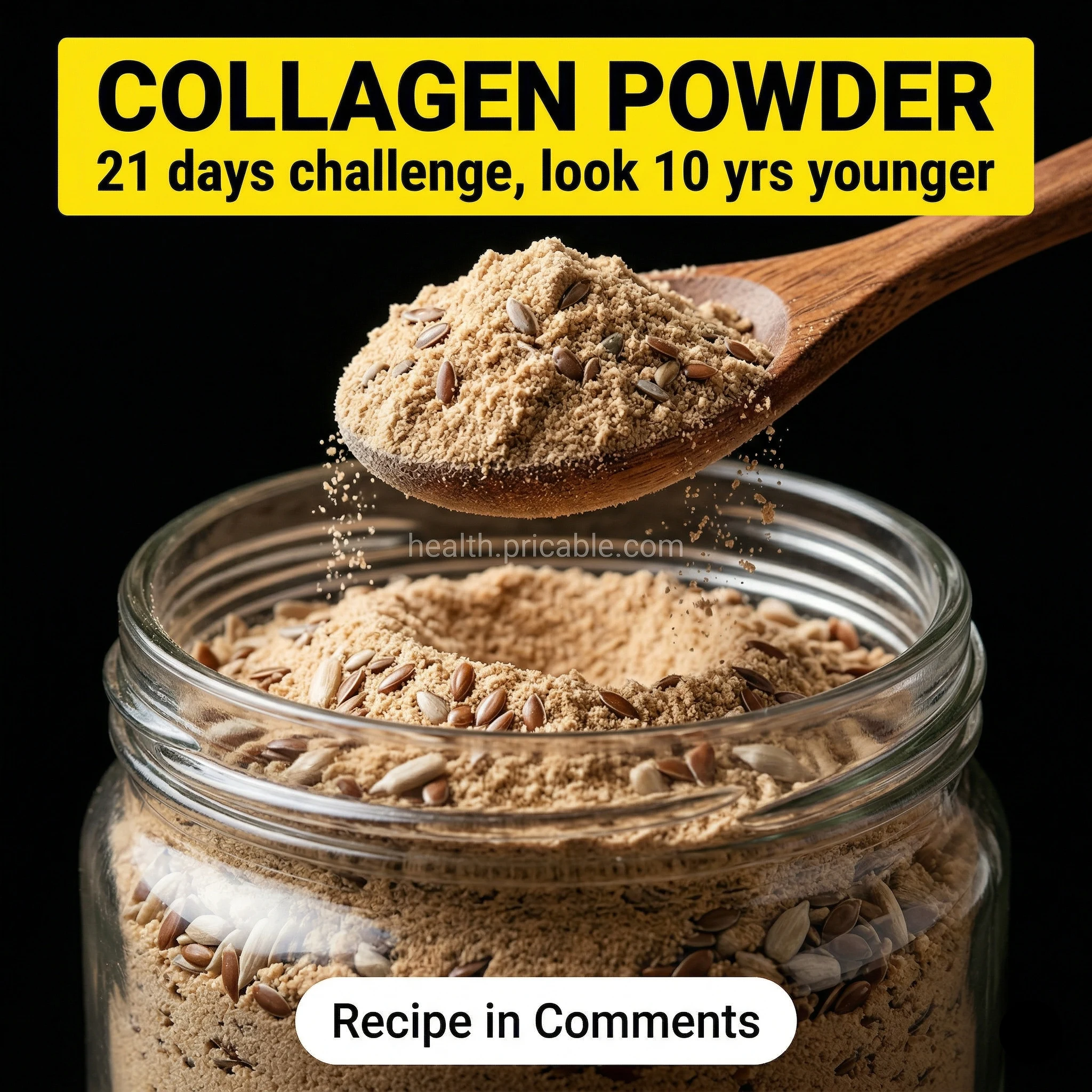
That viral collagen powder challenge keeps popping up because it promises something people actually want: one simple daily habit that feels doable.
A scoop in your yogurt. A spoonful in oats. A quick shake in a smoothie.
The appeal is obvious. A homemade collagen powder recipe can make your routine feel easier, cheaper, and more consistent without turning breakfast into a project.
The real payoff is not magic. It is having a blend you will actually use every day.
A homemade collagen powder recipe can support a smarter daily routine, but it will not make you look 10 years younger in 21 days. What it can do is help you build a more consistent habit around protein and collagen-supporting nutrients like vitamin C, zinc, and copper. That matters because your body uses amino acids plus nutrients like vitamin C and certain minerals to make collagen, while the evidence on dramatic anti-aging results from supplements is still limited.
Why this homemade collagen powder recipe gets so much attention
Here is why this kind of routine makes sense:
- It removes friction from your morning.
- It turns “I should eat better” into one repeatable step.
- It is easy to customize for smoothies, oats, or yogurt bowls.
- It can be built around protein, seeds, and a vitamin C pairing instead of hype.
- It gives you a simple daily ritual you can actually stick with.
The big idea is simple: collagen support works better as a routine than as a miracle claim. Your body builds collagen from amino acids and relies on vitamin C and minerals like zinc and copper in the process.
3 homemade collagen powder recipe options to try
Plant-Forward Daily Glow Powder
Ingredients
Makes 14 servings
- 1 cup oat flour
- 1/2 cup hemp hearts
- 1/2 cup ground flaxseed
- 1/4 cup pumpkin seeds, finely ground
- 2 tablespoons freeze-dried strawberry powder
- 1 tablespoon cinnamon
- 1/4 teaspoon fine sea salt
Steps
- Add all ingredients to a blender or food processor.
- Pulse until the texture looks even and powdery.
- Transfer to a dry glass jar with a tight lid.
- Use 2 tablespoons per serving in yogurt, oatmeal, or a smoothie.
Best time/how to use
This one works best at breakfast. Pair it with berries, kiwi, or citrus if you want a brighter, fresher bowl.
Why it works
- Mild, nutty flavor makes it easy to use every day.
- Fine texture blends well into oats and yogurt.
- Seeds make the mix feel more satisfying.
- Strawberry powder adds flavor without making the blend overly sweet.
Adjustments
For a smoother powder, sift after blending. If you want a richer texture, add 1 extra tablespoon almond flour.
Classic Morning Collagen Peptide Blend
Ingredients
Makes 16 servings
- 1 1/2 cups unflavored collagen peptides
- 1/2 cup almond flour
- 1/4 cup ground chia seeds
- 2 tablespoons freeze-dried blueberry powder
- 1 teaspoon cinnamon
- 1/4 teaspoon fine sea salt
Steps
- Whisk all ingredients in a large bowl until evenly mixed.
- Break up any clumps with the back of a spoon.
- Pour into an airtight jar.
- Use 2 tablespoons per serving in smoothies, yogurt, or overnight oats.
Best time/how to use
Use this when you want the closest version to the viral “collagen powder” idea. It is especially good in a berry smoothie or plain Greek yogurt.
Why it works
- Neutral base fits sweet breakfast recipes.
- Blueberry powder softens the plain taste.
- Chia helps the mix feel more substantial.
- Easy option for anyone who prefers a true collagen-based blend.
Adjustments
If you want less seed texture, swap the chia for 2 extra tablespoons almond flour. If you like a cleaner taste, leave out the blueberry powder.
Cocoa Cinnamon Beauty Blend
Ingredients
Makes 12 servings
- 1 cup oat flour
- 1/2 cup unflavored collagen peptides or hemp protein powder
- 1/4 cup unsweetened cocoa powder
- 1/4 cup almond flour
- 2 tablespoons ground flaxseed
- 1 teaspoon cinnamon
- 1/4 teaspoon fine sea salt
Steps
- Add all ingredients to a mixing bowl.
- Stir until the cocoa is fully distributed.
- Transfer to a jar and seal well.
- Use 2 tablespoons per serving in warm oats, a smoothie, or warm milk.
Best time/how to use
This is the easiest “dessert-like” option. It works well in the evening if you want something cozy but not overly sweet.
Why it works
- Chocolate flavor makes consistency easier.
- Great for people who get bored with plain powders.
- Works in both cold and warm recipes.
- Feels more like a treat than a supplement.
Adjustments
For a sweeter finish, add sweetener only when serving, not to the full jar. For a stronger cocoa taste, add 1 extra tablespoon cocoa powder.
What to look for before you buy collagen powder
If you decide a ready-made option is easier than mixing your own, shop the label instead of the promise. FDA rules require dietary supplements to carry key label information such as a Supplement Facts panel and ingredient disclosures, and NIH notes that third-party certification can add extra reassurance in some supplement categories.
- Source type: If you are choosing between marine collagen vs bovine collagen, start with your diet preference, allergies, and comfort level.
- Unflavored first: Unflavored collagen peptides are easier to use in more recipes.
- Low sugar: Skip blends padded with added sugar if your goal is daily use.
- Short ingredient list: Fewer extras usually means easier flavor control.
- Serving size clarity: Look for a label that clearly tells you how much collagen or protein you get per scoop.
- Texture and dissolvability: If your goal is coffee or smoothies, pick a powder known for mixing easily.
- Price per serving: A cheaper tub is not always a better buy if the serving size is tiny.
- Allergen transparency: Check for fish, dairy, nuts, coconut, or seed cross-contact depending on your needs.
- Testing and lot transparency: If quality matters most to you, look for brands that share testing details.
- Taste profile: If you hate the smell or aftertaste, you will not keep using it.
If your goal is convenience, a simple unflavored powder is usually the best place to start. If your goal is a food-first routine, build a blend you enjoy and keep it in plain sight.
Common mistakes + quick fixes
Most people do not fail because the recipe is bad. They fail because the routine is too fussy, the expectations are unrealistic, or the label was chosen on hype alone. Vitamin C matters for collagen production, and some people do get GI side effects from collagen supplements, so smarter pairing and slower start-ups make a difference.
- Expecting overnight changes → the viral promise sounds fast → give the routine at least a few weeks and judge consistency before results.
- Taking too much on day one → more feels better, but it can be uncomfortable → start with 1 tablespoon or 1 serving and build from there.
- Skipping a vitamin C food → the powder becomes a stand-alone habit → pair it with berries, kiwi, citrus, or another vitamin C-rich food.
- Buying sweetened powders by accident → flavored blends can hide extra sugar → check the label before you buy collagen powder.
- Making the blend too gritty → whole seeds do not mix well → grind seeds finely or sift the finished powder.
- Storing it near heat and steam → moisture causes clumps and stale flavor → keep it in a cool, dry, airtight jar.
- Choosing the wrong type for your routine → not every powder works the same in coffee, oats, and smoothies → buy based on use-case, not just reviews.
Safety note
If you are eating these blends, start with a small serving if you are sensitive to fiber, seeds, or collagen supplements. Store the powder airtight and keep seed-heavy blends in a cool spot; refrigerate them if your kitchen runs warm. If you ever use any version as a DIY face mask, patch test first. If you are pregnant, managing a medical condition, taking medications, or dealing with food allergies or digestive sensitivity, check with a clinician before making it a daily supplement habit. Some people tolerate collagen well, but GI side effects can happen, and supplement labels do matter.
When you’ll notice changes
Same day:
You may notice the routine feels easier than assembling a new “healthy breakfast” every morning.
After 1 week:
You will usually know whether the flavor, texture, and serving style fit your real life.
After 2 to 4 weeks:
You may notice better consistency with your routine, and some people feel better about how their skin-support habits are stacking up when protein intake, hydration, and sun protection are all more consistent.
Think subtle support, not a dramatic rewind. Evidence for big anti-aging claims is still limited, and everyday skin habits still matter.
FAQ
Can I make collagen powder at home?
You can make a collagen-support blend at home very easily. But true collagen powder itself is usually commercially processed from animal sources, which is why many homemade versions either support collagen production or use store-bought collagen peptides as the base.
How do you use homemade collagen powder every day?
The easiest way is 1 to 2 tablespoons in something you already eat: yogurt, oatmeal, smoothies, or overnight oats. The best routine is the one that does not feel like extra work.
Can homemade collagen powder help wrinkles?
It may support a broader skin routine, but it is not a fast wrinkle eraser. Research on collagen supplements is still mixed, and realistic expectations matter more than dramatic claims.
Is collagen powder better in coffee or smoothies?
Smoothies are usually easier because you can pair the powder with fruit and control the texture. Coffee works best with very plain, fast-dissolving powders.
What is the best collagen powder for beginners?
For most people, the easiest entry point is an unflavored powder with a short ingredient list, clear serving size, and no extra sugar. If your goal is testing tolerance, start simple before you buy specialty blends.
Marine collagen vs bovine collagen powder: which should I choose?
Choose based on your diet, allergies, smell preference, and price per serving. If your goal is “best value,” compare cost per serving and ingredient simplicity, not just the size of the tub.
What to look for when buying collagen powder?
Look for a clear source, Supplement Facts, ingredient transparency, low sugar, and a serving size that makes sense for how you will use it. FDA requires core label information on dietary supplements, so use that label instead of front-of-pack beauty claims.
Is collagen powder worth it after 40?
It can be worth trying if it helps you stay consistent with protein intake and a simple routine. Just do not treat it like a substitute for sunscreen, sleep, hydration, and overall diet quality. Anti-aging evidence is still not strong enough to expect dramatic change from a scoop alone.
Final takeaway
- A homemade collagen powder recipe works best as a daily routine tool, not a 21-day miracle.
- If you want the simplest safe routine, use 2 tablespoons once a day in yogurt, oats, or a smoothie.
- If your goal is food-first support, pick the Plant-Forward Daily Glow Powder.
- If your goal is the closest match to the viral trend, choose the Classic Morning Collagen Peptide Blend.
- If you buy a powder instead, look for clear labels, low sugar, easy mixing, and sensible price per serving.
- The next best step is simple: pick one blend, prep one jar, and use it consistently for the next 2 to 4 weeks.