Not every gardener has a sun-drenched patio or a wide-open yard. Many growing spaces get only a few hours of direct light, filtered afternoon brightness, or soft shade from fences, trees, and buildings. The encouraging truth is that a productive container garden is still very possible. You just need to choose crops that are naturally more comfortable in cooler, lower-light conditions.
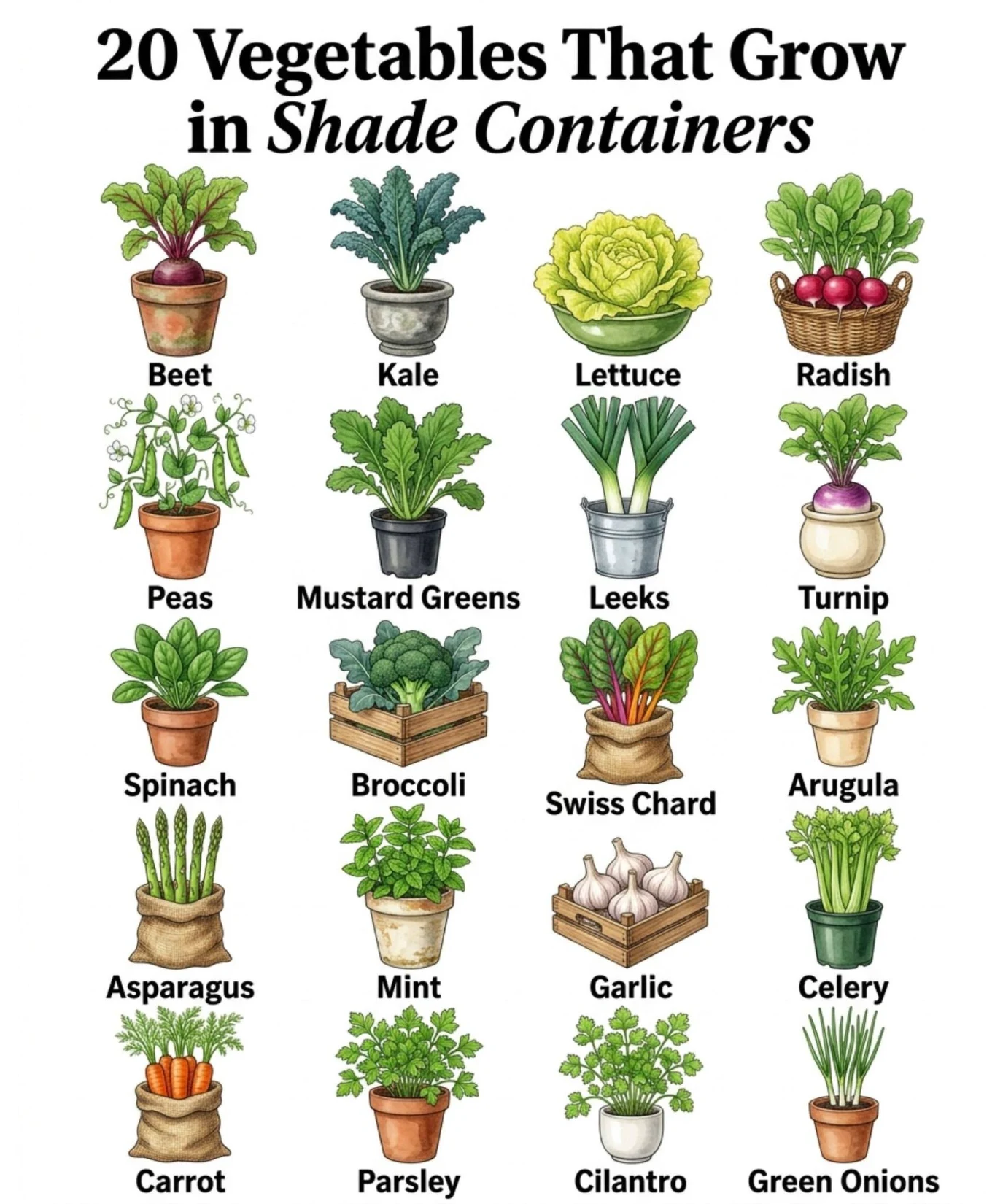
Some of the best vegetables and herbs for shade containers include beet, kale, lettuce, radish, peas, mustard greens, leeks, turnip, spinach, broccoli, Swiss chard, arugula, asparagus, mint, garlic, celery, carrot, parsley, cilantro, and green onions. These plants do not all thrive in deep darkness, but many perform surprisingly well in partial shade, filtered light, or cooler spring conditions where full-sun crops like tomatoes and peppers would struggle.
That is what makes shade gardening so satisfying. Instead of fighting your space, you work with it. And once you do, a quiet corner, shaded balcony, or low-light patio can become one of the most reliable and pleasant places to grow food.
Why shade containers can still be highly productive
A shaded container garden has advantages that many people overlook.
Lower light often means:
- slower drying soil
- less heat stress
- reduced bolting in leafy greens
- more tender leaves
- a longer harvest window for cool-season crops
This is especially helpful with crops like lettuce, spinach, cilantro, mustard greens, and arugula, which can become bitter or rush to seed in intense heat.
The real key is understanding what “shade” means. Most edible plants still need some meaningful daylight. In container gardening, the best results usually come from:
- bright indirect light
- morning sun with afternoon shade
- dappled sunlight
- partial sun for 3 to 5 hours
That is often more than enough for the right vegetables.
Start with the right container setup
Before choosing crops, get the container system right.
Use containers with drainage
Shade slows evaporation, so water tends to remain in the pot longer. That makes drainage even more important. A pot without drainage holes is one of the fastest ways to lose roots in a shaded garden.
Use quality potting mix
Containers need a light, airy growing medium. Heavy garden soil compacts too easily, especially where the sun is not drying it out quickly.
Match container depth to the crop
Leafy greens can use shallower containers than roots like carrots, beets, turnips, garlic, and leeks. Broccoli, celery, and asparagus also need more room than quick salad crops.
Be careful with watering
Shade containers dry more slowly than full-sun pots. This is helpful, but it also means overwatering becomes more likely. Always check the soil before watering.
The best vegetables for shade containers
Leafy greens: the stars of low-light container gardening
If you want the most dependable results in shade containers, start with leafy greens.
Lettuce
Lettuce is one of the best crops for partial shade because it actually benefits from relief from strong afternoon sun. Leaves stay softer and sweeter longer.
Spinach
Spinach performs especially well in cool conditions and is ideal for spring shade containers. It is one of the easiest crops to grow where the sun is gentle.
Kale
Kale tolerates lower light better than many fruiting vegetables and still gives repeated harvests if you pick outer leaves.
Mustard greens
Mustard greens grow quickly and offer strong flavor. Shade can help keep them from becoming too harsh too fast.
Swiss chard
Swiss chard is one of the best all-purpose leafy crops. It handles a range of conditions and gives long harvests from a single planting.
Arugula
Arugula often grows beautifully in partial shade, where cooler conditions help slow bolting and keep the leaves more tender.
Practical tip for leafy greens
Harvest often, but lightly. Snipping outer leaves encourages continued growth and keeps containers productive for longer.
Root crops that still perform well in lower light
Many gardeners assume root crops need blazing sun, but several do very well in bright partial shade, especially in spring.
Beet
Beets are especially useful because you get two harvests in one: roots and greens. Even if the roots stay slightly smaller in lower light, the greens are still excellent.
Radish
Radishes are fast, satisfying, and ideal for beginners. In shade containers, they often stay crisp if moisture is consistent.
Turnip
Like beets, turnips offer both edible roots and greens, making them a practical use of container space.
Carrot
Carrots can perform well in shade containers if the container is deep enough and the soil is loose. They may grow a bit slower, but they are still very worthwhile.
Garlic
Garlic is often overlooked in containers, but it can do quite well, especially in cooler conditions with decent light.
Practical tip for root crops
Use deeper containers than you think you need. Most disappointments with root vegetables come from shallow pots or compacted soil, not from the crop itself.
Cool-season growers that reward patience
Some shade-tolerant vegetables take longer or need more room, but they are still very worthwhile.
Peas
Peas are one of the best container crops for cooler weather. They appreciate mild conditions and can tolerate less intense sun than heat-loving summer crops. Give them support.
Leeks
Leeks are slow but useful, especially for gardeners who enjoy long-season container crops. Their upright habit makes them efficient in pots.
Broccoli
Broccoli can be grown in containers if given enough root space and steady care. In partial shade, growth may be slower, but cool conditions often help overall plant quality.
Celery
Celery appreciates consistent moisture and can benefit from reduced heat stress in a shaded setup.
Asparagus
Asparagus is less common in containers, but it can be grown if you are willing to commit space and time. It is not the quickest option, but it is possible.
Practical tip for slower crops
These vegetables are best for gardeners willing to trade speed for steadiness. Keep them in larger containers and be patient with growth.
Herbs that grow well in shade containers
Several useful herbs perform beautifully in lower-light spaces.
Mint
Mint is vigorous and adaptable, making it one of the easiest herbs for shade containers. Keep it in its own pot so it does not take over.
Parsley
Parsley handles partial shade very well and often stays lush longer in cooler conditions.
Cilantro
Cilantro is famous for bolting in heat, so partial shade can be a major advantage. It often stays usable longer when protected from harsh sun.
Green onions
Green onions are one of the easiest and most practical container crops of all. They fit almost anywhere and give steady kitchen value.
Practical tip for herbs
Keep these close to the kitchen if possible. A shaded back step or porch pot is often perfect for daily harvesting.
How to group these vegetables for easier care
One of the smartest ways to improve a shade container garden is to group crops by similar needs.
Group 1: fast leafy harvests
Lettuce, spinach, arugula, mustard greens, and cilantro work well together because they are quick and appreciate similar conditions.
Group 2: long-term leafy containers
Kale, Swiss chard, parsley, celery, and green onions provide extended production and are good for gardeners who want consistent harvesting.
Group 3: roots and bulbs
Beet, radish, turnip, carrot, garlic, leeks, and green onions do well when given deep containers and loose mix.
Group 4: cool-season structure crops
Peas, broccoli, and asparagus need more planning but add range and depth to the garden.
Watering shade containers without causing problems
This is where many gardeners get into trouble.
Shade containers need less frequent watering than full-sun containers, but they still need steady attention. The goal is not to keep the soil constantly wet. The goal is to keep it evenly supportive.
A better watering habit
Check soil with your finger before watering. If the upper inch is still moist for shallow-rooted greens, wait. For deeper pots, check lower down if possible.
Signs of too much water
- yellowing leaves with wet soil
- slow growth
- limp plants that do not recover after watering
- sour or musty smell from the pot
Signs of too little water
- dry, crumbly mix
- wilting that improves after watering
- harsh or bitter greens
- small or woody roots
Feeding shade-grown vegetables the right way
Because growth is often slower in partial shade, heavy feeding is not always necessary. Too much fertilizer can produce overly lush growth that is weak or imbalanced.
A better approach is:
- start with good potting mix
- add compost where appropriate
- feed lightly and steadily
- adjust based on plant performance
Leafy greens often appreciate gentle feeding. Root crops need balanced nutrition. Herbs like mint and parsley need enough support to stay lush, but not constant heavy feeding.
Common mistakes in shade container gardening
Choosing sun-loving crops for a low-light spot
Tomatoes, peppers, and eggplants are usually disappointing where lettuce and kale would thrive.
Using shallow containers for roots
Carrots, beets, turnips, garlic, and leeks all need more depth than many gardeners assume.
Overwatering because the surface looks dry
In shade, the top can dry while the lower root zone stays wet.
Underestimating brightness
A dark corner is not the same as bright shade. Even shade-tolerant vegetables still need meaningful daylight.
A simple weekly routine for a thriving shade container garden
Once or twice a week:
- check moisture by hand
- harvest outer leaves from greens
- thin crowded root crops
- remove damaged foliage
- rotate pots if they lean toward light
- sow a new quick crop like radish, arugula, or lettuce every few weeks
This kind of steady attention keeps the garden productive without making it feel demanding.
Final thoughts
A low-light growing space is not a gardening failure. It is a different kind of opportunity. Beet, kale, lettuce, radish, peas, mustard greens, leeks, turnip, spinach, broccoli, Swiss chard, arugula, asparagus, mint, garlic, celery, carrot, parsley, cilantro, and green onions all show that shade containers can still be productive, beautiful, and deeply useful.
The real secret is not forcing the wrong crop into the wrong conditions. It is recognizing which plants naturally handle cooler, gentler light and then giving them the right container, the right soil, and the right watering rhythm.
That is where confidence grows. Not from having perfect sun, but from understanding your space well enough to make it flourish anyway.