Here is the practical version: four simple aloe-based recipes, plus what to buy, what to avoid, and how to keep it gentle.
It may help skin feel hydrated and calm, which can make texture look smoother and makeup sit better.
Ingredients like cloves, oils, and occlusive balms can be useful for some people, but they can also irritate sensitive or acne-prone skin when used too strongly.
Why aloe vera works so well in simple skin recipes
- It adds lightweight hydration: aloe gel has a watery texture that helps skin feel refreshed without a heavy finish.
- It can calm the look of stressed skin: many people use aloe when their skin feels warm, tight, or overworked.
- It layers easily: aloe can sit under moisturizer, sunscreen, or a small amount of facial oil.
- It helps DIY recipes feel less greasy: mixing aloe with richer ingredients can make them easier to spread.
- It is easy to customize: you can keep it plain, make a rinse-off mask, or use it as a light gel moisturizer.
Before you mix anything, decide your goal first: hydration, uneven-looking tone, fine lines, or visible pores. That one choice tells you whether to buy a plain gel, a richer gel cream, or a formula made for sensitive facial skin.
What to look for before you buy aloe vera gel
A good aloe gel matters more than a complicated recipe. A poor-quality gel with heavy fragrance or drying alcohol can make a simple routine feel itchy, tight, or sticky.
- Aloe listed near the top: look for aloe vera leaf juice or aloe vera gel high on the ingredient list.
- Fragrance-free or low-fragrance: this is especially important for the face, neck, and under-eye area.
- No strong drying alcohols: avoid formulas where alcohol denat. appears high on the label if your skin is dry or sensitive.
- Clear or lightly tinted gel: very bright green color is usually cosmetic coloring, not proof of purity.
- Simple preservative system: preserved aloe gel is safer than leaving fresh aloe unrefrigerated.
- Patch-test friendly texture: choose a gel that absorbs cleanly without burning, heavy perfume, or tacky residue.
- Face-safe label cues: “non-comedogenic,” “for face,” or “sensitive skin” can be helpful if you break out easily.
- Packaging that protects the formula: tubes and pumps are usually cleaner than repeatedly dipping fingers into a jar.
For homemade masks, plain aloe gel is usually better than a heavily perfumed body gel. For daily use, choose a formula that feels comfortable under sunscreen.
Best aloe vera gel for face: which texture fits your routine?
The best aloe texture depends on your skin type and how you plan to use it. A watery gel is not always better, and a thick gel is not always more moisturizing.
- Oily skin: choose a lightweight, fast-absorbing gel and use a thin layer.
- Dry skin: use aloe under a moisturizer or mix it with a tiny amount of balm for nighttime only.
- Combination skin: apply aloe to the cheeks and forehead, then moisturize only where you feel dry.
- Textured skin: keep the formula simple and avoid strong essential oils or heavy DIY add-ins.
- Dull-looking skin: use aloe as a hydrating base before a gentle moisturizer and daily sunscreen.
- Large-looking pores: use a chilled aloe layer for a temporary tighter feel, not as a permanent pore-shrinking treatment.
If you are choosing one product for most face recipes, buy a fragrance-free gel first. You can always add richness later with moisturizer, but it is harder to make a perfumed formula gentle.
How to use aloe vera for skin without making it sticky
Sticky aloe usually means you are using too much or layering it with products that do not blend well. The fix is simple: use less, apply to damp skin, and seal only when needed.
- Cleanse your face and pat until slightly damp.
- Apply a pea-size amount of aloe gel for the whole face.
- Spread it thinly, especially around the nose, cheeks, and forehead.
- Wait 60 to 90 seconds before adding moisturizer.
- Use sunscreen in the morning, especially if your goal is uneven-looking tone or dark spots.
For daytime, keep aloe simple. For nighttime, you can use a slightly richer recipe, but avoid thick layers if you are acne-prone.
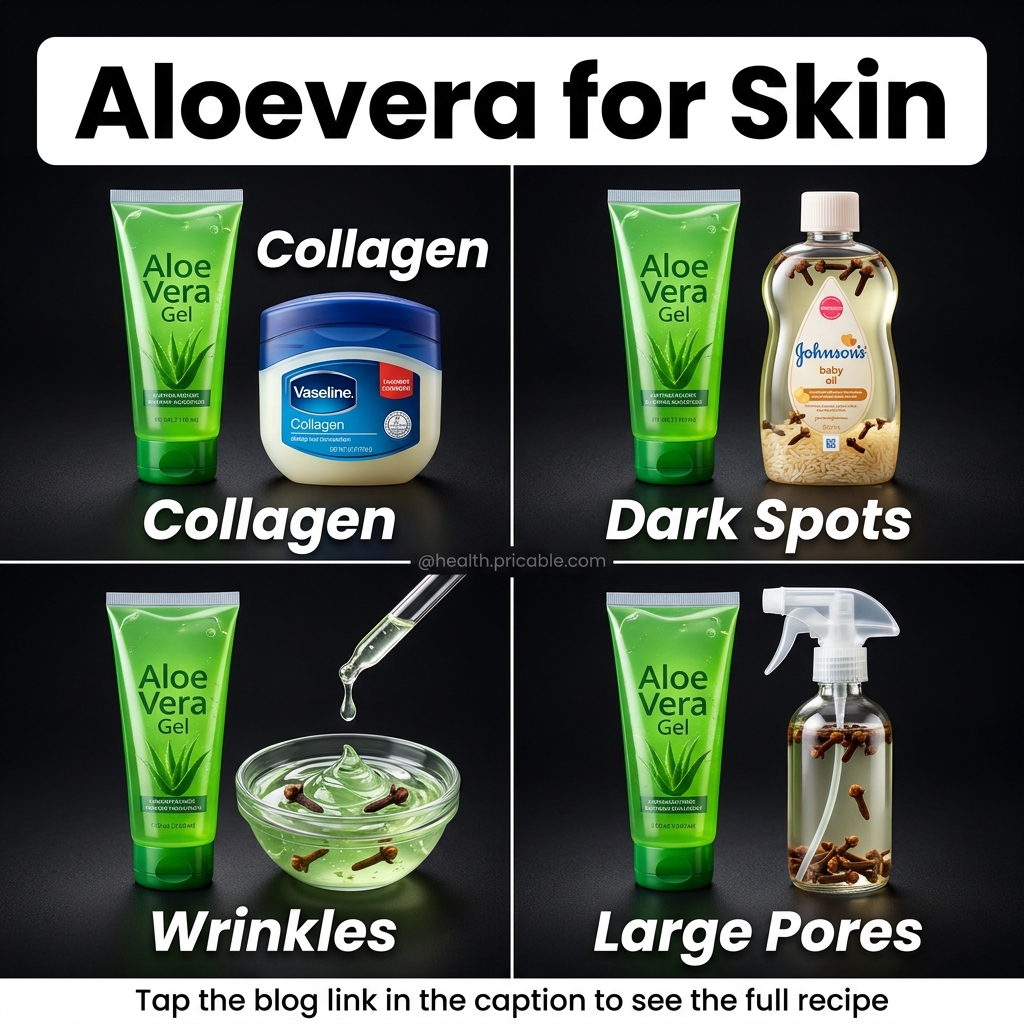
How to make aloe vera gel recipes for glow, spots, wrinkles, and pores
These recipes are inspired by the viral aloe combinations, but adjusted to be more practical for home use. Make small batches and patch test before applying to your face.
1. Aloe gel glow mask for a fresh, collagen-like look
This recipe does not create collagen, but it can make skin look more hydrated and bouncy for a short-term glow.
Ingredients:
- 1 tablespoon plain aloe vera gel
- 1/2 teaspoon fragrance-free moisturizer or gel cream
- Optional: 1 drop glycerin if your skin is very dry
Steps:
- Mix the aloe gel and moisturizer in a clean bowl.
- Apply a thin layer to clean skin.
- Leave on for 10 minutes.
- Rinse lightly or tissue off excess if it feels sticky.
- Finish with moisturizer.
Best for: dull, dry-looking, or tired skin before makeup.
Use: 2 to 3 times weekly.
2. Aloe and rice water gel for uneven-looking tone
This is a gentler alternative to using strong clove oil or heavy baby oil on the face. Rice water gives the recipe a soft, lightweight feel.
Ingredients:
- 1 tablespoon aloe vera gel
- 1 teaspoon cooled rice water
- Optional: 1 drop lightweight facial oil for dry skin only
Steps:
- Rinse 1 tablespoon uncooked rice.
- Soak it in 3 tablespoons clean water for 30 minutes.
- Strain and use 1 teaspoon of the rice water.
- Mix with aloe gel until smooth.
- Apply to areas that look dull or uneven.
- Leave on for 8 to 10 minutes, then rinse.
Best for: skin that looks dull, uneven, or tired.
Use: 2 times weekly. Use sunscreen daily for visible dark spots.
3. Aloe and clove rinse-off mask for the look of fine lines
Clove is strong, so this recipe uses clove water instead of clove oil. Keep it weak, brief, and rinse it off.
Ingredients:
- 1 tablespoon aloe vera gel
- 1/2 teaspoon weak clove water
- 1/2 teaspoon plain yogurt or honey, optional for a softer mask texture
How to make weak clove water:
- Add 2 whole cloves to 1/4 cup hot water.
- Steep for 5 minutes only.
- Cool completely.
- Use only 1/2 teaspoon in the mask.
Steps:
- Mix the aloe gel and weak clove water.
- Apply a thin layer, avoiding the eyes, lips, and broken skin.
- Leave on for 5 minutes the first time.
- Rinse well and apply moisturizer.
Best for: normal skin that tolerates botanicals well.
Use: once weekly at most. Skip clove if your skin is sensitive.
4. Chilled aloe toner for the look of large pores
Pores do not permanently open and close, but chilled aloe can make skin feel temporarily tighter and smoother.
Ingredients:
- 1 tablespoon aloe vera gel
- 2 tablespoons cooled green tea or plain distilled water
- Optional: 1 teaspoon rose water if your skin tolerates it
Steps:
- Whisk the aloe gel with the liquid until smooth.
- Pour into a clean small bottle.
- Chill for 20 minutes before use.
- Apply with clean hands or a cotton pad after cleansing.
- Follow with a light moisturizer.
Best for: oily or combination skin that wants a fresh, non-greasy feel.
Use: up to 3 times weekly. Make a fresh batch every 2 to 3 days.
Aloe vera for skin for sensitive skin: who should be careful?
Sensitive skin can still use aloe, but it should start with plain gel only. The more add-ins you use, the higher the chance of stinging, redness, or clogged pores.
- Avoid clove-based recipes if your skin burns easily.
- Avoid heavy oils or balms if you get clogged pores or acne bumps.
- Do not apply aloe mixtures over cuts, open pimples, or freshly exfoliated skin.
- Do not use DIY masks right after retinol, exfoliating acids, or strong acne treatments.
- Stop using any mixture that causes burning, swelling, itching, or a rash.
For sensitive skin, the safest routine is usually plain aloe gel for 5 to 10 minutes, followed by a basic moisturizer.
Common mistakes and quick fixes
- Mistake: using too much aloe. Why it happens: more gel feels like more results. Quick fix: use a pea-size amount for the face.
- Mistake: leaving clove mixtures on too long. Why it happens: cloves feel “active.” Quick fix: keep clove recipes weak and rinse after 5 minutes.
- Mistake: using baby oil on acne-prone facial skin. Why it happens: it looks glossy and smooth. Quick fix: use a non-comedogenic moisturizer instead.
- Mistake: skipping sunscreen while treating dark spots. Why it happens: DIY recipes feel like enough. Quick fix: apply broad-spectrum sunscreen every morning.
- Mistake: mixing a large batch. Why it happens: it saves time. Quick fix: make enough for 1 to 3 uses only.
- Mistake: applying aloe over too many actives. Why it happens: people stack routines. Quick fix: use aloe on simple skincare nights.
- Mistake: expecting pores to disappear. Why it happens: chilled skin looks tighter. Quick fix: use aloe for temporary smoothness and keep pores clear with consistent cleansing.
Safety note before you try any aloe recipe
Patch test first. Apply a small amount to the inner arm or behind the ear and wait 24 hours before using it on your face.
Keep fresh DIY mixtures refrigerated and discard them if they smell strange, change texture, or look cloudy. Do not store homemade watery mixtures for more than 2 to 3 days.
People with eczema-prone skin, fragrance sensitivity, active acne irritation, or known plant allergies should keep recipes very simple or ask a dermatologist before experimenting.
Realistic timeline: what you may notice
- Same day: skin may feel cooler, softer, and more hydrated. The look of tightness may improve temporarily.
- After 1 week: skin may look a little calmer if the formula suits you and you avoid irritating add-ins.
- After 2 to 4 weeks: texture may look smoother from consistent hydration, but dark spots and wrinkles usually need sunscreen, time, and a broader skincare plan.
Frequently Asked Questions
What should I look for before I buy aloe vera gel?
Look for aloe vera listed high on the ingredient label, minimal fragrance, no strong drying alcohol near the top, and packaging that keeps the gel clean. For face use, a fragrance-free gel is usually the safest starting point.
What is the best aloe vera gel for face care?
The best option is a lightweight, fragrance-free aloe gel that absorbs without burning or leaving a sticky film. If you have dry skin, layer it under moisturizer instead of relying on aloe alone.
How do I use aloe vera for skin without irritation?
Start with plain aloe gel, use a thin layer, and avoid adding strong ingredients like clove oil or perfume. Patch test first and rinse it off if your skin feels hot, itchy, or uncomfortable.
How do I make aloe vera gel recipes at home?
Use 1 tablespoon of aloe gel as the base, then add only one gentle ingredient at a time, such as rice water, green tea, or a small amount of moisturizer. Make small batches and keep watery mixtures refrigerated.
Is aloe vera for skin safe for sensitive skin?
It can be, but sensitive skin should use plain aloe first and avoid clove, fragrance, strong oils, and long leave-on DIY masks. A 24-hour patch test is important.
Can aloe vera remove dark spots?
Aloe may support a calmer, more hydrated look, but it is unlikely to remove dark spots by itself. Daily sunscreen is essential if you are trying to improve the look of uneven tone.
Can aloe vera shrink large pores?
Aloe cannot permanently shrink pores, but chilled aloe can make skin feel temporarily tighter. Keeping skin clean, hydrated, and protected from sun damage can help pores look less noticeable.
Can I leave aloe vera gel on my face overnight?
Some people can leave a thin layer of plain aloe overnight, but rinse-off use is better if you are new to it or prone to irritation. Avoid leaving clove, rice water, or fresh DIY mixtures on overnight.
How often should I use aloe vera on my face?
Plain aloe can often be used several times a week if your skin tolerates it. DIY masks with add-ins should be used less often, usually 1 to 3 times weekly depending on the recipe.
Once you know your skin goal, choosing the right aloe gel becomes much easier. A simple face-safe gel, a basic moisturizer, and a gentle routine will usually do more for your skin than a strong recipe used too often.
Final takeaway
- Best use-case: aloe vera is best for lightweight hydration, a fresh feel, and a smoother-looking glow.
- Simplest routine: cleanse, apply a thin aloe layer, wait 60 to 90 seconds, then moisturize.
- What to buy: choose fragrance-free aloe gel with a clean, non-sticky finish.
- What to avoid: strong clove oil, heavy baby oil on acne-prone skin, and large unrefrigerated DIY batches.
- Best next step: start with plain aloe for one week, then add one recipe only if your skin stays calm.