Yellow teeth whitening gets attention because the before-and-after promise is instantly satisfying.
The viral lemon, toothpaste, and powder-style tricks look simple, cheap, and dramatic.
But the version worth reading is the one that helps you brighten surface stains without treating your enamel like a kitchen tile.
At-home whitening can help with everyday stains from coffee, tea, wine, sauces, and tobacco residue. It cannot safely fix cavities, tartar buildup, deep gray discoloration, or black areas that may need dental care.
The goal is a cleaner-looking smile, not a harsh scrub that makes teeth sensitive.
- Whitening toothpaste can help polish surface stains over time.
- Flossing removes dark lines between teeth that brushing misses.
- Consistent brushing time matters more than brushing harder.
- Rinsing after stain-heavy drinks can reduce buildup.
- Dentist cleanings remove hardened tartar that home tricks cannot remove.
If you are deciding what to try first, start with the safest routine: clean better, polish gently, and only upgrade to whitening products if your teeth and gums tolerate them.
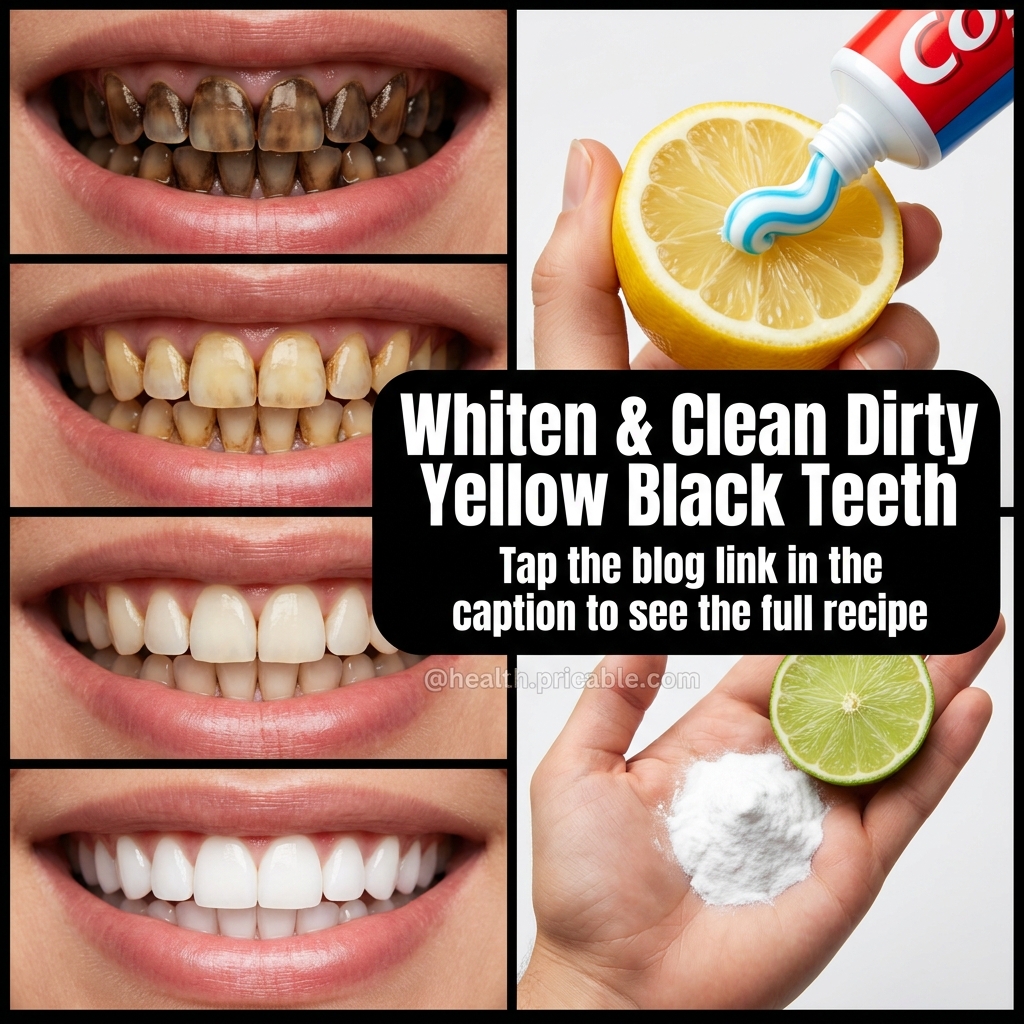
How to whiten yellow teeth at home safely
This routine is designed for common surface stains, not dental disease or severe discoloration.
Simple 7-day stain reset routine
- Brush twice daily for 2 full minutes with a soft-bristle toothbrush.
- Use a fluoride whitening toothpaste if your teeth are not sensitive.
- Floss once daily, especially before bed.
- Rinse your mouth with water after coffee, tea, cola, wine, or dark sauces.
- Use a tongue scraper or gently brush the tongue to reduce odor and buildup.
- Avoid brushing immediately after acidic foods or drinks; rinse with water first and wait about 30 minutes.
- Book a dental cleaning if stains look rough, black, green, or stuck near the gumline.
For a once-weekly polish, some people use a tiny pinch of baking soda mixed into toothpaste. Keep it gentle, do not scrub hard, and stop if sensitivity appears.
Skip lemon juice on teeth. It looks like a whitening shortcut, but acidic ingredients can make enamel more vulnerable when used as a brushing paste.
Whitening strips vs whitening toothpaste for stained teeth
Whitening toothpaste and whitening strips solve different problems.
- Whitening toothpaste: better for mild surface stains and daily maintenance.
- Whitening strips: stronger option for color change, but more likely to cause temporary sensitivity.
- Professional cleaning: best for tartar, gumline buildup, and stains that feel rough.
- Custom dentist whitening: best when you want controlled whitening with professional guidance.
If your teeth are already sensitive, start with toothpaste made for sensitivity before using strips. If you have crowns, veneers, fillings, or bonding, whitening products may not change those materials the same way they affect natural teeth.
What to look for before you buy whitening toothpaste for yellow teeth
A good whitening toothpaste should support daily oral care, not just promise instant brightness.
- Fluoride: helps support enamel protection as part of daily brushing.
- Low-abrasion feel: avoid gritty pastes that feel like sand.
- Sensitivity support: choose formulas for sensitive teeth if you feel zaps from cold drinks.
- No harsh DIY claims: be careful with products that promote lemon, charcoal overload, or extreme scrubbing.
- Clear directions: the label should tell you how often to use it.
- Realistic claims: look for surface-stain language instead of “instant permanent whitening.”
- Gum comfort: avoid products that burn your gums or make your mouth peel.
- Compatibility: check with your dentist if you have braces, veneers, crowns, or lots of dental work.
The best product is not always the strongest one. It is the one you can use consistently without sensitivity, gum irritation, or enamel worries.
How to remove black stains from teeth safely
Black or very dark stains should be treated carefully. They may be surface stains, tartar, old dental work, decay, or something else a dentist should examine.
Common mistakes and quick fixes
- Mistake: scrubbing black stains with lemon. Why: acid plus abrasion can be rough on enamel. Fix: rinse, brush normally, and schedule a cleaning.
- Mistake: using a hard toothbrush. Why: it can irritate gums. Fix: switch to a soft-bristle brush.
- Mistake: brushing harder instead of longer. Why: pressure does not equal better cleaning. Fix: brush gently for 2 minutes.
- Mistake: skipping floss. Why: stains often collect between teeth. Fix: floss nightly.
- Mistake: expecting toothpaste to remove tartar. Why: hardened tartar needs professional tools. Fix: book a dental cleaning.
- Mistake: whitening over cavities. Why: sensitivity can worsen. Fix: treat dental issues first.
Safety note
Do not use lemon juice, vinegar, bleach, household cleaners, or abrasive powders as tooth whiteners. Stop whitening if you feel sharp sensitivity, gum burns, or pain.
See a dentist promptly if stains are black, spreading, painful, rough near the gums, or paired with bleeding or bad odor.
Realistic timeline
- Same day: teeth may look cleaner after proper brushing and flossing.
- 1 week: surface stains may look lighter with consistent brushing and fewer stain-heavy drinks.
- 2 to 4 weeks: whitening toothpaste may gradually improve mild yellowing, while deeper stains may need strips or professional care.
Yellow teeth whitening for coffee drinkers
Coffee stains are common because dark pigments can cling to plaque and rough areas on teeth. You do not have to quit coffee to improve the look of your smile, but you do need a better after-coffee routine.
- Drink water after coffee.
- Avoid sipping coffee slowly for hours.
- Do not brush immediately after acidic drinks; rinse first and wait.
- Floss daily to reduce dark lines between teeth.
- Schedule regular cleanings if stains return quickly.
FAQ
What should I look for before I buy whitening toothpaste for yellow teeth?
Look for fluoride, clear usage directions, sensitivity-friendly options, and realistic surface-stain claims. Avoid extremely gritty formulas or products that encourage harsh scrubbing.
Are whitening strips or whitening toothpaste better for stained teeth?
Whitening toothpaste is better for mild daily surface stains. Whitening strips may create more noticeable color change, but they can cause sensitivity and should be used as directed.
How can I whiten yellow teeth at home safely?
Brush twice daily for 2 minutes, floss daily, rinse after stain-heavy drinks, and use a gentle whitening toothpaste if your teeth tolerate it. Avoid lemon-based brushing tricks.
How do I remove black stains from teeth safely?
Do not try to scrape or bleach black stains at home. Black stains may need a professional cleaning or dental exam, especially if they are near the gumline or feel rough.
What is the best yellow teeth whitening routine for coffee drinkers?
Drink water after coffee, avoid all-day sipping, brush twice daily, floss nightly, and use whitening toothpaste for surface stains if your teeth are not sensitive.
Can lemon and toothpaste whiten teeth?
It may look like a quick hack, but lemon is acidic and not a good brushing ingredient for enamel. A safer choice is a fluoride whitening toothpaste used as directed.
Why are my teeth yellow even though I brush?
Yellowing can come from enamel thickness, surface stains, plaque, tartar, aging, medication history, or dental conditions. A dentist can help identify the cause.
Do whitening products work on crowns or veneers?
Most whitening products are designed for natural teeth and may not change crowns, veneers, fillings, or bonding. Ask your dentist before whitening if you have visible dental work.
Before buying a whitening product, decide whether your main issue is surface stain, sensitivity, tartar, or deeper discoloration. That choice saves money and protects your smile.
Final takeaway
- Best use-case: mild yellow surface stains from coffee, tea, or everyday buildup.
- Simplest routine: brush 2 minutes twice daily, floss nightly, rinse after staining drinks.
- What to buy: fluoride whitening toothpaste or sensitivity-friendly whitening products.
- What to avoid: lemon brushing, hard scrubbing, bleach, and gritty powders.
- Next step: try a 7-day stain reset and book a dental cleaning if stains are dark, rough, or stubborn.