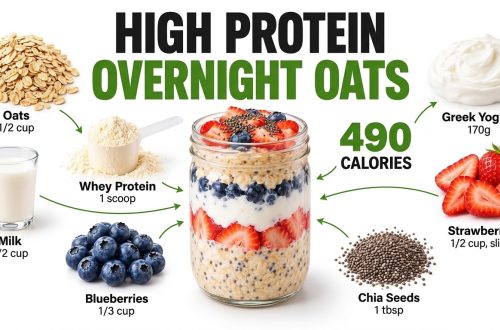
If you’ve ever felt tired, hungry, or sluggish after lunch — you’re not alone.
Most people assume:
👉 “I ate healthy, so I should feel good.”
But here’s the truth:
Healthy food ≠ balanced meal
The real issue is how your meal is built.
A proper lunch should include:
- Protein → keeps you full
- Fiber → slows digestion
- Healthy fats → stabilize energy
Below are 15 fully detailed, quick recipes you can actually follow.
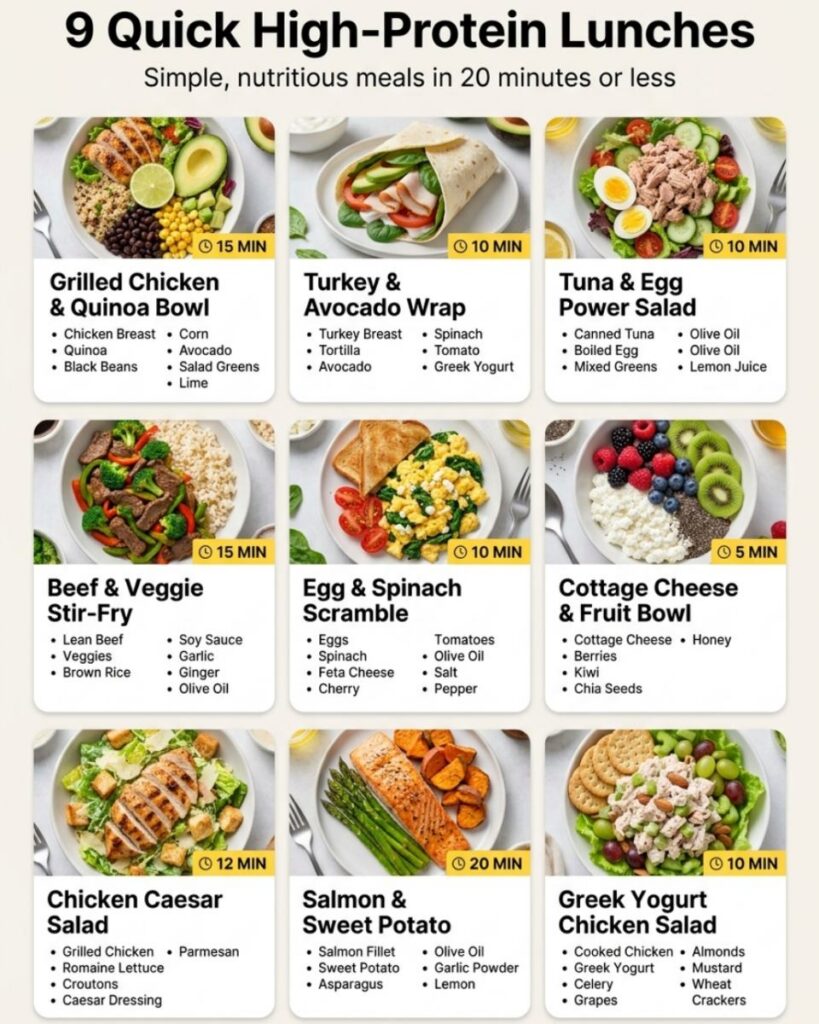
High Protein Lunch Idea #1: Grilled Chicken & Quinoa Bowl
Ingredients:
- 150g chicken breast
- 1/2 cup cooked quinoa
- 1/2 avocado
- 1 cup mixed greens
- 1 tbsp olive oil
- Salt, pepper
Instructions:
- Season chicken with salt and pepper
- Heat a pan and cook chicken 6–7 minutes per side
- Let rest, then slice
- In a bowl, combine quinoa, greens, avocado
- Add chicken and drizzle olive oil
Why it works:
Protein + fiber combo slows glucose release → steady energy.
Turkey & Avocado Wrap (10 minutes)
Ingredients:
- 1 whole grain tortilla
- 100g turkey breast
- 1/2 avocado
- Spinach, tomato
Instructions:
- Mash avocado and spread onto tortilla
- Add turkey and vegetables
- Roll tightly and slice
Insight:
Healthy fats from avocado reduce hunger spikes.

Tuna & Egg Power Salad (10 minutes)
Ingredients:
- 1 can tuna
- 2 boiled eggs
- 1 cup greens
- 1 tbsp olive oil
- Lemon juice
Instructions:
- Boil eggs for 8–10 minutes
- Mix tuna with olive oil + lemon
- Slice eggs and combine everything
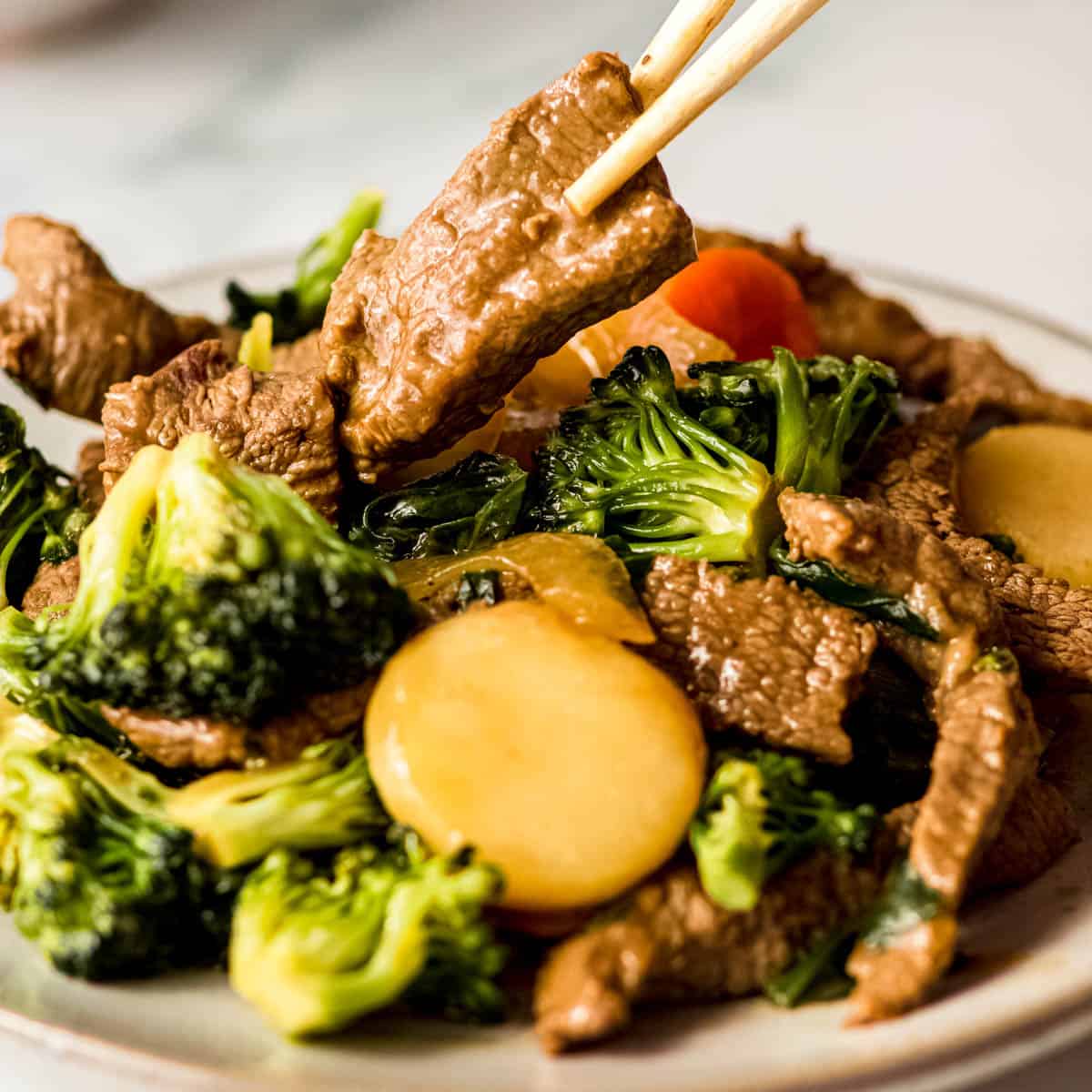
Beef & Veggie Stir-Fry (15 minutes)
Ingredients:
- 120g lean beef
- 1 cup vegetables
- 1/2 cup brown rice
- 1 tbsp soy sauce
- Garlic
Instructions:
- Heat oil, sauté garlic
- Add beef and cook quickly
- Add vegetables and soy sauce
- Serve over rice
Egg & Spinach Scramble (10 minutes)
Ingredients:
- 3 eggs
- 1 cup spinach
- 30g feta cheese
Instructions:
- Cook spinach until soft
- Add eggs and stir slowly
- Sprinkle feta before serving
Cottage Cheese & Fruit Bowl (5 minutes)
Ingredients:
- 1 cup cottage cheese
- 1/2 cup berries
- 1 tbsp chia seeds
Instructions:
Mix everything in a bowl
👉 Slow-digesting protein = longer fullness.

Chicken Caesar Salad (12 minutes)
Ingredients:
- 150g grilled chicken
- Romaine lettuce
- Parmesan cheese
- Caesar dressing
Instructions:
- Grill chicken and slice
- Toss lettuce with dressing
- Add chicken and parmesan
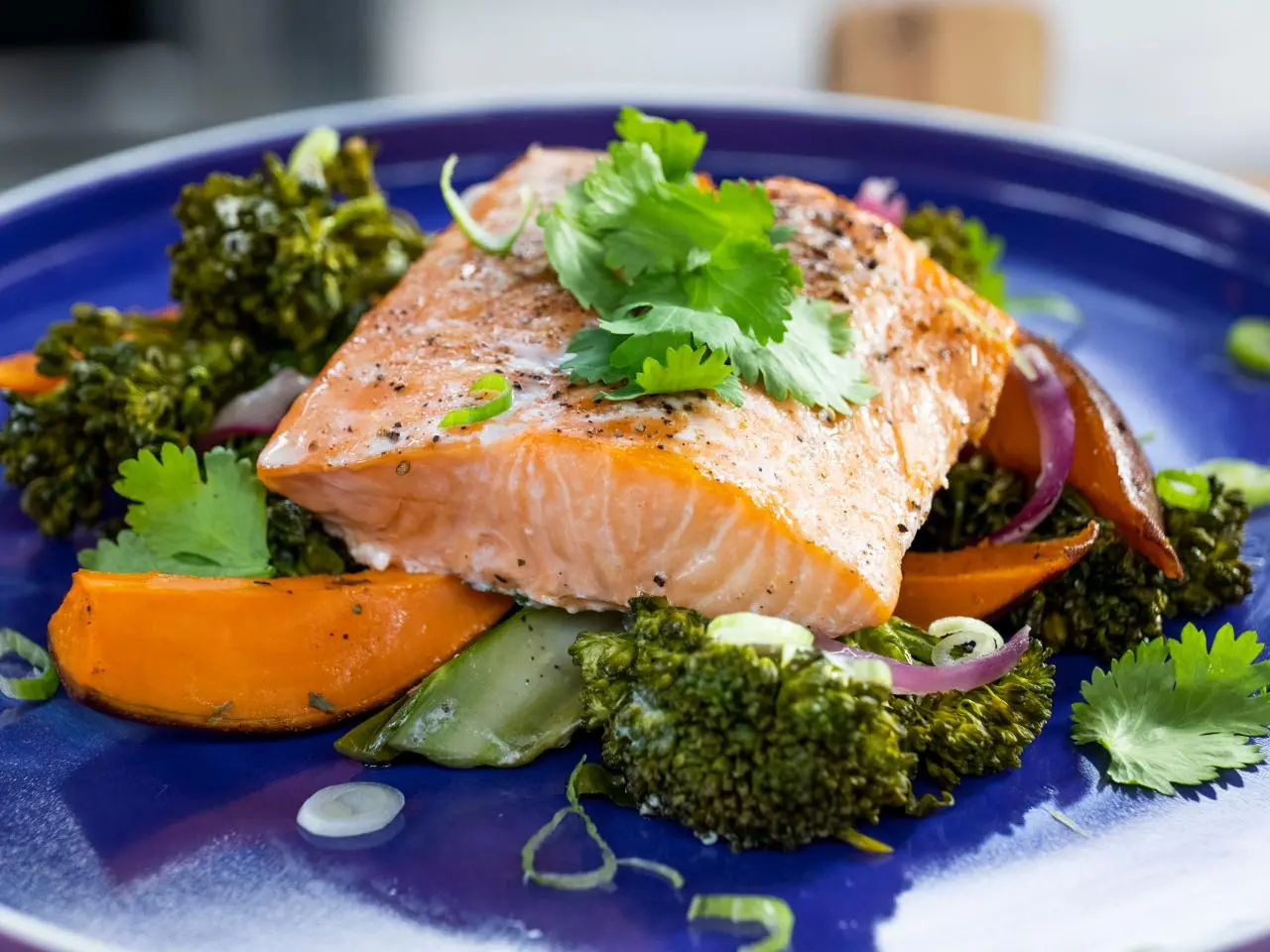
Salmon & Sweet Potato Plate (20 minutes)
Ingredients:
- 120g salmon
- 1 sweet potato
- Vegetables
- 1 tbsp olive oil
Instructions:
- Bake salmon at 180°C for 12–15 min
- Roast sweet potato
- Cook vegetables
👉 Omega-3 fats help regulate metabolism.
Greek Yogurt Chicken Salad (10 minutes)
Ingredients:
- 120g cooked chicken
- 3 tbsp Greek yogurt
- Celery
Instructions:
Mix everything together
👉 Higher protein, lower fat than mayo.
Yogurt, Berries & Nuts (5 minutes)
Ingredients:
- 1 cup Greek yogurt
- 1/2 cup mixed berries
- 1 tbsp almonds or walnuts
Instructions:
- Add yogurt to bowl
- Top with berries and nuts
- Mix lightly or eat layered
Why it works:
- Yogurt = protein
- Berries = fiber + antioxidants
- Nuts = healthy fats
👉 This combo slows sugar absorption and prevents energy crashes.
Tuna & Crackers Plate (5–10 minutes)
Ingredients:
- 1 can tuna
- 4–6 whole grain crackers
- 1 tbsp olive oil
- Optional: olives or nuts
Instructions:
- Drain tuna and mix with olive oil
- Serve with crackers
- Add olives or nuts if available
👉 Adding fat (olive oil/nuts) improves satiety significantly.
Mini Rice & Eggs Bowl (10 minutes)
Ingredients:
- 1/2 cup cooked rice
- 2 eggs
- 1/2 cup greens
- 1 tsp soy sauce
Instructions:
- Cook eggs (fried or boiled)
- Place over rice
- Add greens and drizzle soy sauce
👉 Simple meals reduce decision fatigue → easier to stay consistent.

Chicken & Veggie Wrap (10 minutes)
Ingredients:
- 100g cooked chicken
- Whole grain wrap
- Lettuce, cucumber, carrots
- 1 tbsp yogurt or sauce
Instructions:
- Lay wrap flat
- Add chicken and vegetables
- Drizzle sauce
- Roll tightly
👉 Great for meal prep and portability.
Avocado Egg Toast (10 minutes)
Ingredients:
- 1 slice whole grain bread
- 1/2 avocado
- 1 egg
- Salt, pepper
Instructions:
- Toast bread
- Mash avocado and spread
- Add cooked egg on top
👉 Balanced macros prevent rapid blood sugar spikes.
Lentil & Chickpea Protein Bowl (15 minutes)
Ingredients:
- 1/2 cup lentils
- 1/2 cup chickpeas
- 1 cup vegetables
- 1 tbsp olive oil
Instructions:
- Cook lentils until soft
- Combine with chickpeas and vegetables
- Drizzle olive oil
👉 High fiber + plant protein supports gut health and long-lasting energy.

The Key Insight Most People Miss
Most “healthy meals” fail because:
- too low in protein
- too fast to digest
- missing fat
👉 Fast digestion = fast hunger.
Smart Nutrition Tips & Notes (Simple but Important)
To make these meals actually work for your energy and hunger, a few small adjustments matter more than people think.
First, try to prioritize protein in every meal. Protein doesn’t just build muscle — it directly affects how full you feel. Studies show higher-protein meals increase satiety hormones (like GLP-1), which helps reduce cravings later in the day.
Second, don’t eat carbs “alone” too often. Meals like fruit, toast, or rice by themselves digest very quickly and can cause blood sugar spikes followed by crashes. A simple fix is to pair carbs with fat or protein — for example, fruit with yogurt, or rice with eggs.
Another important point: fat is not the enemy. Healthy fats (olive oil, nuts, avocado) actually slow digestion and help stabilize energy. Without fat, meals often digest too quickly, leaving you hungry again within a short time.
Also, be careful with liquid calories like smoothies or juices. Even if they’re healthy, they’re absorbed faster than solid food and don’t trigger fullness as effectively. If you do drink smoothies, make them thicker by adding chia seeds, oats, or yogurt.
Fiber is another key factor many people overlook. It doesn’t just help digestion — it slows glucose absorption and supports gut health. Aim for around 25–35g fiber per day from vegetables, fruits, legumes, and whole grains.
Finally, consistency matters more than variety. You don’t need dozens of recipes — just a few balanced meals you can repeat easily. This reduces decision fatigue and makes healthy eating sustainable long term.
References
- Leidy HJ et al. (2015). The role of protein in weight loss and maintenance. American Journal of Clinical Nutrition
- Slavin JL (2013). Dietary fiber and body weight. Nutrition Journal
- Ludwig DS (2002). Glycemic index and metabolism. JAMA
- Wolfe RR et al. (2017). Optimal protein intake in adults. Journal of Nutrition
Final Thought
You don’t need complicated recipes.
👉 You need meals that:
- keep you full
- stabilize energy
- and are easy to repeat daily
Because consistency is what actually changes your body.