A fence line can be much more than a boundary. With the right plants, it becomes shelter, food, nesting space, pollinator habitat, and a safe travel corridor for birds, butterflies, beneficial insects, frogs, and small backyard wildlife. What looks like a narrow strip of land can become one of the hardest-working parts of your garden.
This is especially powerful in suburban and small-lot landscapes. Many gardeners think wildlife habitat requires a large meadow or rural acreage. In reality, a fence line is often the perfect place to start. It already forms a visual edge. It is usually underused. And when planted in layers, it becomes a connected ribbon of life that supports the garden far beyond its footprint.
The beauty of this approach is that it is practical. You are not simply planting for looks. You are building a living system that improves pollination, reduces bare ground, softens fences, cools the soil, and turns routine garden work into something more meaningful and sustainable.
Why a fence line makes an ideal wildlife corridor
Wildlife tends to move along edges. Fence lines, hedges, and planted borders naturally create these pathways. When that edge includes flowers, berries, ground cover, grasses, and shrubs, it becomes much more than a route. It becomes habitat.
A good wildlife fence line does four jobs at once:
- offers cover from predators and weather
- provides food through flowers, seeds, berries, or foliage
- creates breeding or nesting space
- connects isolated planting areas into one useful corridor
That last point matters more than many people realize. A single flower patch is helpful. A connected strip of habitat is far more valuable, because it lets wildlife move through your landscape instead of only stopping briefly.
The best design strategy: plant in layers, not rows
The biggest mistake in fence-line planting is using a single line of one plant type. That can look neat at first, but it does not create the depth or function wildlife needs.
A better structure looks like this:
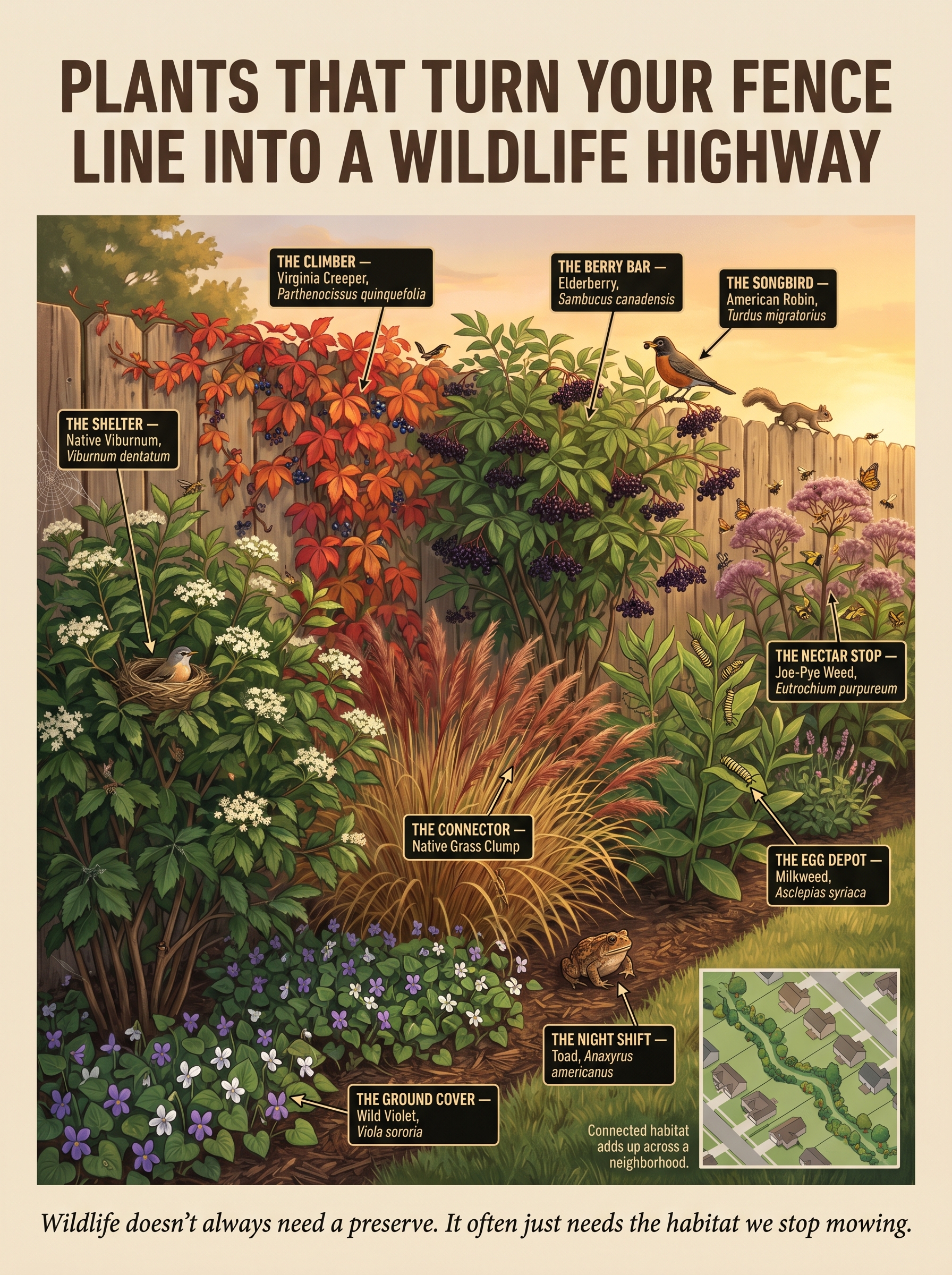
Back layer: climbers and taller shrubs
These soften the fence itself and create vertical cover.
Middle layer: flowering perennials and berrying shrubs
These provide nectar, seeds, and seasonal food.
Lower layer: grasses and leafy habitat plants
These help with movement, cover, and insect life.
Front edge: ground covers
These cool the soil, reduce weeds, and create hiding space for beneficial creatures.
When these layers work together, the fence line starts behaving like a living edge instead of a decorative strip.
1. Virginia Creeper: the climber that turns a fence into habitat
Virginia creeper is one of the best native vines for quickly covering a fence and making it useful to wildlife. It climbs well, softens hard wood or wire, and adds strong seasonal beauty with rich fall color.
Why it matters
This vine does more than hide a fence. It creates a vertical travel route, cover for birds, and berries that support wildlife later in the season.
USDA zones
Virginia creeper is widely suited to Zones 3–9, which makes it useful across much of the United States.
Practical care tip
Guide it early. Young growth is easier to direct than older, tangled stems. A little training now prevents a lot of correction later.
Best use
Fence panels, back corners, privacy screens, and wildlife-friendly vertical cover.

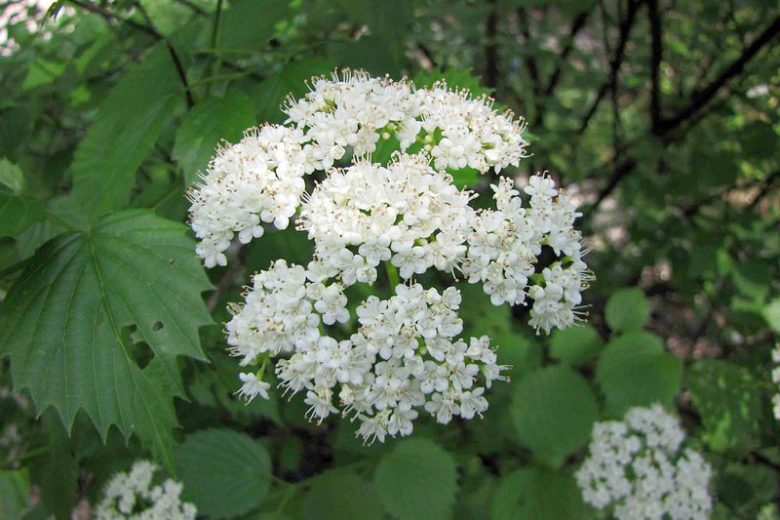
2. Arrowwood Viburnum: dependable shelter and nesting support
A native viburnum is one of the smartest shrubs you can place along a fence line because it brings structure, flowers, dense cover, and food value all in one plant. Arrowwood viburnum is especially useful for nesting and protective shelter.
Why it matters
Dense shrubs create the kind of layered safety many birds need. They are not just feeding stations. They are places where wildlife can actually stay.
USDA zones
Arrowwood viburnum typically performs well in Zones 2–8.
Practical care tip
Let it keep some of its natural fullness. Over-pruning may make it look tidier, but it also reduces the dense interior cover that birds value.
Best use
Mid- to back-layer planting, especially where you want privacy and habitat at the same time.
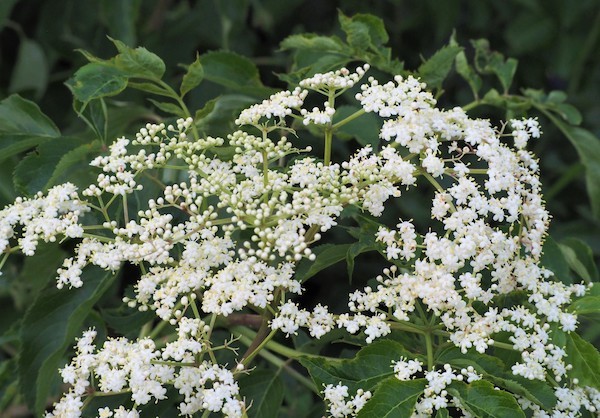
3. Elderberry: the berry bar that feeds birds and pollinators
Elderberry is one of the most useful native shrubs for a wildlife fence line. Its flowers support pollinators, and its dark berry clusters become a valuable food source later on.
Why it matters
This is the kind of plant that adds true seasonal productivity. It feeds insects in bloom and birds when fruit ripens.
USDA zones
American elderberry is generally suited to Zones 3–9.
Practical care tip
Give elderberry enough room. It is not a tiny ornamental shrub. It performs best when allowed to become a generous, fruiting presence.
Best use
Fence corners, mid-back layers, wildlife hedges, and looser naturalized plantings.
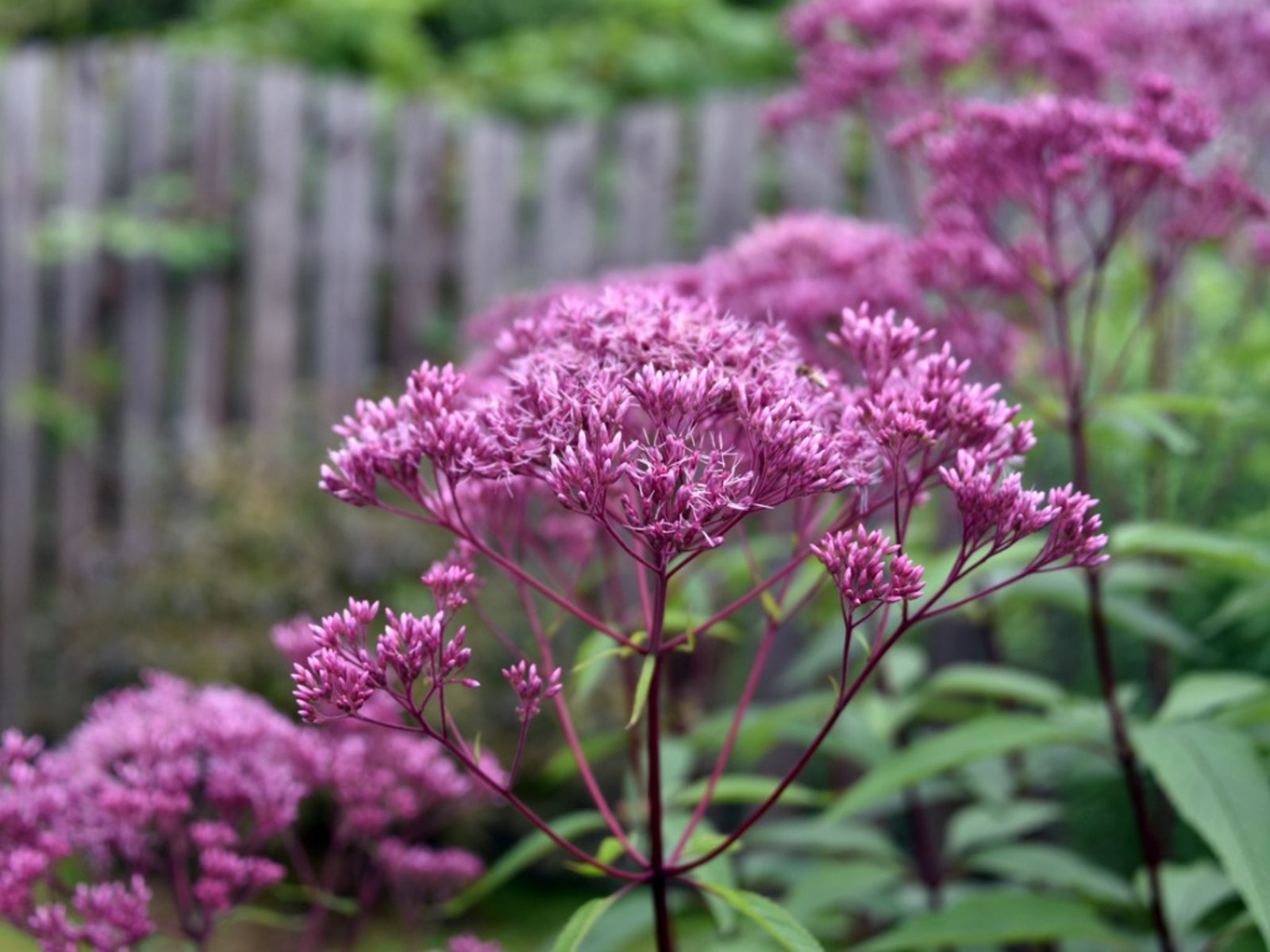
4. Joe-Pye Weed: a nectar stop that brings the fence line alive
Joe-Pye weed is one of the best perennials for supporting butterflies and other pollinators in late summer. It adds height, flower power, and a softer natural look that pairs beautifully with shrubs and grasses.
Why it matters
A wildlife corridor needs more than cover. It needs active feeding stations. Joe-Pye weed is one of the strongest late-season nectar plants for that role.
USDA zones
Most Joe-Pye weed types perform well in Zones 4–9.
Practical care tip
Place it where the soil stays reasonably moist, especially during establishment. It is tougher once settled, but young plants appreciate consistency.
Best use
Behind shorter flowers, beside shrubs, or in sunny-moist portions of the fence line.
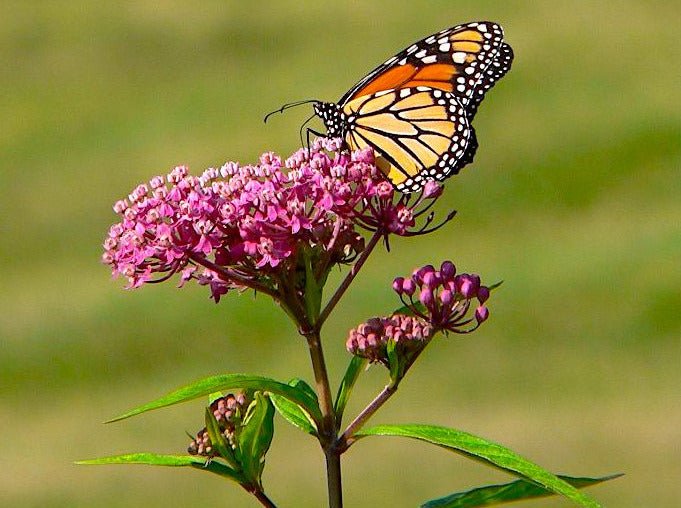
5. Milkweed: the egg depot every pollinator strip needs
If you want your fence line to support more than casual butterfly visits, milkweed belongs in the planting. It is one of the most important host plants for monarch butterflies and also serves many pollinators with its flowers.
Why it matters
Some plants feed adult insects. Milkweed does more. It supports the next generation by giving caterpillars a place to develop.
USDA zones
Common milkweed and several other native milkweed species suit broad parts of the U.S., often from Zones 3–9, though species choice should match your region.
Practical care tip
Choose a milkweed native to your area when possible. Regional fit matters, both for plant performance and ecological usefulness.
Best use
Sunny middle-layer plantings, pollinator borders, and naturalized fence strips.
6. Native grass clumps: the quiet connector that makes everything work
A wildlife planting without grass structure often feels incomplete. Native grass clumps provide movement, seasonal beauty, nesting material, insect habitat, and safe passage through the planting.
Why it matters
Grasses connect the larger plants. They create the “in-between” habitat that many creatures use while moving, hiding, or nesting.
USDA zones
This depends on the grass species, but many excellent native bunch grasses work across Zones 3–9.
Practical care tip
Choose clump-forming native grasses rather than aggressive spreaders if the space is narrow. That gives you texture and habitat without losing control of the strip.
Best use
Middle and lower layers, woven between shrubs and flowering perennials.

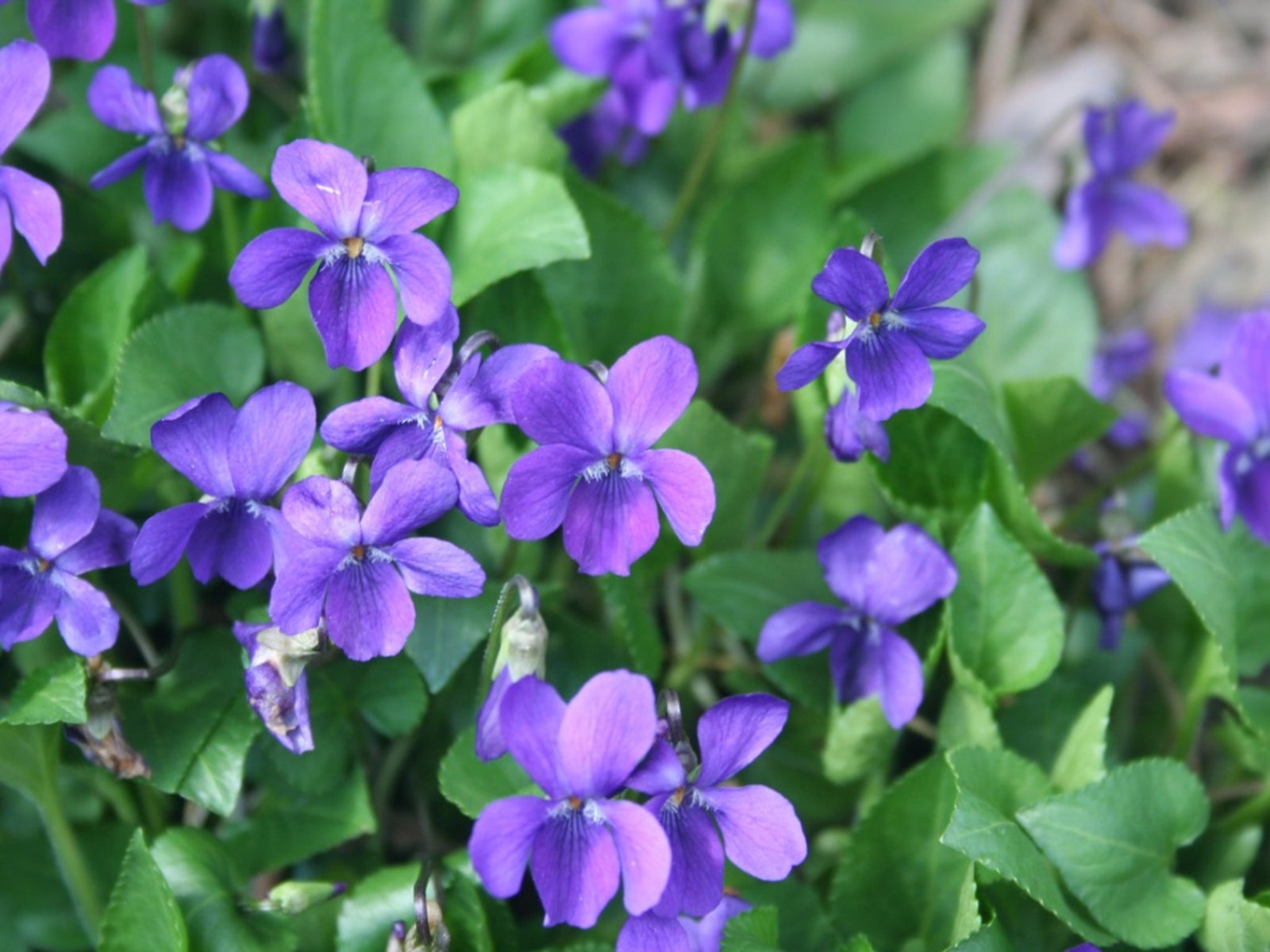
7. Wild violet: the ground cover that turns bare soil into living habitat
Wild violet is one of the most useful ground-layer plants for a wildlife edge. It fills gaps, softens the front of the planting, and creates low shelter for beneficial insects and small creatures.
Why it matters
Bare soil is a missed opportunity. Ground covers like wild violet protect the soil, reduce weeding pressure, and add ecological depth at the lowest level.
USDA zones
Wild violet is broadly adapted in Zones 3–9.
Practical care tip
Use it where you actually want a natural look. It is lovely and useful, but it suits an ecological border better than a highly formal edge.
Best use
Front edges, under shrubs, and around grass clumps where the soil would otherwise stay exposed.
How to build your fence line in a way that really works
Start with a few strong anchors
Begin with one vine, one or two shrubs, one flowering perennial group, one grass type, and one ground cover. You do not need dozens of species to create real function.
A simple starter combination might be:
- Virginia creeper on the fence
- elderberry and viburnum as shrub anchors
- Joe-Pye weed and milkweed for pollinators
- a native bunch grass for movement and habitat
- wild violet at the front edge
That is already a real corridor, not just a flower bed.
Leave some mess on purpose
A wildlife fence line should not be treated like a showroom planting. Cut back only what needs cutting. Leave some stems, seed heads, and leaf litter where appropriate. That is where many insects and small animals actually live.
Think season by season
A good fence-line habitat offers something in every season:
- spring shelter and fresh growth
- summer nectar and cover
- autumn berries, seeds, and warm-season structure
- winter stems, root protection, and shelter
That is what turns a planted edge into a functioning habitat.
Maintenance tips that keep it beautiful and useful
Water deeply in the first season
Native and adapted plants still need help while establishing. Deep watering early builds roots that later make the planting more self-sufficient.
Mulch, but do not smother
A natural mulch layer helps hold moisture and reduce weeds, but keep crowns and stems from staying buried or constantly damp.
Edit, do not sterilize
Remove invasive weeds, weak growth, or damaged stems. But avoid the urge to make everything uniformly trimmed. Wildlife needs texture and layers, not just neatness.
Watch how wildlife uses it
This is one of the most rewarding parts. Notice where birds perch, where butterflies linger, where toads rest, and where pollinators concentrate. Let that observation shape future planting.
Final thoughts: a fence line can become one of the most alive parts of your garden
A wildlife garden does not have to begin with acreage. It can begin with a fence. When you plant Virginia creeper for cover, viburnum for shelter, elderberry for fruit, Joe-Pye weed for nectar, milkweed for caterpillars, native grasses for movement, and wild violet for living ground cover, you are doing more than decorating an edge.
You are creating connection.
And that is what wildlife needs most in many neighborhoods: not one isolated flower patch, but a place to move, feed, hide, nest, and return. Once your fence line starts doing that work, the whole garden changes. It becomes less like a boundary and more like a living pathway.