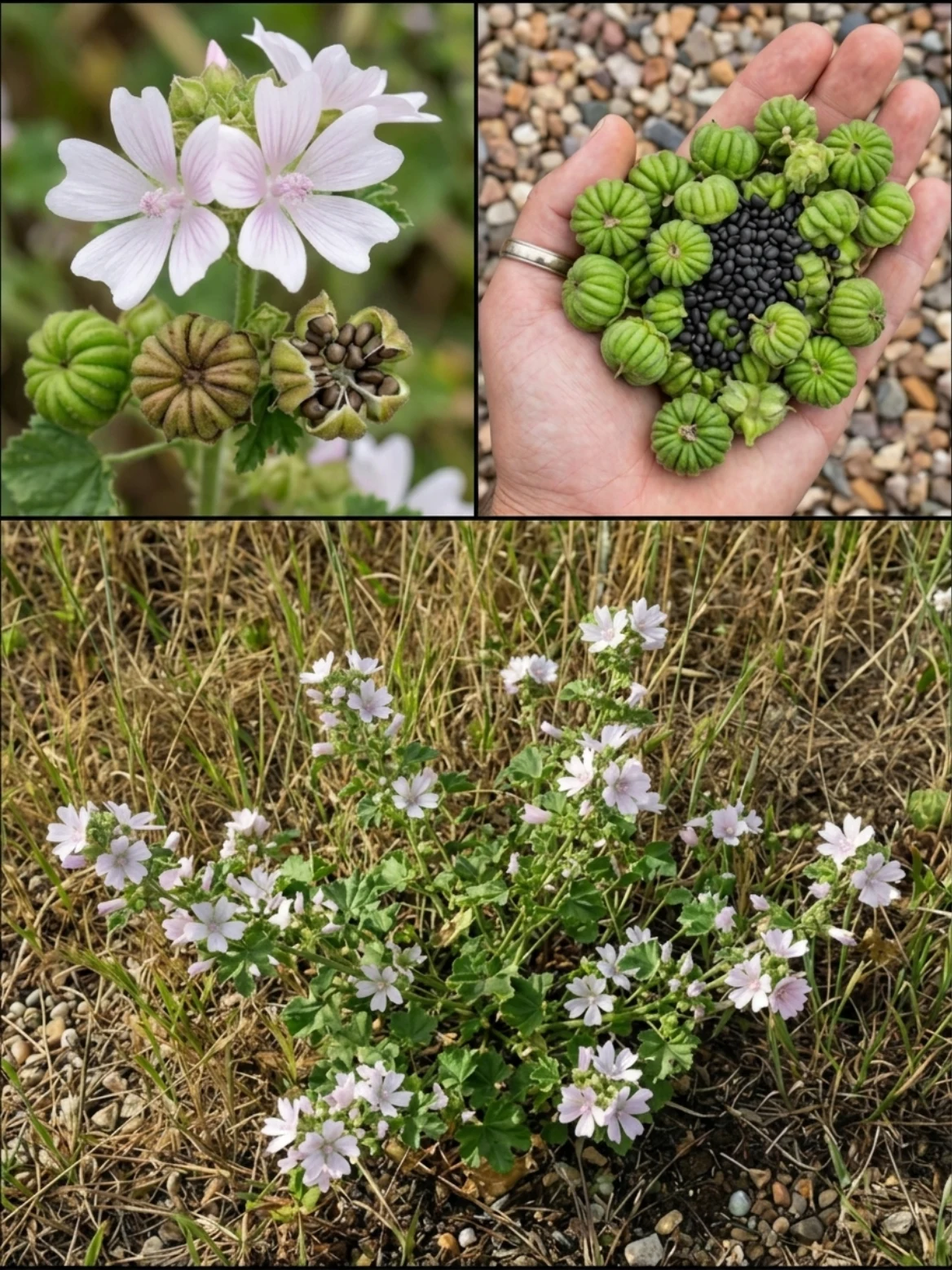
This plant looks like common mallow, often called cheeseweed mallow because of its small round seed pods. In traditional herbal use, mallow species such as Malva sylvestris and Malva neglecta are valued for their mucilage, a soothing plant substance that can coat irritated tissues. That is why mallow has long been used for dry cough, mouth and throat irritation, and mild stomach discomfort. (European Medicines Agency (EMA)
What makes this herb so interesting is how gentle it is. It does not rely on strong bitterness or heat. Instead, it works more like a soft, calming layer. Most people overlook it because it grows low, blooms quietly, and looks simple. But in herbal traditions, simple herbs are often the ones people return to again and again. (PMC)
What This Herb Is Traditionally Used For
Common mallow is traditionally used when tissues feel dry, irritated, or inflamed. European Medicines Agency monographs describe mallow leaf and flower preparations as traditional herbal medicines for mouth or throat irritation with associated dry cough and for mild stomach and gut discomfort.
That traditional use makes sense when you look at the plant chemistry. Reviews of Malva sylvestris describe it as rich in mucilage, along with flavonoids and phenolic compounds. Mucilage is the key reason people reach for mallow when they want something soothing rather than stimulating.
Ingredients
For a simple traditional-style mallow tea, use:
- 1 to 2 teaspoons dried mallow leaves and flowers, or a small handful of fresh clean leaves and flowers
- 1½ to 2 cups hot water
If you are drying your own herb, make sure the plant is correctly identified and gathered from a clean area away from roadsides, pesticides, and pet contamination.
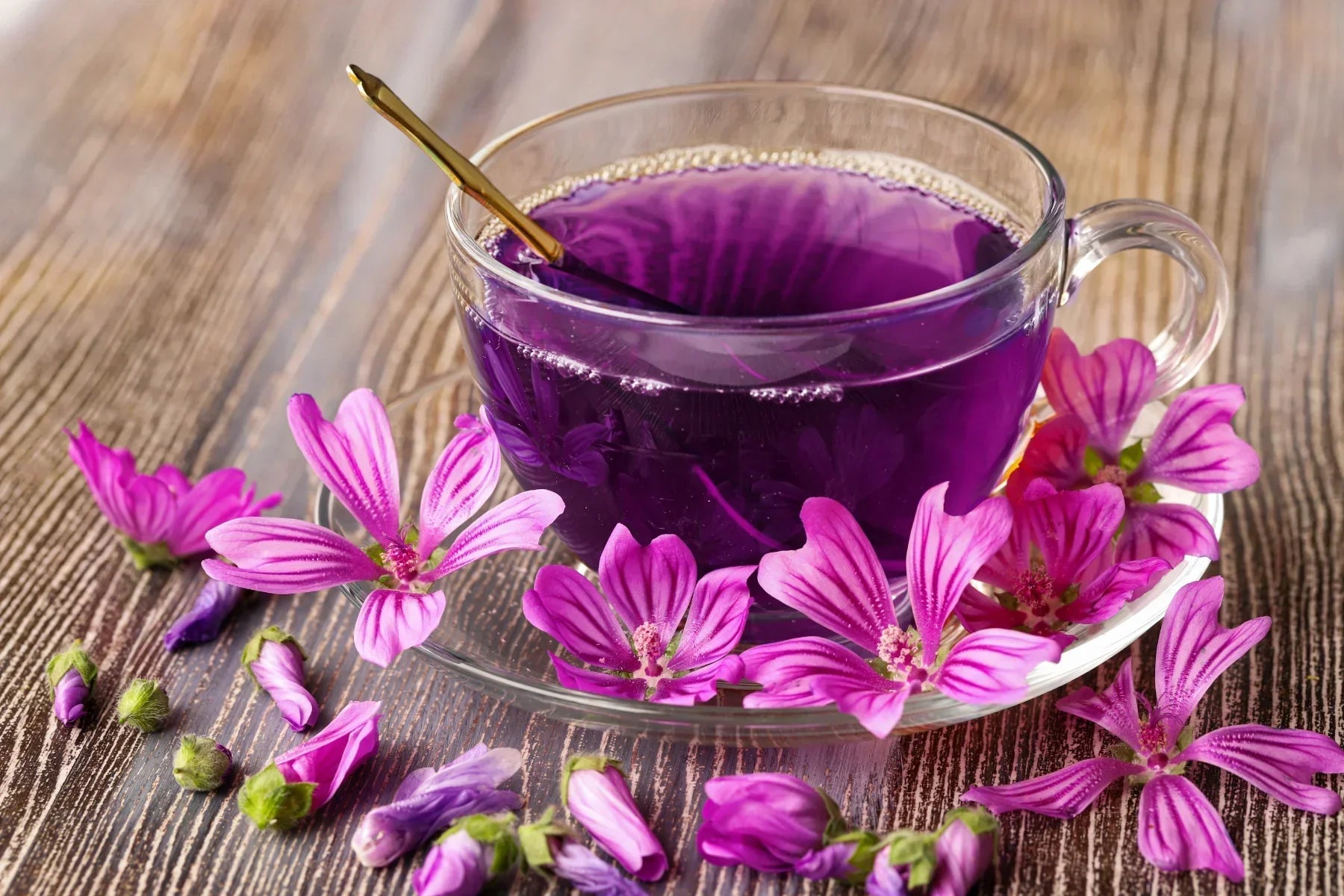
How to Prepare Common Mallow Tea
This herb is best prepared gently.
Step 1: Clean the plant material
Rinse fresh leaves and flowers lightly if you are using them fresh.
Step 2: Add hot water
Place the mallow in a cup or teapot and pour over hot water.
Step 3: Cover and steep
Cover and let it steep for about 10 to 15 minutes. Covering helps hold in the moisture and keeps the infusion from cooling too quickly.
Step 4: Strain and drink
Strain and sip slowly while warm.
A mild cup is often enough. Since mallow is a soothing herb, it usually does not need to be made very strong to feel useful.
How to Use It
This is the kind of remedy people usually use for surface comfort.
For throat and dry cough
Sip a warm cup slowly so it has time to coat the throat.
For mild stomach irritation
Drink one small cup after meals or when the stomach feels dry, irritated, or unsettled.
Best time to take it
Morning or evening both work well. For cough, many people prefer it in the evening when throat irritation tends to feel worse.
Why It Works
The main reason people use mallow is its demulcent effect. EMA specifically describes mallow preparations as demulcent, meaning they soothe irritated mucous membranes. That is why the herb is linked with relief for dry, scratchy throat irritation and mild gastrointestinal discomfort.
Modern reviews also support the idea that mallow’s traditional use is tied to its mucilage and other phytochemicals. Researchers describe centuries of use for cough, cold, diarrhea, and constipation, while also noting anti-inflammatory and antioxidant properties in preclinical research. That does not make it a cure, but it does help explain why the herb kept its reputation over time.
Who May Benefit Most
This herb may be especially appealing for people who:
- get a dry, tickly cough
- want a gentle throat-soothing tea
- feel mild stomach irritation after meals
- prefer soft, non-spicy herbal remedies
It is more of a comfort herb than a dramatic one. That gentle profile is exactly why many people like it.
When You May Notice Relief
Mallow is not usually the kind of remedy that takes days to feel. Because it works by soothing irritated surfaces, some people notice throat comfort within 15 to 30 minutes of sipping it slowly. For mild stomach irritation, the settling effect may show up within the same day. Its role is supportive and gentle, not aggressive or fast-acting like a medicine designed for acute disease.
Safety Notes
This is an herb with a relatively gentle traditional profile, but it still deserves care. EMA monographs classify mallow leaf and flower medicines under traditional use, which means the accepted uses are based on long-standing practice rather than strong modern clinical proof.
Use caution if:
- symptoms are severe or persistent
- you have shortness of breath, wheezing, high fever, or chest pain
- stomach pain is strong or ongoing
- you are pregnant, breastfeeding, or taking regular medication and want to use herbs frequently
Also, correct plant identification matters. A lot of low-growing wild plants can look similar at a glance.
Final Takeaway
Common mallow tea is one of those traditional remedies that does not look impressive at first, yet has a long reputation for dry cough, throat irritation, and mild stomach discomfort. Its soothing mucilage is the real reason people keep using it.
When used as a gentle tea, it fits beautifully into a simple home routine. It is not a miracle herb, but for the right kind of irritation, it may be exactly the soft, calming support people are looking for.
Related Source Science
European herbal monographs recognize mallow leaf and flower for traditional use in mouth and throat irritation with dry cough and mild gastrointestinal discomfort, while modern reviews highlight mucilage, flavonoids, and phenolic compounds as key constituents behind its soothing reputation.