Some wildflowers look so cheerful and harmless that most people never imagine they were ever used in herbal traditions.
This bright yellow bloom appears to be yellow toadflax, often called butter-and-eggs. It has delicate snapdragon-like flowers, narrow leaves, and a long history of being mentioned in folk herbal use. People are often surprised by this plant because it looks ornamental, yet it has traditionally been linked with digestion, mild water retention, and gentle cleansing support.
At the same time, this is one of those herbs that should be approached with care. Wildflower remedies sound simple, but correct identification matters. A lookalike or a poorly prepared herb can turn a gentle old remedy into a bad idea very quickly.
What This Flower Is Traditionally Used For
In traditional herbal use, yellow toadflax is sometimes associated with:
- Mild digestive sluggishness
- A heavy or bloated feeling
- Gentle fluid-balance support
- Old-fashioned cleansing teas
- Light seasonal herbal routines
What makes this plant interesting is that it is not usually described as a strong everyday tea like mint or chamomile. It belongs more to the category of occasional folk remedy, the kind people used in small amounts and with a little more caution.
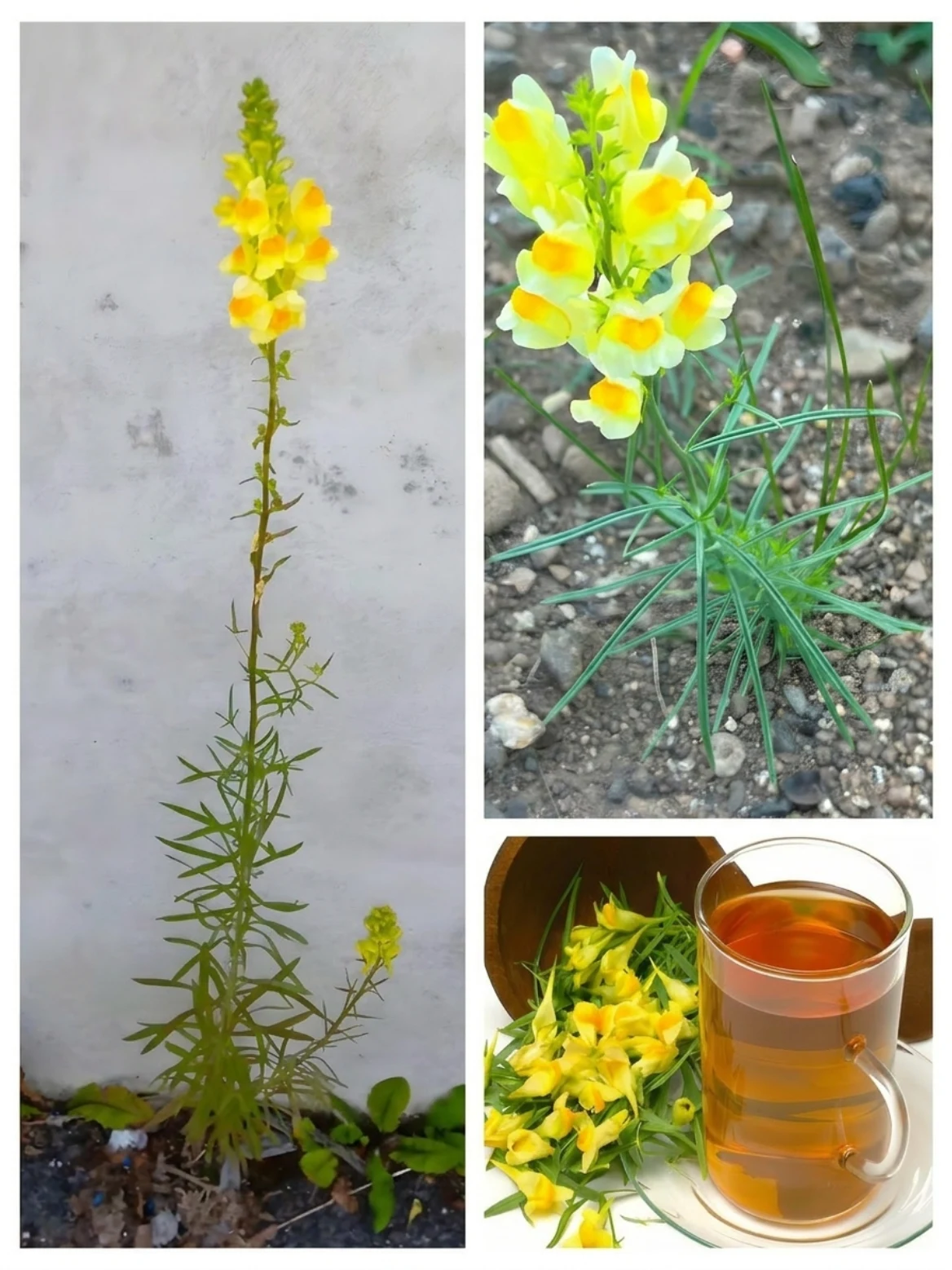
Ingredients
If the plant has been correctly identified by an experienced forager or herbal professional, a simple traditional-style preparation may use:
- 1 to 2 teaspoons dried yellow toadflax flowers and tender upper parts
- 1½ cups hot water
For a milder cup, use less herb rather than more. This is not a case where stronger automatically means better.
How to Prepare
This type of herbal tea is usually made as a light infusion.
Step 1: Use only correctly identified plant material
Make sure the herb is truly yellow toadflax and comes from a clean, unsprayed area away from roadsides and polluted ground.
Step 2: Dry or lightly wilt the herb
Traditionally, many people prefer using dried herb for a more stable, measured preparation.
Step 3: Pour over hot water
Place the herb in a cup or teapot and pour over freshly heated water.
Step 4: Cover and steep
Let it steep for about 8 to 10 minutes.
Step 5: Strain and drink
Strain well and sip slowly while warm.
A light cup is usually enough. This is meant to be a gentle traditional preparation, not a strong daily tonic.
How to Use It
This kind of remedy is traditionally used in small amounts.
Best time to take it
People who use herbs like this often prefer:
- After meals, when digestion feels heavy
- Earlier in the day, if the goal is fluid-balance support
- Occasionally rather than continuously
Because folk use often links this plant with mild cleansing or water balance, it is usually better taken during the day than late at night.
Why People Believe It Helps
The reason plants like yellow toadflax remained in folk medicine is usually a mix of observation, tradition, and plant chemistry.
It has a long folk-herb reputation
This flower has often been associated with mild cleansing and digestive use in old herbal traditions. That reputation is probably why it still appears in traditional remedy conversations today.
It is seen as a light bitter-style herb
Many old digestion remedies were slightly bitter or sharp, because those plants were believed to help the body feel less sluggish after food.
It fits the “gentle clearing” idea
In traditional wellness language, herbs like this were often used when the body felt puffy, heavy, or slow rather than acutely ill.
That does not mean it is a miracle herb. It means it earned a place in folk use because people felt it had a subtle effect when used carefully.
Who May Be Interested in This Herb
Yellow toadflax tea may appeal most to people who:
- Enjoy lesser-known traditional herbs
- Prefer small-batch folk remedies
- Want a simple herbal tea for occasional digestive heaviness
- Are interested in wildflower-based wellness traditions
It is more of a curiosity herb than a mainstream kitchen remedy, which is exactly why it catches people’s attention.
When You Might Notice Something
The effect of a traditional herb like this is usually subtle.
If it suits the person using it, they may notice a lighter feeling within a few hours, especially if the issue is mild heaviness after meals or a puffy feeling. For others, the biggest effect may simply be the ritual of drinking a warm herbal cup and slowing down for a few minutes.
This is not a fast or dramatic remedy. It belongs firmly in the category of gentle traditional support.
Safety Notes You Should Not Skip
This part matters most.
Yellow toadflax is not the kind of herb to use casually without confidence in the identification.
A few common-sense precautions:
Be sure of the plant
Do not rely on a quick guess. Wildflowers can be confused with other species.
Use small amounts only
Traditional use usually favors light, moderate preparations.
Avoid during pregnancy or breastfeeding
This is not a beginner herb for sensitive situations.
Skip it if you have ongoing digestive or kidney issues
Persistent bloating, pain, swelling, or fluid retention should not be self-treated with a wild herb alone.
Stop if it causes discomfort
Any nausea, stomach upset, or unusual reaction is a reason to stop using it.
If symptoms are strong, persistent, or unexplained, medical care is more important than any herbal tea.
How to Build a Safer Herbal Routine Around It
If someone is drawn to old-fashioned herbal teas, the smartest approach is moderation.
Use herbs like this occasionally, keep the preparation light, and pay attention to how the body responds. Many people do best with a broader routine that also includes slower meals, enough water, better sleep, and less processed food. That is often where the real benefit comes from.
Final Takeaway
Yellow toadflax tea is one of those traditional flower remedies people rarely hear about until they come across it in folk herbal conversations. It is often linked with digestion, mild heaviness, and gentle fluid-balance support, which explains why it has kept a quiet place in traditional practice.
Its appeal is not that it is dramatic. Its appeal is that it feels old, simple, and unexpectedly useful.