Long before modern wellness trends, many cultures already had their own “fertility support” recipes.
And one combination keeps appearing again and again:
- dates
- coconut
- warming herbs and spices
Today, people searching for:
- fertility drinks
- traditional fertility recipes
- dates and coconut benefits
- natural fertility support foods
- energy boosting drinks
are rediscovering these simple ingredients.
Not because they’re magic —
but because they’re naturally rich in nutrients often linked to energy, hormone health, and overall wellness.
Why Dates Are Often Included in Traditional Fertility Recipes
Dates have been used in traditional diets for centuries because they contain:
- natural sugars for quick energy
- potassium
- magnesium
- iron
- antioxidants
Many wellness communities use dates in recipes designed to support:
- energy levels
- recovery
- nourishment
- overall reproductive wellness
That’s one reason dates are commonly included in:
- fertility smoothies
- postpartum recipes
- traditional tonic drinks
Why Coconut Is Commonly Paired With Dates
Coconut adds:
- healthy fats
- minerals
- calories for nourishment
- creamy texture
In many traditional recipes, coconut milk was used to create richer, more filling drinks.
People often search:
- coconut milk fertility drink
- dates and coconut milk benefits
- traditional coconut tonic
because the combination feels both energizing and comforting.
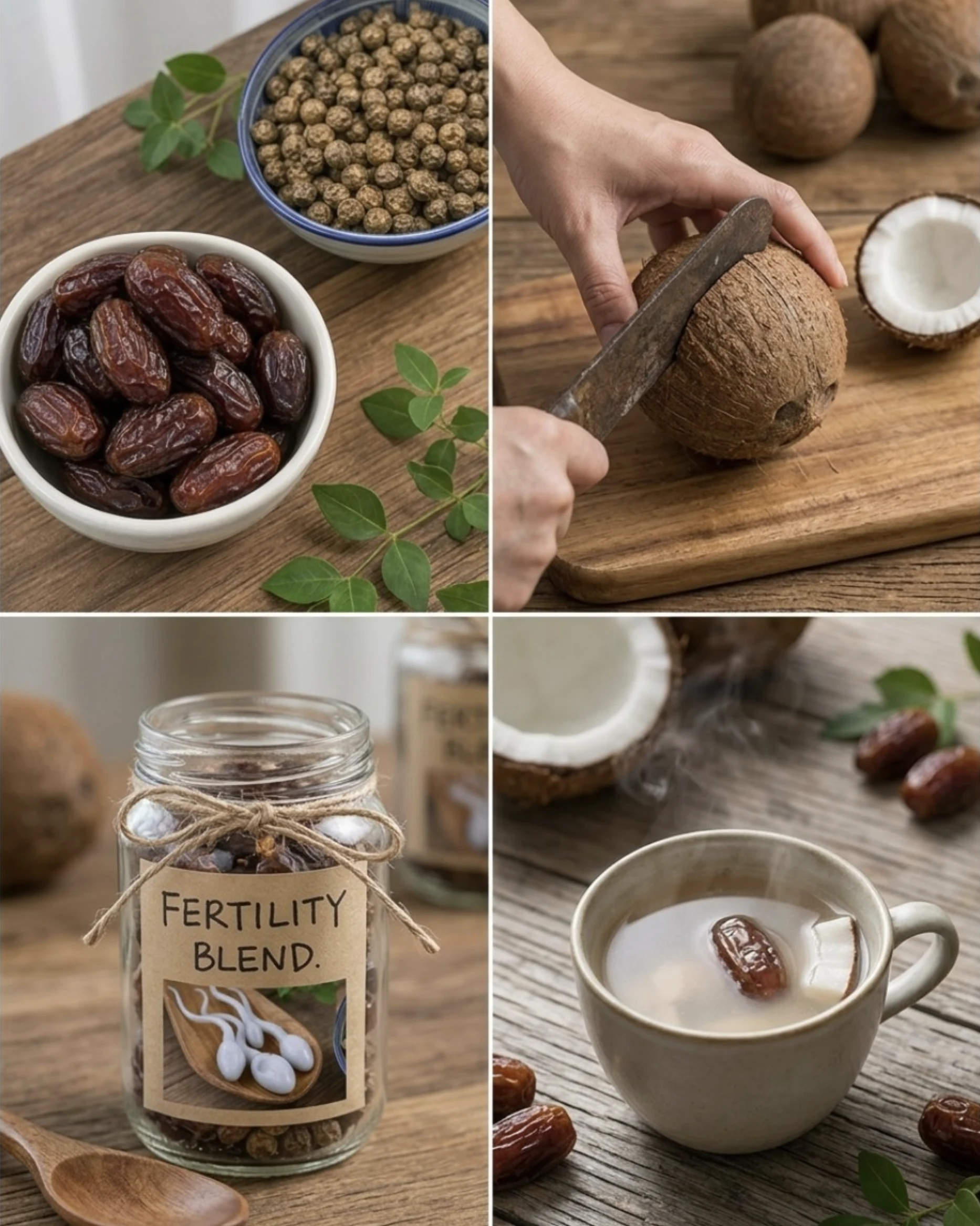
The Traditional Dates and Coconut Drink
Different cultures make it differently, but the basic idea is simple:
A warm, nourishing blend made from:
- dates
- coconut milk
- warming spices
Sometimes additional herbs or seeds are included depending on tradition.
Simple Dates and Coconut Wellness Drink Recipe
Ingredients
- 5 soft dates (pitted)
- 1 cup unsweetened coconut milk
- 1/2 cup warm water
- 1/2 tsp cinnamon
- Small pinch cardamom (optional)
- 1 tsp honey (optional)
How To Make
- Soak dates in warm water for 10–15 minutes
- Add dates and soaking water into blender
- Add coconut milk and spices
- Blend until smooth
- Serve warm or cold
Optional Add-Ins People Often Use
Some traditional versions also include:
- almonds
- black sesame seeds
- walnuts
- saffron
- ginger
- oats
These ingredients are commonly used in nutrient-dense wellness drinks.
Why People Still Drink It Today
Modern wellness trends often focus on:
- expensive powders
- complicated supplements
- extreme detoxes
But simple recipes like this remain popular because they are:
- easy to make
- naturally sweet
- filling
- comforting
- nutrient-dense
Many people use them as:
- morning drinks
- evening nourishment
- post-workout recovery
- healthy snack replacements
Important Reality Check
This is important:
No drink can “cure” infertility.
Fertility is influenced by many factors including:
- hormones
- sleep
- nutrition
- stress
- age
- medical conditions
Traditional drinks may support overall wellness, but they are NOT medical treatments.
Anyone struggling with fertility concerns should speak with a qualified healthcare professional.
Other Traditional Fertility Support Foods People Often SearchRelated searches commonly include:
- fertility boosting foods
- foods for reproductive health
- natural fertility nutrition
- foods rich in zinc and magnesium
- fertility smoothie recipes
Commonly mentioned foods include:
- eggs
- nuts
- seeds
- leafy greens
- fatty fish
- berries
Best Time To Drink This Blend
Most people prefer:
- morning
or - evening
because the drink is naturally filling and calming.
Final Thought
Sometimes the oldest wellness recipes stay popular for a reason.
Dates and coconut are simple ingredients, but together they create a nourishing drink many cultures have appreciated for generations.
Not as a miracle cure —
but as part of a balanced, nourishing lifestyle focused on energy, wellness, and overall health.
Sources
- Harvard T.H. Chan School of Public Health
- Cleveland Clinic Nutrition Resources
- National Institutes of Health (NIH)
- Mayo Clinic Healthy Diet Guidelines
- USDA FoodData Central
- Academy of Nutrition and Dietetics