Some traditional remedies look almost shocking the first time you see them.
One of them is the milky sap from unripe papaya, often called papaya latex. When a green papaya is lightly cut, a thick white liquid begins to drip out. In traditional practice, people have used this latex for very specific purposes, especially around digestion, tough meat tenderizing, and sometimes external spot use. Most people never expect a fruit to release something this strong, and that is exactly why this remedy gets so much attention.
But this is also one of those natural remedies that must be handled with real caution. Papaya latex is not a gentle kitchen drink. It is potent, irritating for some people, and definitely not something to use casually.
What This Traditional Remedy Is
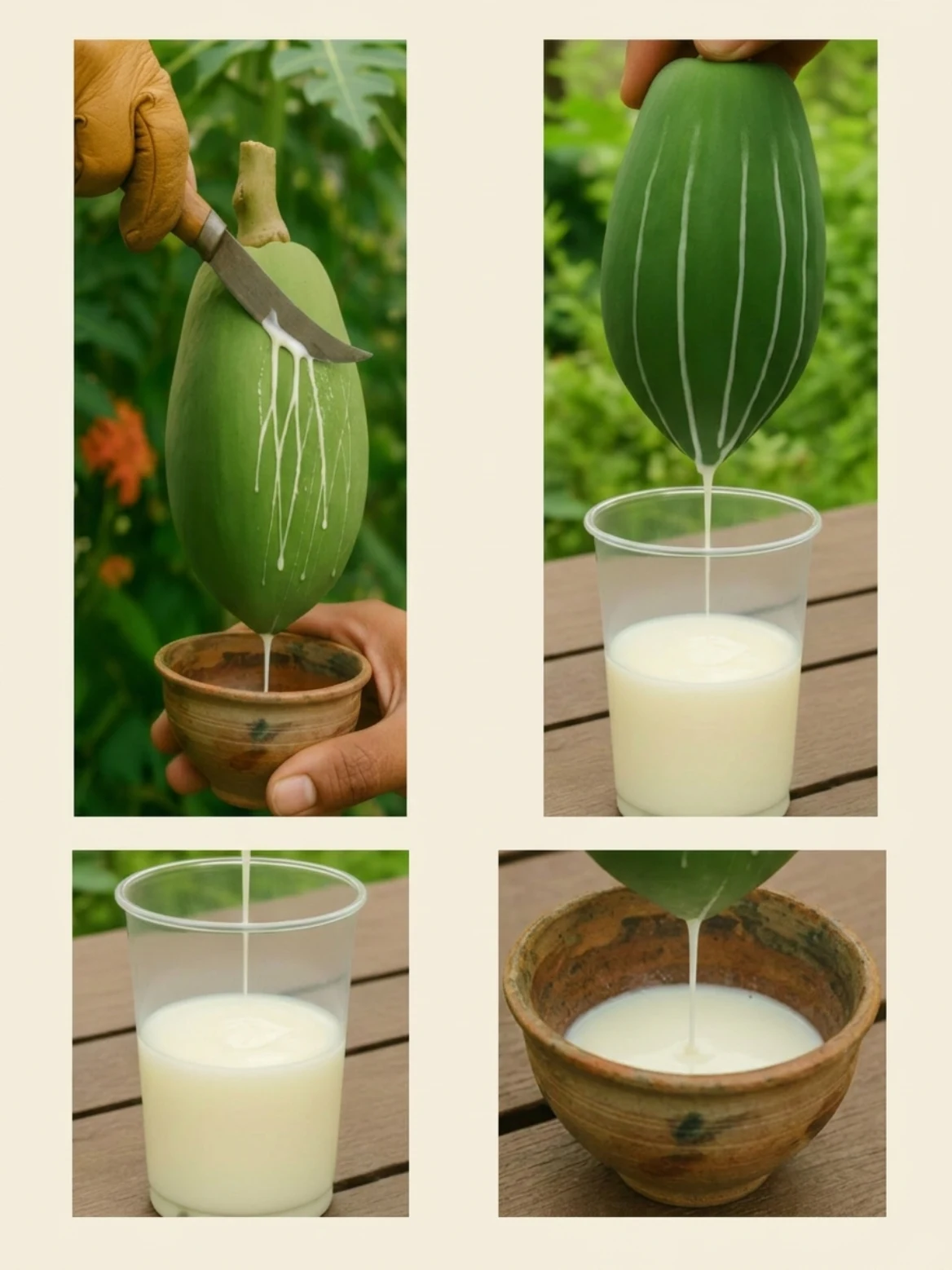
This remedy is the fresh white latex collected from unripe green papaya.
That milky sap is rich in natural enzymes, especially papain-like compounds, which is why unripe papaya has long been associated with breaking down proteins. That same property helps explain why people traditionally connect it with digestive support and why it has also been used in food preparation.
In folk use, this type of latex is usually discussed for:
- Digestive heaviness
- Traditional deworming-style remedies
- Tenderizing tough foods
- External use on rough skin areas in some traditions
Still, “traditional use” does not mean “safe for everyone.” This is one of the strongest fruit-based substances people experiment with, and it deserves respect.
Ingredients
If people traditionally collect it, the setup is usually very simple:
- 1 fresh unripe green papaya
- A clean knife
- A clean cup or small bowl to catch the latex
That is all that appears to be used.
How It Is Traditionally Collected
This part is simple, but it must be done carefully.
Step 1: Choose a green papaya
The fruit is usually still unripe and firm. That is when the latex content is highest.
Step 2: Make a shallow cut
A light surface cut is made in the skin of the papaya. The cut should be shallow, not deep.
Step 3: Catch the latex
As the white sap begins to drip, it is collected in a small clean container.
Step 4: Use immediately
Fresh latex is usually used right away in traditional settings rather than stored for long periods.
How People Traditionally Use It
This is where caution matters most.
For digestion-related folk use
Some traditional practices use very tiny amounts of papaya latex, usually diluted rather than taken straight. The idea is that its strong natural enzymes may help when food feels heavy or digestion feels sluggish.
For external spot use
In some home traditions, a tiny amount is dabbed onto a very small rough skin area. This is usually talked about for things like stubborn thickened spots, not as an all-over skin treatment.
In food preparation
A more common and practical use is as a tenderizing agent for meat, because the latex contains strong protein-breaking enzymes.
Why It Works
The reputation of unripe papaya latex comes from how active it is.
It contains powerful enzymes
Papaya latex is known for enzyme activity that helps break down proteins. That is the main reason people connect it with digestion and food softening.
It feels strong, not mild
Unlike soft herbal teas, this remedy has a noticeable intensity. That is why people often believe it “works.” The problem is that something strong enough to act can also be strong enough to irritate.
It has a long folk reputation
Many traditional remedies survive because people see a practical effect. In this case, the effect is tied to the latex’s natural enzyme action.
Who May Be Interested in This Remedy
This traditional remedy usually attracts people who:
- Are curious about old fruit-based remedies
- Want to understand papaya latex traditional use
- Have heard of unripe papaya for digestion
- Are interested in natural enzyme remedies
But it is not a beginner-friendly remedy, and it is not something to copy casually without understanding the risks.
Quick Relief Timeline
If people use it in traditional digestion-focused ways, they usually expect any effect to happen within hours, not after weeks.
For external spot use, people generally expect repeated careful application over time rather than instant change.
Still, the more realistic view is this: the first thing many people notice may not be “relief,” but rather irritation if the latex is too strong for them.
Important Safety Notes
This section is the most important of all.
Do not use large amounts
Papaya latex is strong. More is not better.
Never apply widely on skin
It can irritate, burn, or trigger a reaction, especially on sensitive skin.
Avoid the eyes, lips, and broken skin
This is essential.
Avoid during pregnancy
Traditional use of strong latex-like plant substances is not something to experiment with during pregnancy.
Be careful with allergies
Anyone sensitive to papaya or latex may react badly.
Do not use it as a cure
It is not a treatment for ulcers, parasites, severe digestive problems, skin disease, or ongoing abdominal pain.
Stop immediately if irritation happens
Burning, swelling, rash, nausea, or stomach pain are clear reasons to stop.
A More Practical and Safer Alternative
For most people, a much safer way to benefit from papaya is simply to use ripe papaya fruit or cooked green papaya in food.
That gives you the traditional value of papaya in a gentler form, without relying on concentrated fresh latex.
Final Takeaway
Unripe papaya latex is one of the more surprising traditional remedies because it shows just how powerful a simple fruit can be before it ripens. People have used it in folk practice for digestion, external spot applications, and food tenderizing because of its strong natural enzyme action.
But this is not a soft or casual remedy. It is potent, easy to misuse, and best approached with caution and realistic expectations.
Sometimes the most interesting traditional remedies are also the ones that require the most respect.
Related Source Science
The traditional reputation of unripe papaya latex is closely tied to its natural enzyme content, especially protein-breaking compounds associated with the milky sap of green papaya. That helps explain its long use in digestion-related folk practice and food preparation, but it also explains why it can be irritating and should be used very carefully.