Some herbal remedies look almost too beautiful to be medicinal.
That is exactly what happens with hawthorn berries. These bright red berries, along with the leaves and flowers of the hawthorn plant, have a long history in traditional herbal practice, especially for heart comfort, circulation support, and gentle calming. Modern herbal references and official European monographs still recognize hawthorn leaf and flower for traditional use in temporary nervous heart complaints, mild stress, and sleep support, though these uses are based on long-standing practice rather than strong proof that it treats serious heart disease.
What makes hawthorn so interesting is that it sits right between food and medicine. The berries look like tiny wild fruits, but the plant has earned a reputation as one of the most famous traditional cardiovascular herbs in Western herbalism. At the same time, this is not a do-it-yourself substitute for heart medication, chest pain evaluation, or treatment for blood pressure problems. NCCIH specifically notes that hawthorn may interact with some medicines and that people with heart conditions should talk with a healthcare provider before using it. (NCCIH)
What Hawthorn Is Traditionally Used For
Hawthorn is most commonly linked with:
- gentle heart and circulation support
- nervous palpitations after serious causes have been ruled out
- mild stress and tension
- calming herbal routines
- traditional berry tonics and elixirs
Official European herbal summaries say hawthorn leaf and flower medicines are traditionally used for temporary nervous cardiac complaints and mild mental stress, and to aid sleep. (European Medicines Agency (EMA))
In broader traditional herbal practice, the berries are also widely used in syrups, vinegars, and alcohol-based elixirs.
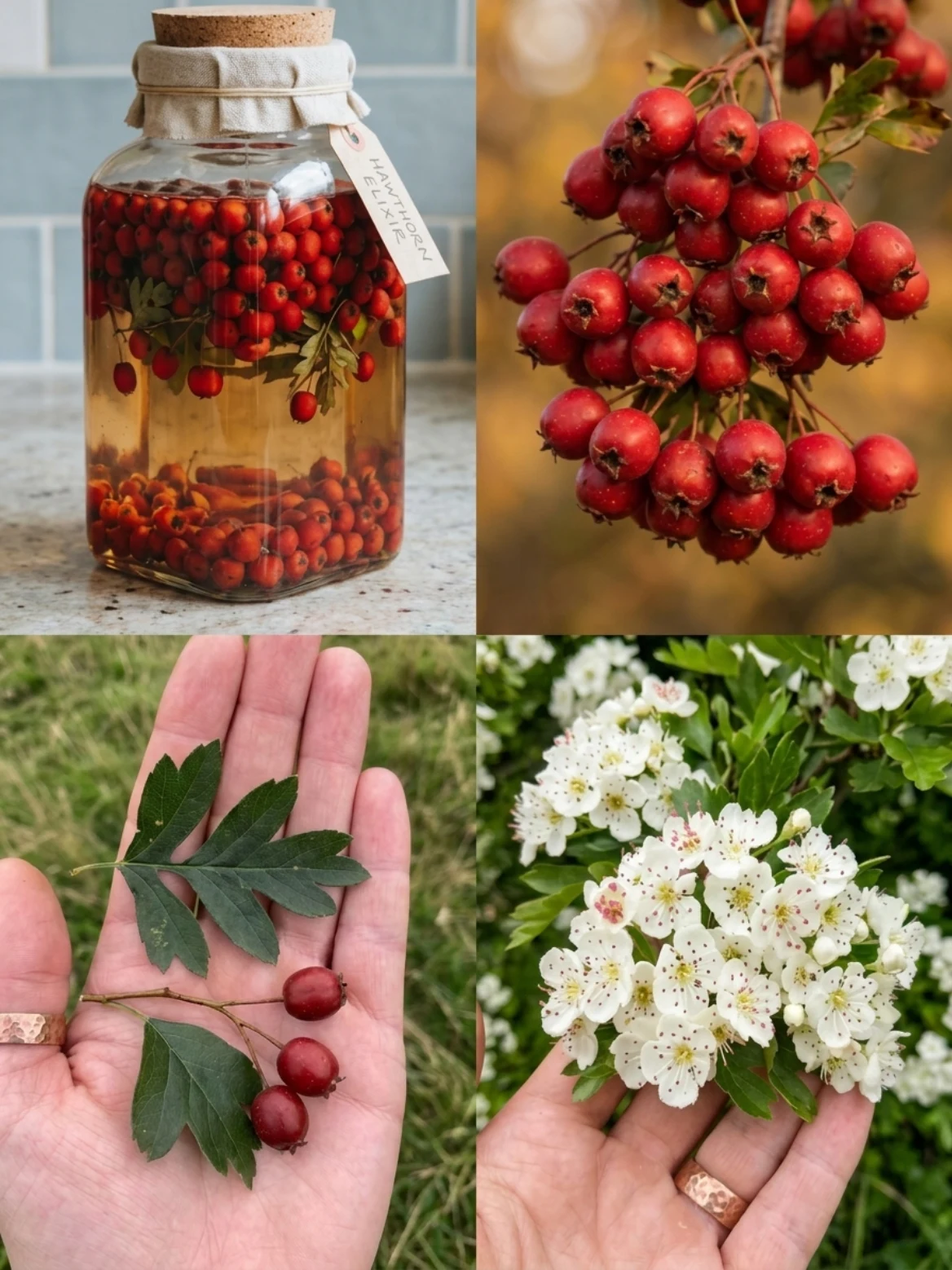
Ingredients
A simple traditional-style hawthorn elixir uses:
- 1 cup fresh hawthorn berries, cleaned
- enough brandy or vodka to fully cover the berries
- optional small handful of hawthorn leaves or flowers, if correctly identified
- a clean glass jar with a tight lid
Some people later sweeten the strained extract with a little honey, but a plain tincture-style elixir is the more classic herbal method.
How to Prepare Hawthorn Elixir
This is a traditional infusion method, not a quick tea.
Step 1: Clean the berries
Rinse the hawthorn berries well and remove any damaged fruit.
Step 2: Fill the jar
Place the berries into a clean glass jar. If you are also using hawthorn leaves or flowers, add only correctly identified plant material.
Step 3: Add the liquid
Pour in enough alcohol to completely cover the berries by at least an inch.
Step 4: Seal and steep
Close the jar and keep it in a cool, dark place for about 3 to 4 weeks. Shake it gently every few days.
Step 5: Strain
Strain out the berries and store the finished liquid in a clean bottle.
How to Use It
In traditional herbal practice, hawthorn elixir is usually used in small amounts.
A common approach is:
Small daily amounts
Use only a small measured amount, such as a few drops or a small spoonful diluted in water.
Best time
Many people take it once or twice daily, often in the evening or during periods of stress.
Quick relief timeline
This is not usually a fast-acting herb. Hawthorn is more often described as a steady support herb, meaning people traditionally use it over time rather than expecting instant effects. If someone is having sudden chest pain, shortness of breath, fainting, or strong palpitations, that needs urgent medical care, not an elixir.
Why Hawthorn Gets So Much Attention
The interest in hawthorn comes from both tradition and plant chemistry.
Reviews describe hawthorn as rich in flavonoids and oligomeric procyanidins, compounds that are often discussed in relation to antioxidant and cardiovascular effects. Modern research has focused heavily on hawthorn’s cardiovascular potential, although the evidence is mixed and not strong enough to replace standard treatment.
That is why hawthorn keeps its reputation. It has the long traditional history herbalists respect, and it also has enough phytochemistry to keep researchers interested.
Who May Be Most Interested in It
Hawthorn elixir may appeal to people who:
- enjoy traditional heart-support herbs
- want a gentle herbal ritual during stressful periods
- are curious about old-fashioned berry tinctures
- prefer long-term herbal tonics over trendy quick fixes
It is especially popular among people interested in classic European herbalism.
Safety Notes You Should Not Skip
This part matters most.
NCCIH says hawthorn can cause side effects such as dizziness or nausea in some people, and it may interact with medicines used for heart conditions, blood pressure, and circulation.
Avoid self-using hawthorn without medical advice if you:
- take heart medications
- take blood pressure medicines
- have a diagnosed heart condition
- are pregnant or breastfeeding
- have chest pain, worsening palpitations, or unexplained shortness of breath
This herb belongs in the category of supportive traditional wellness, not self-treatment for cardiovascular disease.
Final Takeaway
Hawthorn berry elixir is one of the most respected traditional herbal preparations linked to heart comfort, calm circulation support, and gentle nervous-system easing. Its reputation has lasted for generations because it feels both practical and deeply rooted in herbal tradition.
Used carefully, it can be a beautiful addition to an herbal routine. But the smartest approach is balance: appreciate the tradition, respect the plant, and never let a home remedy replace proper heart care.
Related Source Science
Official European herbal monographs support hawthorn leaf and flower for traditional use in temporary nervous heart complaints, mild stress, and sleep support, while NCCIH notes safety concerns and possible medication interactions. Reviews also describe hawthorn as a rich source of flavonoids and procyanidins, which helps explain why it remains one of the best-known traditional cardiovascular herbs.