Breakfast Digestion Traffic Jam: How to Eat for All-Day Comfort
Many of us strive for a nutritious start to the day, diligently choosing what we perceive as healthy breakfast options. We might blend a fruit-packed smoothie, add a scoop of chia seeds, mix in some Greek yogurt, and top it all with a handful of nuts. Each ingredient, on its own, seems like a wholesome choice, promising energy and wellness.
However, what many people don’t realize is that even the healthiest foods can create a ‘digestion traffic jam’ when combined improperly. Your stomach is a sophisticated processor, but it works most efficiently when foods move through at a compatible pace.
When fast-digesting foods meet slow-digesting ones, it can lead to uncomfortable symptoms like bloating, gas, sluggishness, or that heavy feeling right after eating. Understanding how different foods behave in your digestive system can transform your breakfast experience from a potential pitfall to a powerful, comfortable start to your day.
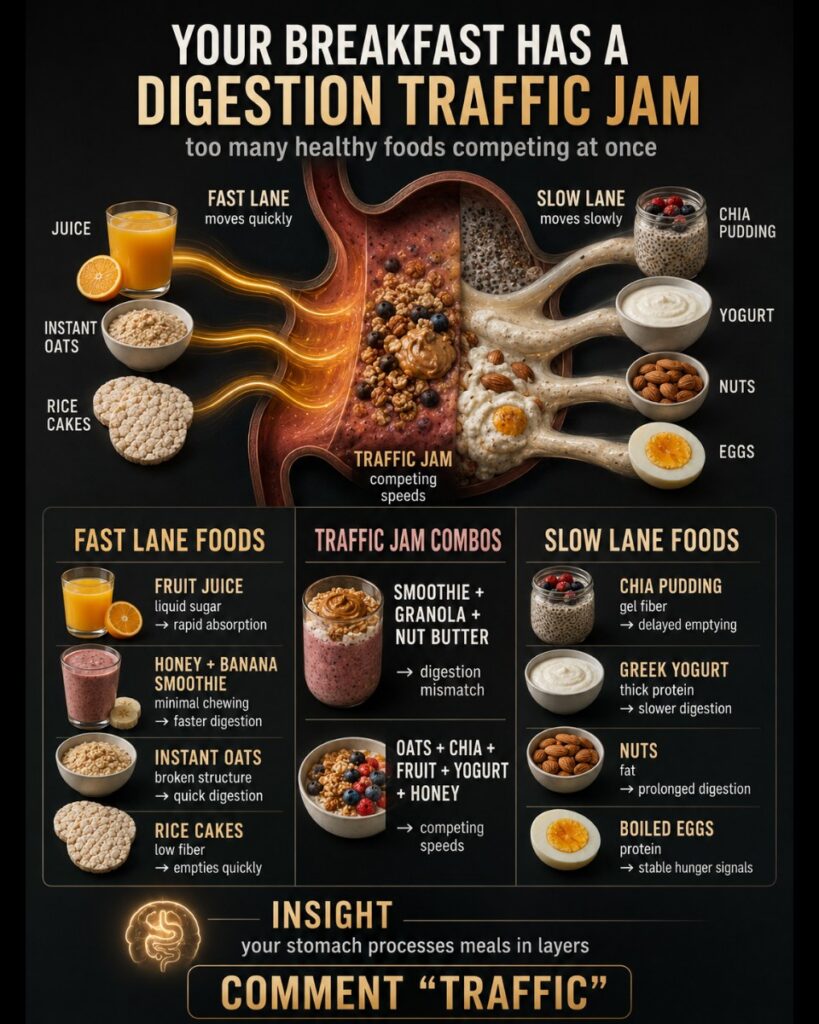 Understand how different food speeds can create a digestive ‘traffic jam’ in your stomach.
Beyond ‘Healthy’: The Science of Digestion Speed
It’s easy to fall into the trap of thinking ‘more healthy ingredients equals a healthier meal.’ But the reality is more nuanced. The key isn’t just what you eat, but how those foods interact once they hit your stomach. For optimal breakfast digestion, knowing these interactions is crucial.
Our digestive system is designed to break down foods at different rates. Simple carbohydrates and liquids tend to move quickly, while proteins, fats, and complex fibers take more time. Mixing them indiscriminately can lead to digestive bottlenecks, resulting in discomfort rather than the desired energy boost. Learning to manage this process can significantly improve your daily comfort.
Quick Energy, Quick Hunger: The Story of Fast-Digesting Breakfasts
Some breakfast items are like speed racers for your digestive system. They’re quickly broken down and absorbed, providing a rapid burst of energy. While this can be useful in specific contexts, it often means less sustained fullness and potential blood sugar spikes.
- Fruit Juice: Stripped of most of its fiber, fruit juice is essentially a concentrated sugar solution. It rushes through your stomach and is absorbed almost immediately, potentially causing a quick spike in blood sugar.
- Honey & Banana Smoothies: While bananas offer nutrients and honey provides natural sweetness, blending them breaks down much of the fiber that would normally slow digestion. Without the need for chewing, these liquid meals can empty from the stomach quite fast, leaving you hungry sooner. This is a common healthy breakfast mistake for smoothie digestion.
- Instant Oats: Highly processed and pre-cooked, instant oats have a much finer texture than their steel-cut or rolled counterparts. This processing makes their starches readily available for digestion, leading to a quicker release of glucose compared to slow-digesting foods like traditional oatmeal.
- Rice Cakes: Made from puffed rice, these light and airy snacks are primarily simple carbohydrates. They require minimal digestion and pass through the stomach rapidly, often leaving you feeling hungry again very soon.

These fast-digesting foods provide quick energy but may not offer lasting fullness.
Lasting Fullness & Stable Energy: The Power of Slow-Digesting Foods
On the other end of the spectrum are foods that demand more time and effort from your digestive system. These are typically rich in protein, fat, or complex fiber, offering sustained energy and lasting fullness. Incorporating these can be key for optimal breakfast digestion and managing cravings.
- Chia Pudding: Chia seeds are renowned for their ability to absorb liquid and form a gel. This soluble fiber matrix significantly slows down digestion, creating a feeling of satiety that lasts for hours and helping to manage blood sugar levels, contributing to better chia pudding digestion.
- Greek Yogurt: Packed with protein, Greek yogurt takes longer to digest than many other breakfast items. The protein content helps to slow stomach emptying, contributing to a feeling of fullness and stable energy throughout the morning. This is a powerful Greek yogurt breakfast component.
- Nuts: Rich in healthy fats, fiber, and protein, nuts are a digestive marathon. Their dense nutritional profile means your body works harder and longer to break them down, providing a slow and steady release of energy and helping to keep cravings at bay.
- Boiled Eggs: Eggs are a complete protein source, and protein is one of the most satiating macronutrients. They digest slowly, keeping hunger at bay and supporting stable blood sugar levels, making them excellent high protein breakfast ideas.

Slow-digesting foods provide sustained energy and help you feel fuller for longer.
Unpacking the ‘Digestion Traffic Jam’: Why Food Combinations Are Key
The problem arises when you combine these fast and slow-lane foods without thought. Imagine a highway where express lanes suddenly merge into slow-moving traffic – chaos ensues. In your stomach, this can manifest as bloating, discomfort, or a feeling of being overly full even from a ‘healthy’ meal, leading to that notorious breakfast bloating.
For example, a smoothie (fast) loaded with granola (complex carb), nut butter (fat/protein), chia (fiber), and yogurt (protein) can become a recipe for a traffic jam. The faster components rush through, while the slower ones get held up, fermenting or causing a backlog that leads to digestive upset. This is a common healthy breakfast mistake.
Understanding how different foods affect your personal digestion speed can be a game-changer. Some individuals find that using a simple food tracking app or keeping a food journal helps identify patterns. For more personalized insights, a professional dietitian consultation can offer tailored advice based on your unique metabolic profile and health goals. This proactive approach can often be a crucial step towards digestive comfort and optimizing your nutrition. Seeking medical nutrition therapy can provide strategies for monitoring your intake and response more effectively.
Building Your Best Breakfast: Strategies for Digestive Harmony
The good news is you don’t have to give up your favorite healthy foods. It’s all about strategic combinations for optimal breakfast digestion. Think of your breakfast as a well-orchestrated meal, not a free-for-all.
Here’s a simple framework to guide your choices:
- Choose One Base: Start with a primary slow-digesting base like rolled oats, Greek yogurt, or eggs. These provide a steady foundation. Consider using specific meal prep containers to portion your oats or yogurt.
- Add One Protein: Ensure you have a good protein source, such as Greek yogurt, eggs, cottage cheese, or a high-quality protein powder (if using a smoothie). Protein is key for satiety and stable energy.
- Add One Fiber Source: Incorporate fiber from whole fruits, vegetables, chia seeds (in moderation with enough liquid), or other whole grains. High fiber breakfast options are great for gut health.
- Add One Fat Source (Only if needed): A small amount of healthy fat from nuts, seeds, or avocado can enhance satiety, but don’t overdo it, as fat significantly slows digestion further.
- Avoid Stacking: Resist the urge to pile on every healthy topping at once. A smoothie doesn’t need granola, nut butter, chia, and honey all at the same time; simpler combinations are often better for smoothie digestion.
Smart Breakfast Combinations for Lasting Fullness and Stable Energy
Here are some balanced breakfast ideas that promote smooth digestion and sustained energy, preventing common healthy breakfast mistakes:
- Rolled Oats with Greek Yogurt and Berries: The complex carbs in rolled oats pair well with the protein from Greek yogurt, while berries add fiber and antioxidants without causing a major traffic jam. This makes for a great high fiber breakfast. For convenience, prepare these in overnight oats jars.
- Eggs with Whole-Grain Toast and Avocado: A classic for a reason. Eggs provide protein, whole-grain toast offers complex carbs, and a slice of avocado adds healthy fats for sustained satisfaction. This is an excellent breakfast for stable energy.
- Greek Yogurt with a Small Handful of Berries and Nuts: Focus on the protein from yogurt, a single fruit, and just enough nuts for crunch and healthy fats without overwhelming the digestive system. A simple yet powerful Greek yogurt breakfast.
- Chia Pudding with Fruit Only: Let the chia seeds do their job. Top your chia pudding with a single type of fruit for sweetness and fiber, avoiding excessive additions for better chia pudding digestion.
- Oatmeal with Peanut Butter and Banana: This combination balances complex carbs from oats with protein and fat from peanut butter, and the fiber from a banana, making it a filling and delicious option.
- Rice Cakes with Eggs or Cottage Cheese: If you enjoy rice cakes, pair them with a significant protein source like scrambled eggs or cottage cheese to slow down their rapid digestion and increase satiety.
These balanced combinations aren’t just good for digestion; they can also play a role in maintaining stable blood sugar levels throughout the morning. For those interested in deeper insights, tracking key lab markers like fasting glucose or HbA1c through regular blood tests can provide valuable data. In some cases, your doctor might even recommend advanced monitoring tools like CGM sensors to get a clearer picture of your body’s responses to different meals. Discussing these options during a medical nutrition therapy session or with your healthcare provider can help you develop a comprehensive approach, potentially covered by employer health plans or private insurance depending on your country-specific rules.

A well-balanced breakfast provides stable energy and supports healthy digestion.
Beyond Combinations: Common Breakfast Mistakes That Cause Bloating
Beyond simply mixing fast and slow foods, certain habits can exacerbate digestion issues and contribute to breakfast bloating:
- Overloading Smoothies: Thinking a smoothie is a catch-all for every superfood. Too many ingredients, especially a mix of high-sugar fruits, fats, and fibers, can make it harder to digest and cause smoothie digestion problems.
- Eating Too Quickly: Rushing through your breakfast prevents proper chewing and signals your body to prepare for digestion, leading to indigestion and bloating. Mindful eating is crucial.
- Ignoring Hydration: Fiber needs water to work effectively. Not drinking enough water with high-fiber breakfasts can lead to constipation or a heavier feeling. Always keep a water bottle handy, especially if you’re eating a high fiber breakfast.
- Excessive Sweeteners: Adding too much honey, maple syrup, or artificial sweeteners can disrupt gut balance and potentially contribute to digestive distress for some individuals. Opt for natural sweetness from fruit when possible.
- Lack of Variety: Eating the exact same combination every day might not be problematic for everyone, but varying your breakfast ingredients can introduce different nutrients and fiber types, potentially supporting a more robust gut microbiome. This is also important for providing diverse foods that keep you full longer and preventing nutrient deficiencies.
 Preparing balanced breakfasts in advance can simplify healthy eating.
Conclusion
Navigating the world of ‘healthy’ breakfast choices doesn’t have to be complicated. By understanding the basics of digestion speed and being mindful of your food combinations, you can create meals that not only taste good but also leave you feeling energized and comfortable for optimal breakfast digestion.
Focus on balanced, simpler meals, and listen to your body’s signals. A well-constructed breakfast can prevent that digestion traffic jam and set you up for a more productive and comfortable day. Making these small adjustments can have a significant impact on how you feel.
[Read next: High Fiber Breakfasts for Lasting Fullness]
[Source: NIH National Institute of Diabetes and Digestive and Kidney Diseases]
This is general information, not medical advice.