At first glance, this plant looks like a simple roadside mint-family weed. In reality, it is most likely purple dead-nettle (Lamium purpureum), a common spring herb with a long history of traditional use as a mild tea and edible green. Lamium species contain plant compounds such as flavonoids, phenolic acids, iridoids, and related phytochemicals, which is one reason they continue to attract herbal and research interest.
What needs a reality check is the “artery clear tea” claim. Atherosclerosis is plaque buildup in the arteries, and major heart-health guidance does not recognize one homemade herb tea as a proven way to clear plaque. Standard care focuses on risk-factor control, heart-healthy eating patterns, exercise, medicines when needed, and medical follow-up. (www.heart.org)
That does not make the herb useless. It just means the most honest way to talk about purple dead-nettle is as a gentle traditional wellness tea, not a shortcut for blocked arteries.
What This Herb Traditionally Does in the Body
Purple dead-nettle belongs to the Lamium group, plants that have been used traditionally for mild wellness support rather than as aggressive medicinal herbs. Reviews of Lamium plants describe traditional uses across the group and note their rich content of hydroxycinnamic acids, flavonoids, iridoids, anthocyanins, and other biologically active compounds.
In practical terms, that means people usually value this herb for its light, soothing, everyday herbal quality. It is more of a seasonal “support” plant than a dramatic remedy. That is also why the artery-clearing promise is too strong. Even broader tea research on cardiovascular health discusses support mechanisms like antioxidant and anti-inflammatory effects, not direct plaque removal from one cup of tea. (MDPI)
Ingredients
A simple traditional-style purple dead-nettle tea is easy to make:
- 1 to 2 teaspoons dried purple dead-nettle
or a small handful of fresh, clean tops - 1½ cups hot water
If using fresh herb, use only correctly identified, tender upper parts from a clean unsprayed area.
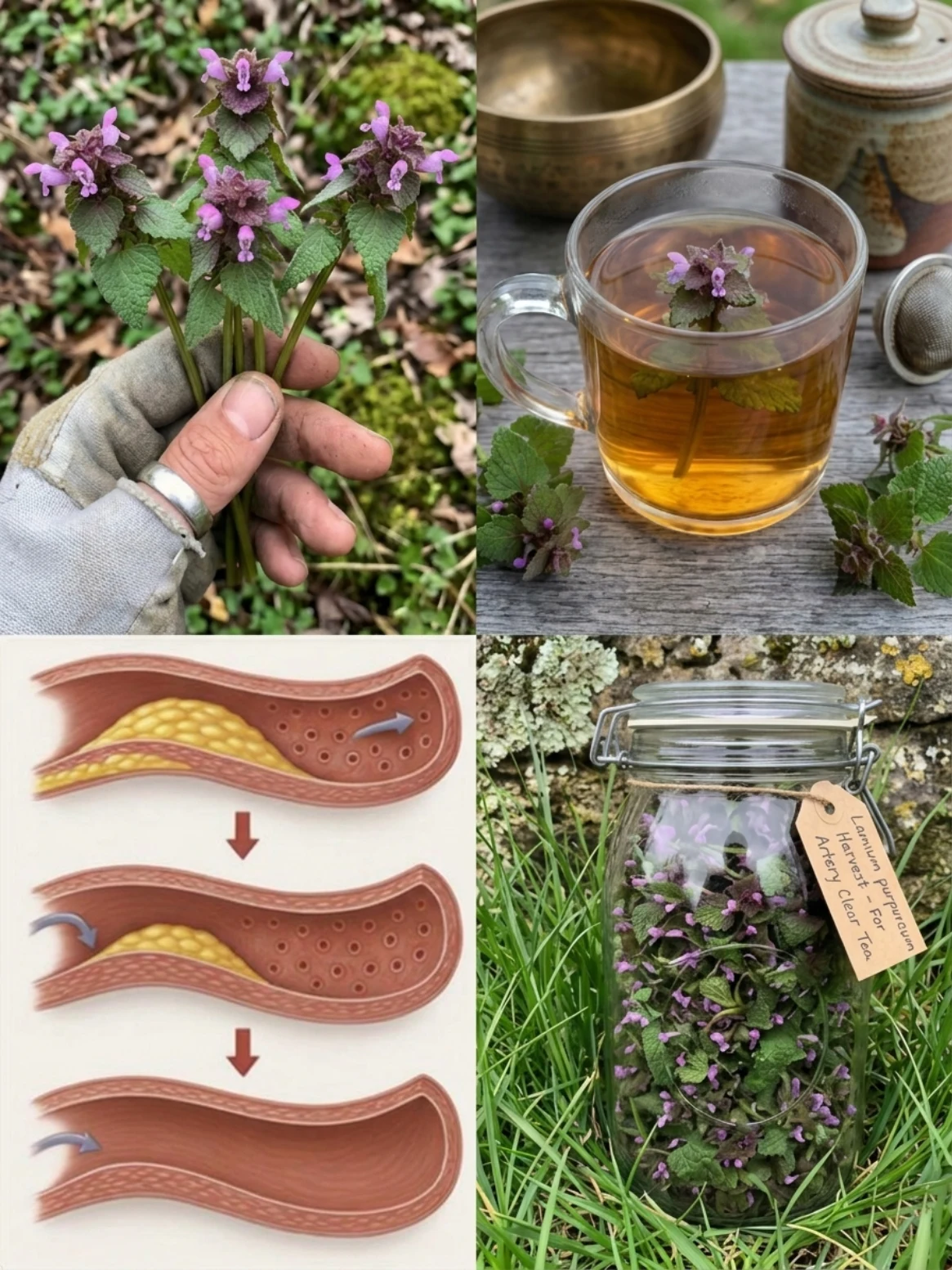
How to Prepare Purple Dead-Nettle Tea
Step 1: Clean the herb
If using fresh tops, rinse them well. This matters because low-growing herbs catch dust and debris easily.
Step 2: Add hot water
Place the herb in a cup or teapot and pour over hot water.
Step 3: Cover and steep
Let it steep for about 8 to 10 minutes.
Step 4: Strain and drink
Strain and sip warm.
The flavor is usually mild and slightly green. It is not meant to be a very strong brew.
When to Drink It
This tea fits best into a light daily wellness routine.
Many people would use it:
- in the morning as a simple spring herbal tea
- between meals
- in the evening when they want a caffeine-free cup
Quick relief timeline
If it suits you, the most noticeable effects are usually gentle: warmth, hydration, and a calm herbal feeling the same day. Any broader “wellness” effect would be gradual and subtle over days or weeks, not dramatic or guaranteed. It is not realistic to expect visible artery changes from a few cups of herbal tea. (www.heart.org)
Why People Think It Helps
The interest around this herb probably comes from two places.
First, Lamium plants are phytochemical-rich. Reviews describe multiple antioxidant-related compounds across the genus, which makes the plants scientifically interesting. (MDPI)
Second, people often jump from “contains antioxidants” to “clears arteries.” That leap is where misinformation starts. Heart organizations describe atherosclerosis as a complex condition involving cholesterol, inflammation, blood pressure, blood sugar, and long-term vascular damage. Proven management includes lifestyle change and, when appropriate, medication, not one herbal infusion. (www.heart.org)
So the better claim is this: purple dead-nettle tea may be a pleasant supportive herb, but it is not a medically established artery-cleaning remedy.
Who May Enjoy This Herb Most
Purple dead-nettle tea may appeal to people who:
- enjoy mild spring herbs
- want a simple caffeine-free herbal drink
- like traditional foraged-plant wellness habits
- prefer gentle herbs over intense bitter remedies
It may also appeal to people who want to use common seasonal plants more thoughtfully, as long as identification is correct.
Safety Notes
This part matters.
Correct identification is essential. Purple dead-nettle can be confused with other small mint-family plants by beginners. Also, “natural” does not automatically mean risk-free. General herbal safety guidance warns that botanicals can still cause side effects or interactions depending on the person and the product.
Use caution if you are pregnant, breastfeeding, taking prescription medications, or highly sensitive to wild herbs. And most importantly, do not use this tea instead of proper care for chest pain, shortness of breath, high cholesterol, high blood pressure, or known cardiovascular disease. Atherosclerosis often needs structured treatment and monitoring. (www.heart.org)
Final Takeaway
Purple dead-nettle tea is an interesting traditional herb with a mild profile and a respectable phytochemical background. It can fit into a simple herbal routine as a gentle spring tea, but the “artery clear tea” label is not supported by current mainstream cardiovascular guidance.
The most realistic expectation is simple: a soothing cup, a modest herbal ritual, and one small supportive habit within a much bigger heart-health picture.
Related Source Science
Reviews of Lamium plants describe flavonoids, hydroxycinnamic acids, iridoids, and other bioactive compounds that may help explain their traditional use. At the same time, major cardiovascular guidance says atherosclerosis management relies on risk reduction, diet, exercise, and medical treatment when needed, not a single herbal tea.