Beech trees have been part of forest ecosystems for centuries, providing shade, wildlife habitat, and small edible nuts that have traditionally been gathered by foragers in parts of Europe, North America, and Asia. While often overlooked compared to walnuts or chestnuts, beech nuts have a rich history as a seasonal wild food and were once an important source of nutrition in many rural communities.
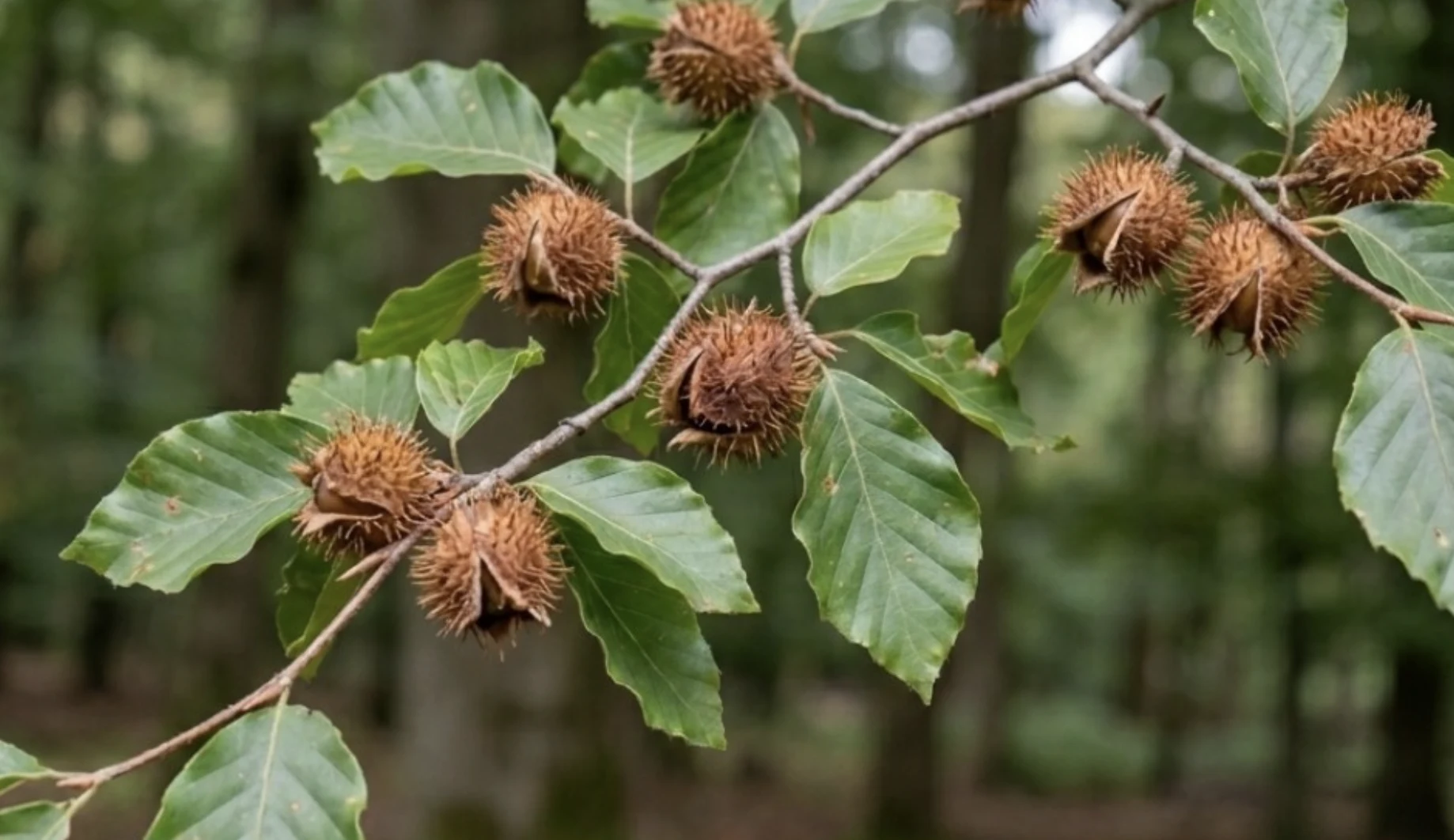
The images above show the distinctive spiky seed husks of the beech tree, harvested nuts, and a traditional beech nut infusion often associated with historical folk practices.
What Are Beech Nuts?
Beech nuts are the seeds produced by trees in the Fagus genus. They develop inside small prickly husks that split open when mature, revealing triangular nuts inside.
A mature beech tree can produce large quantities of nuts during good mast years, although production varies significantly from season to season.
Foragers often recognize beech nuts by:
- Small triangular shape
- Thin brown shell
- Spiky outer husk
- Mild nutty flavor after processing
Traditional Uses of Beech Nuts
Historically, beech nuts were used in several ways:
- Roasted and eaten as a snack
- Ground into flour for baking
- Added to porridge and grain dishes
- Pressed for oil in some regions
- Used in traditional folk preparations and infusions
Before modern food distribution systems, wild nuts provided valuable calories during autumn harvest seasons.
Nutritional Profile
Beech nuts contain:
- Healthy fats
- Small amounts of protein
- Dietary fiber
- Minerals such as magnesium and potassium
Because of their fat content, they were traditionally considered an energy-dense food for colder months.
Like many wild foods, nutritional composition can vary depending on species, growing conditions, and maturity.
Harvesting Beech Nuts
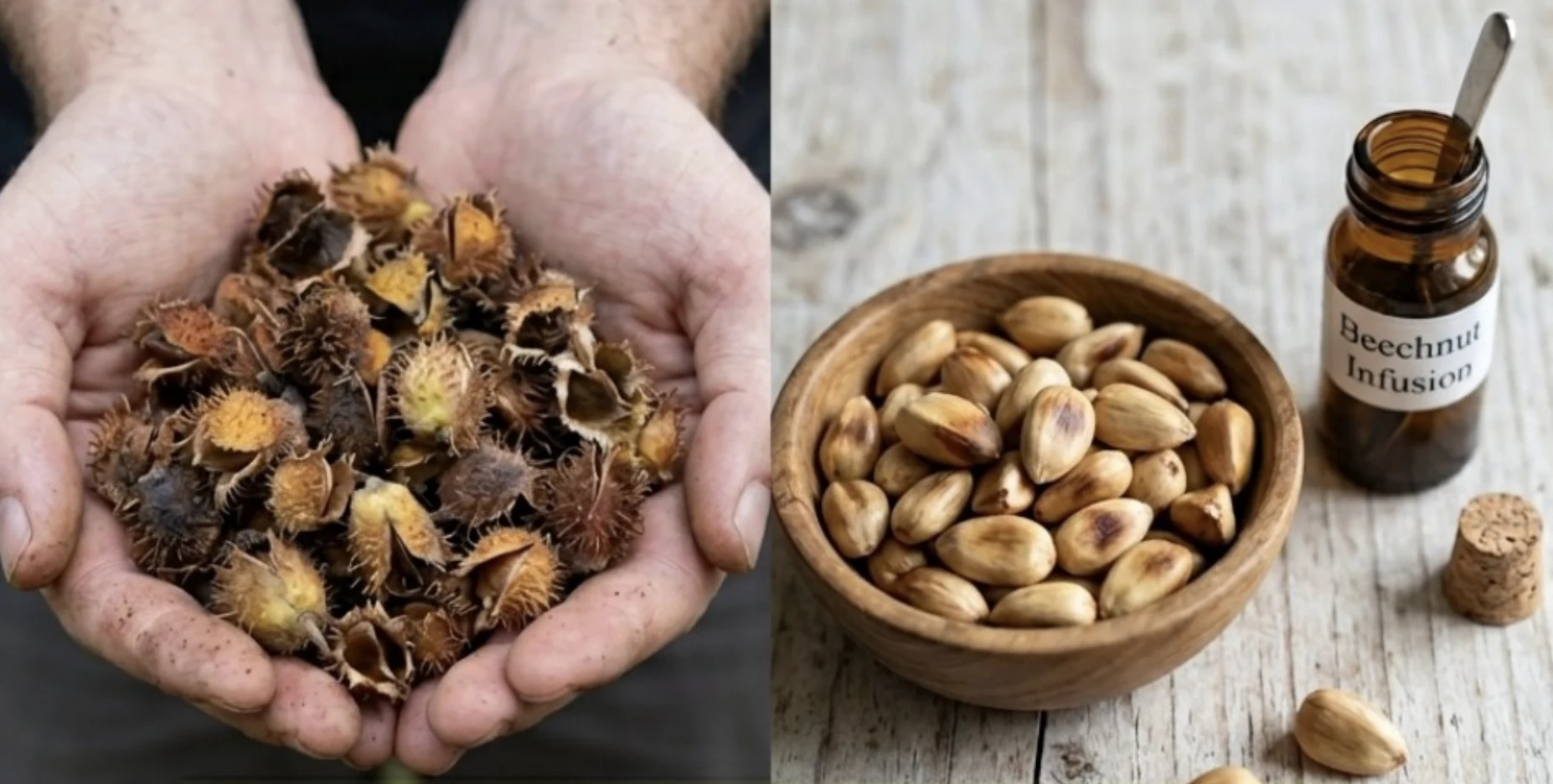
Foragers typically collect beech nuts during late summer or autumn when the husks begin opening naturally.
The general process includes:
- Gathering fallen husks beneath mature trees
- Separating nuts from the prickly coverings
- Removing damaged or moldy seeds
- Drying or processing shortly after harvest
Freshly harvested nuts should always be properly identified before consumption.
Roasting Beech Nuts
Roasting is one of the most common traditional preparation methods.
Basic preparation often involves:
- Removing outer shells
- Spreading nuts on a baking tray
- Roasting until lightly golden
- Allowing them to cool before eating
Roasting can improve flavor and texture while reducing bitterness.
Traditional Beech Nut Infusions
Some historical folk traditions describe using beech nuts in homemade infusions or oil preparations.
These preparations were often made by:
- Crushing cleaned nuts
- Combining them with a carrier liquid
- Allowing the mixture to steep over time
- Straining before storage
Such uses are largely part of traditional herbal and folk practices rather than modern evidence-based medicine.
Important Safety Considerations
Wild food identification should always be approached carefully.
Before consuming any wild plant or nut:
- Confirm identification with reliable sources
- Avoid collecting from polluted areas
- Discard moldy or damaged specimens
- Research local species thoroughly
Beech nuts naturally contain compounds that may cause digestive discomfort if consumed in large quantities, particularly when raw.
Moderation and proper preparation have traditionally been recommended.
Ecological Importance
Beech nuts are not only valuable to humans. They are an important food source for:
- Squirrels
- Deer
- Wild birds
- Small mammals
In many forests, wildlife depends heavily on beech nut production during autumn and winter.
Foragers are often encouraged to harvest responsibly and leave plenty for native animals.
Why Foragers Still Appreciate Beech Nuts
Modern interest in foraging has brought renewed attention to beech nuts because they are:
- Readily available in some regions
- Rich in traditional history
- Interesting to process and prepare
- Connected to seasonal eating practices
Many people enjoy learning about these lesser-known forest foods as part of a broader interest in nature, self-sufficiency, and traditional food knowledge.
Final Thoughts
Beech nuts are a fascinating example of a traditional wild food that has nourished both wildlife and people for generations. From their distinctive spiky husks to their mild nutty flavor, they offer a glimpse into historical foraging traditions and seasonal food gathering practices.
Whether appreciated for their ecological role, culinary history, or place in traditional folk preparations, beech nuts remain one of the forest’s most intriguing autumn harvests.