Some herbs get attention because of what they do.
This one gets attention because of how it moves.
Shy plant, also called sensitive plant or Mimosa pudica, is the little fern-like herb whose leaves fold inward when touched. That alone makes it memorable. But in traditional plant use, it has also been linked with calming routines, nervous tension, and gentle bedtime remedies in some regions. The tricky part is that the modern evidence is still early. Most of the research around Mimosa pudica for sleep or anxiety comes from animal studies, not strong human trials.
So if you want the most grounded version of this story, here it is: shy plant tea may be used traditionally as a calming evening herb, but it is not a proven cure for insomnia. That is a much fairer place to start.
Why People Connect Shy Plant With Sleep
The connection is not completely random.
A few studies on Mimosa pudica extracts in mice have reported anxiolytic or calming effects in behavioral models, and one recent paper also described broader neuropharmacological potential, including reduced anxiety-like behavior in animal testing. Another study found an anxiolytic effect from an aqueous extract in mice. (NCBI)
That helps explain why people in traditional settings might think of the plant as something to use when the mind feels restless. But it is important not to oversell it. A calming effect in animal models is not the same thing as proving that a cup of tea will reliably help people fall asleep.
What This Remedy Is Really Best Suited For
A shy plant tea makes the most sense as a gentle evening ritual, not a dramatic sleep fix.
People are usually drawn to it when they want:
- a warm herbal drink before bed
- something traditional for nervous restlessness
- a softer alternative to overly stimulating evening drinks
- a simple herb to pair with a calming nighttime routine
That is probably the healthiest way to think about it. Sometimes what helps sleep is not one magic ingredient, but a stack of small habits that help the body slow down.
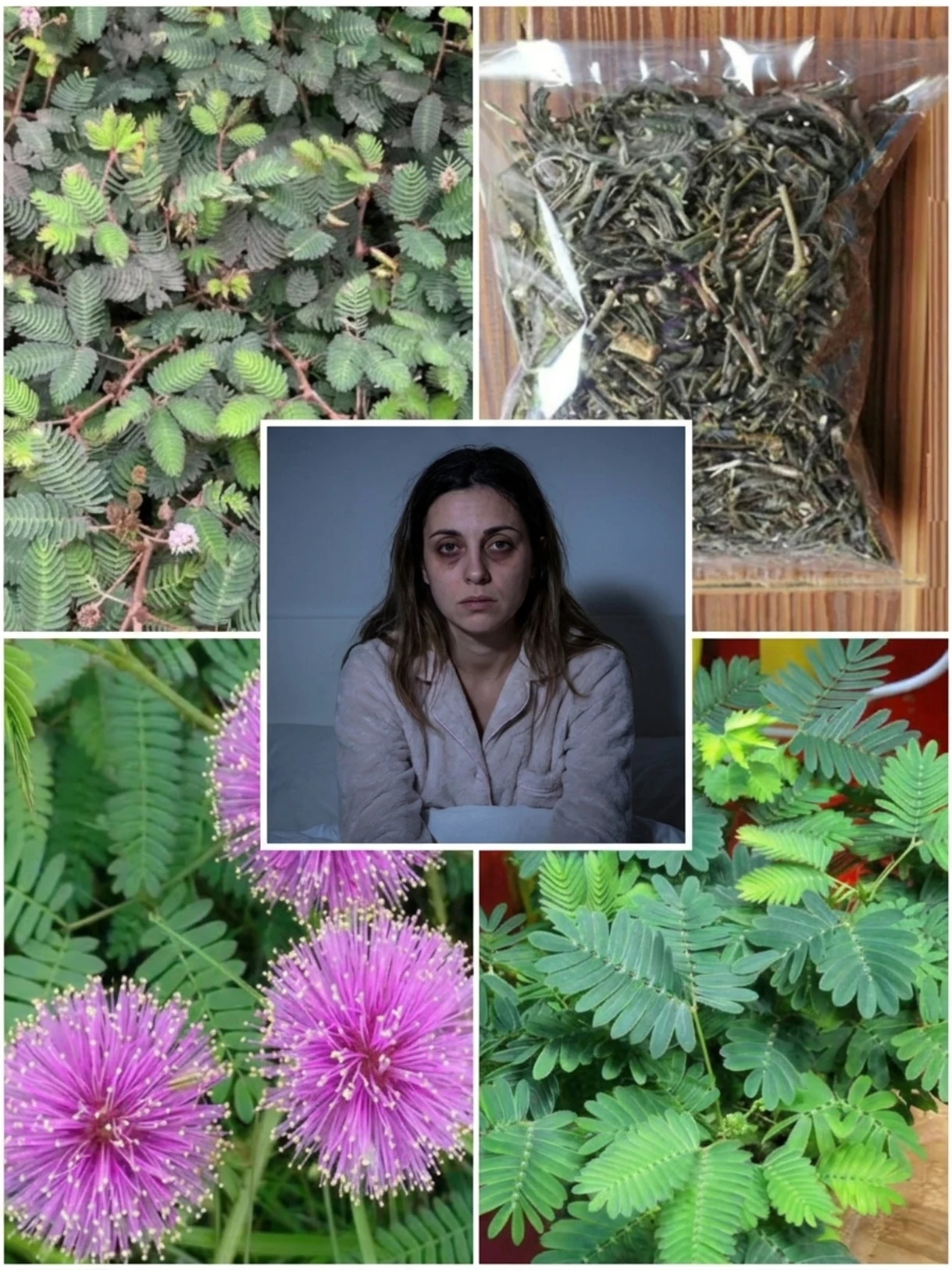
Ingredients
For a simple traditional-style shy plant tea for sleep, use:
- 1 small handful fresh Mimosa pudica leaves and tender stems
or 1 to 2 teaspoons dried herb - 2 cups water
Fresh herb is often used in folk-style preparations, but dried herb is easier if you want consistency.
How to Prepare Shy Plant Tea
This is a very simple tea to make.
Step 1: Wash the herb well
If you are using fresh shy plant, rinse it carefully to remove dust and grit.
Step 2: Add it to water
Place the herb in a small pot with 2 cups of water.
Step 3: Simmer gently
Bring it to a light boil, then lower the heat and let it simmer for about 8 to 10 minutes.
Step 4: Let it rest
Turn off the heat and leave it for another 5 minutes.
Step 5: Strain and sip warm
Strain into a cup and drink it warm, preferably in the evening.
The taste is usually herbal and mild, not especially pleasant or strong. This is more of a functional bedtime tea than a flavor-first tea.
How to Use It
If someone wants to try this kind of traditional remedy, the gentlest approach makes the most sense.
Best time to drink it
Most people would use it about 30 to 60 minutes before bed.
How often
This works better as an occasional calming tea than as a heavy everyday habit.
What to pair it with
The tea is more likely to feel helpful when it is part of a full evening routine:
- dimmer lights
- less screen time
- a lighter dinner
- no late caffeine
- a quieter wind-down hour
That may not sound glamorous, but it is often the difference between a tea that feels pointless and one that actually helps.
What You Can Realistically Expect
This is the part worth being honest about.
If shy plant tea suits you, the first thing you may notice is not “instant sleep.” It is more likely a softer shift:
- the body feels a little calmer
- the mind feels less agitated
- bedtime feels less rushed
- sleep may come a little easier on some nights
You may feel that same-night effect, especially if stress is the main issue. But if you are dealing with chronic insomnia, repeated nighttime waking, or sleep problems driven by anxiety, depression, reflux, pain, hormones, or sleep apnea, a simple herb tea is unlikely to fix the real cause. There is also no strong human evidence showing that Mimosa pudica tea reliably treats insomnia.
Why This Herb Still Appeals to People
Part of it is the ritual.
Part of it is the plant itself.
Sensitive plant already feels special because it responds to touch. That gives it a kind of quiet personality that makes people more curious about it than they would be about an ordinary weed. Add a few early studies suggesting anxiety-related effects, and it is easy to see why the herb picks up a reputation for rest and sleep.
And honestly, some bedtime remedies stick around for a simple reason: they create a pause. A warm cup, a slower breath, a little space before bed. Sometimes that matters more than people expect.
Safety Notes
This part matters.
The scientific papers around Mimosa pudica repeatedly note that more research is needed, especially around long-term use and safety. One recent paper specifically said more work is still needed to understand mechanisms and evaluate long-term effects and safety.
A few practical precautions:
- use only a correctly identified plant
- start with a small amount
- avoid self-treating serious anxiety or chronic insomnia with herbal tea alone
- be cautious if pregnant, breastfeeding, or taking regular medication
- stop if it causes stomach upset or any unusual reaction
And if sleep trouble is ongoing, severe, or affecting your mood and daytime function, that is usually a sign to look deeper rather than simply trying stronger herbs.
Final Thoughts
Shy plant tea for sleep makes sense as a traditional calming remedy, especially for evenings when the body feels tense and the mind will not quite settle. There is some early research that helps explain the reputation, but the evidence is still far from strong enough to call it a proven sleep treatment. (NCBI)
So the best way to use it is also the simplest: as a small, gentle bedtime ritual with realistic expectations.
Sometimes that is exactly enough.