Some remedies survive because they are dramatic. Others survive because they are simple enough for anyone to try.
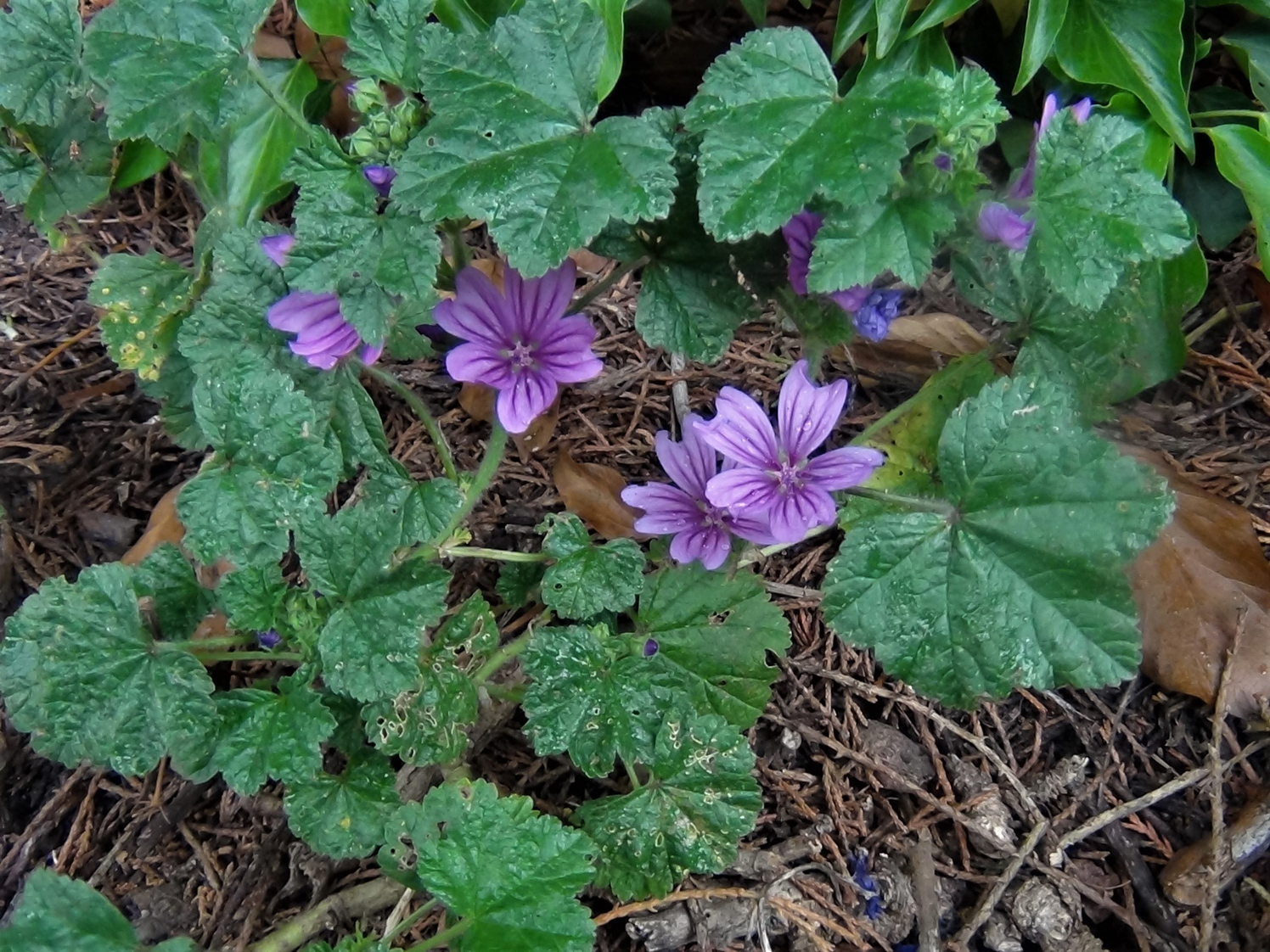
Common mallow, usually identified as Malva neglecta or a closely related Malva species, belongs in that second group. It grows low to the ground, has round, softly pleated leaves, and makes those little wheel-shaped seed pods that many people recognize once they see them up close. It is a familiar weed in gardens and edges of paths, but in traditional plant use it has been much more than that. References describe common mallow as a plant valued for its soothing, anti-inflammatory, and demulcent qualities, and modern reviews note that it has long been used for pain and inflammation in folk medicine. (Washington College)
That is probably why it keeps showing up in home remedies for sore knees, stiff joints, and general body aches.
Still, this is where it helps to stay honest. Mallow is an interesting traditional herb, and there is some lab and animal research behind its anti-inflammatory reputation, but that does not mean a pot of boiled mallow is a miracle cure for arthritis or severe knee pain.
Why People Use Common Mallow for Knee Discomfort
When people turn to mallow for joint pain, they are usually not expecting something aggressive.
This is more of a gentle support herb. In traditional use, mallow has been associated with:
- inflammation
- mild pain relief
- soothing irritated tissues
- warm poultices and softening washes
A recent review of Malva neglecta notes that its leaves and aerial parts have traditionally been used in Anatolia for pain and inflammation, among other uses. Another study on Malva parviflora, a related mallow species, reported anti-arthritic and anti-inflammatory activity in experimental models, which helps explain why the whole mallow group gets linked with joint support.
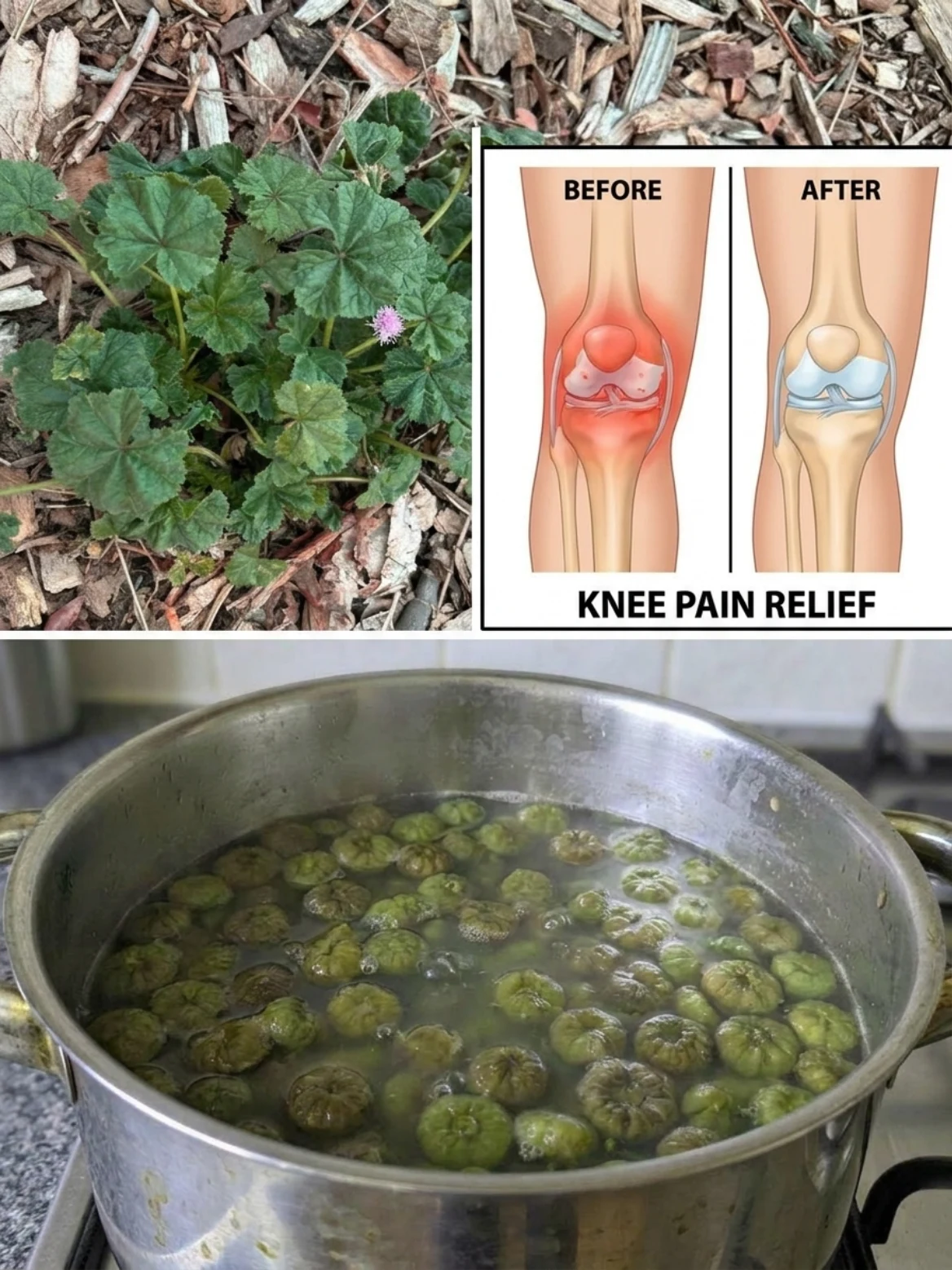
So while the image makes it look like a direct “before and after” fix, the more realistic story is this: mallow has a long traditional reputation as a soft, inflammation-supportive herb, and that is likely the reason people still use it for knees.
Ingredients
For a simple traditional-style mallow decoction for knee comfort, people usually use:
- 1 small handful fresh common mallow leaves and immature seed pods
or 2 to 3 teaspoons dried mallow - 3 to 4 cups water
If you want to use it as an external compress, you will also need:
- a clean cloth or towel
- a bowl for soaking the cloth
How to Prepare It
This kind of remedy is usually prepared as a decoction, meaning the plant is gently boiled rather than just steeped like delicate tea.
Step 1: Wash the plant well
Rinse the leaves and seed pods thoroughly to remove dust and grit.
Step 2: Add to water
Place the plant material in a pot with 3 to 4 cups of water.
Step 3: Simmer gently
Bring it to a light boil, then lower the heat and let it simmer for about 10 to 15 minutes.
Step 4: Let it rest
Turn off the heat and leave it for another 5 to 10 minutes.
Step 5: Choose how to use it
You can strain the liquid and drink a small cup warm, or use the warm strained liquid as the base for a knee compress by soaking a cloth in it and laying it over the sore area.
That second option often makes the most sense for a knee remedy, because it keeps the use local and gentle.
How to Use It
A mallow remedy like this is usually used in a calm, practical way.
As a warm compress
Soak a clean cloth in the warm liquid, wring it out, and place it over the knee for 10 to 15 minutes.
As a light tea
Some people also sip a small cup of the decoction, usually once a day or only during short periods of discomfort.
Best time to use
This kind of remedy usually makes the most sense:
- in the evening
- after long periods of standing
- when the knee feels stiff rather than sharply injured
What You Can Realistically Expect
This part matters.
If mallow helps, the first thing you usually notice is not some dramatic transformation. It is more likely:
- the knee feels a little warmer
- the area feels less tight
- the body relaxes a bit after the compress
- mild soreness feels easier by the end of the day
That is the most believable outcome.
Mallow has been studied for anti-inflammatory and analgesic effects in experimental settings, but that is still very different from proving that a home remedy will reverse osteoarthritis or fix persistent joint damage.
So the better expectation is comfort and support, not a cure.
Why Mallow Makes Sense as a Gentle Remedy
Part of mallow’s reputation comes from the fact that it is simply a very soft herb.
It contains mucilage, the same kind of soothing plant substance that makes herbs like marshmallow and slippery herbs feel calming rather than harsh. Reference sources describe common mallow as useful in tea to soothe inflammation, and that alone helps explain why people still think of it as a “cooling” or calming herb for irritated tissues. (Washington College)
That softness is part of the appeal. When joints feel inflamed, many people are not looking for something intense. They are looking for something that feels gentle, warm, and steady.
Safety Notes
Mallow is usually thought of as a mild plant, but a few precautions still matter.
Use only a correctly identified plant from a clean area. Avoid roadside plants or anything that may have been sprayed.
Also remember that knee pain is not all the same. A mild ache after overuse is very different from:
- a hot, swollen joint
- sudden severe pain
- inability to bear weight
- pain after a fall
- redness, fever, or obvious joint distortion
Those situations need proper medical care, not a home compress.
Final Thoughts
Common mallow is one of those old-fashioned herbs that makes sense once you understand how people use it. It is not flashy. It is not a miracle. It is simply a soft, traditional plant that has long been linked with pain, inflammation, and soothing support.
Used as a warm decoction or compress, it may be one of those small remedies that helps an aching knee feel a little calmer at the end of the day.
Sometimes that kind of relief is exactly what people are looking for.
Related Source Science
Reviews on Malva neglecta describe traditional use for pain and inflammation, while related research on Malva parviflora has reported anti-inflammatory and anti-arthritic effects in experimental models. The best-supported takeaway is not that mallow “cures” knee pain, but that its traditional role as a gentle inflammation-support herb is at least partly backed by preclinical research.