June is not a late start. In many gardens, it is the moment when planting finally begins to make real sense.
By June, the soil is warmer, nights are steadier, and many heat-loving crops stop sulking and start growing. University of Minnesota Extension notes that warm-season vegetables should wait until soil temperatures reach about 65°F or warmer and frost danger has passed, usually from late May to early June; that group includes tomatoes, peppers, cucumbers, squash, beans, corn, and basil. Planting too early often leads to slow growth, yellowing, and reduced yields.
That is why June planting can feel so rewarding. Seeds germinate faster. Transplants establish more quickly. Summer annuals and edible herbs gain momentum without fighting cold, soggy spring ground. If you plant thoughtfully now, you are not behind. You are often right on schedule.
Why June planting works so well
Warm soil changes the pace of the garden. Minnesota Extension points out that June warmth helps warm-season vegetables such as tomatoes, peppers, cucumbers, zucchini, and beans thrive, and that herbs like basil and dill also grow quickly at this time. In practical terms, June planting often skips the delays caused by cold spring soil and helps crops catch up fast.
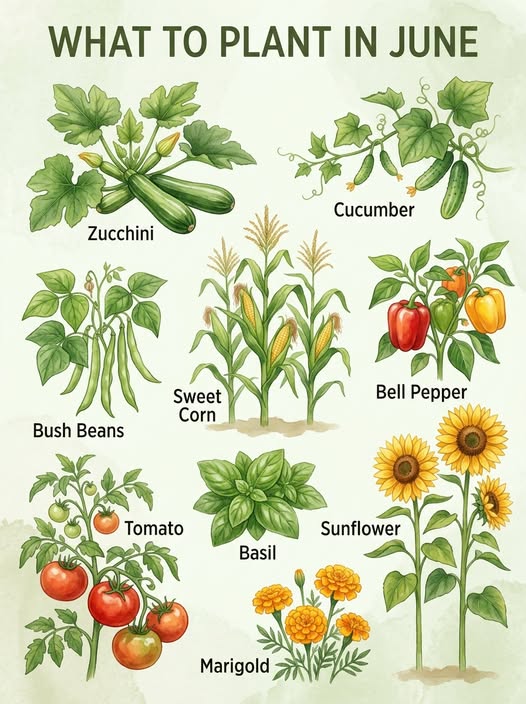
The smartest June planting plan usually includes two types of crops. First, there are direct-sown fast growers like bush beans, cucumbers, zucchini, sweet corn, basil, sunflower, and marigold. Second, there are warm-season transplants like tomato and bell pepper, which are often better planted as starts once the weather has turned reliably warm. Oregon State and Illinois Extension both note that tomatoes and peppers are commonly planted outside in late May to early June, once soil and night temperatures are high enough.
A quick U.S. zone guide for June planting
For most gardeners, June timing depends less on the calendar itself and more on heat, frost dates, and growing season length. In cooler areas, roughly USDA Zones 3 to 5, June is often a prime planting window for heat lovers because the soil has only recently become warm enough. In moderate areas, roughly Zones 6 and 7, June is ideal for succession sowing beans, cucumbers, squash, basil, and sunflowers, while still being a workable transplant window for tomatoes and peppers. In warmer areas, roughly Zones 8 to 10, June planting still works well, but moisture management, mulch, and afternoon heat become much more important. Illinois Extension emphasizes using local frost dates and crop maturity times rather than assuming one planting date fits all regions.
1. Zucchini: one of the best June performers
Zucchini loves warm soil, and June often gives it the fast start it wants. Once it establishes, it grows quickly, flowers heavily, and can become one of the most productive plants in the garden. Minnesota Extension specifically includes zucchini among the warm-season vegetables that thrive in June warmth.
Give zucchini more room than you think it needs. Good airflow matters, especially later in summer when leaves are large and mildew pressure rises. Water deeply at the root zone and harvest often. Frequent picking keeps the plant producing instead of slowing down behind oversized fruit. Consistent moisture also helps prevent stress-related issues common in squash-family crops.
2. Cucumber: fast, productive, and perfect for warm soil
Cucumbers are classic June crops because they germinate and grow much faster in warm ground than in cool spring beds. They are especially strong choices for gardeners who want fast vines and steady harvests. Minnesota Extension lists cucumbers among the crops that should wait for warm soil, and Penn State Extension notes cucumbers are strong candidates for succession-style planting in productive summer gardens.
The best practical upgrade is vertical growing. Trellising saves space, improves airflow, and makes fruit easier to spot before it gets too large. Keep soil moisture even, because cucumber quality drops quickly when plants swing between drought and soaking.
3. Bush beans: the easiest June sowing for quick harvests
Bush beans are one of the most useful June crops because they are fast, dependable, and simple to manage. University sources repeatedly include beans among the heat-loving crops that can be direct seeded once the weather settles and the soil warms.
The best strategy is to sow bush beans in waves. Instead of one large planting, sow a short row every 10 to 14 days for several rounds. That gives you a longer harvest and keeps the kitchen from getting flooded with beans all at once. Warm soil helps them emerge quickly, and regular picking keeps them tender and productive.
4. Sweet corn: a strong June crop when warmth is steady
Sweet corn is another crop that really benefits from warm soil. Minnesota Extension notes that heat-loving crops such as sweet corn should wait until soil is warm enough, and the Upper Midwest care calendar includes direct seeding corn from late May through the first week of June.
Plant corn in blocks rather than single rows so pollination works better. This is one of the most overlooked details in backyard corn growing. Feed the soil well, keep moisture steady during tasseling and ear fill, and avoid planting just a tiny strip if you want full ears.
5. Bell pepper: better as a June transplant than a June seed
Peppers are very much June plants, but usually not June direct-sown plants in most home gardens. Oregon State Extension advises planting pepper starts outside in late May to early June when soil temperatures are at least 55°F and nighttime temperatures are at least 50°F. Minnesota Extension similarly recommends transplanting peppers once nighttime lows stay above 50°F.
That means June is an excellent time to set out sturdy pepper transplants. Give them full sun, warm soil, and enough spacing for air movement. Mulch helps hold moisture and stabilize the root zone. Do not rush peppers into cold ground and expect them to recover gracefully. They are slow to forgive.
6. Tomato: June is still a very good planting window
Tomatoes are another crop that often performs beautifully when planted in late May or early June. Illinois Extension specifically notes that gardeners often worry it is too late, but late May and early June are actually excellent timing for rapid root establishment. Oregon State adds that tomato starts should go outside once soil temperatures are at least 55°F and nights stay above 45°F.
Use sturdy transplants, plant deeply, and support them early. Minnesota Extension recommends burying part of the stem because new roots form from that buried section, creating a stronger plant. Keep moisture uniform to reduce fruit problems later in the season.
7. Basil: the herb that finally feels at home in June
Basil is one of the clearest examples of an herb that wants real summer, not a hesitant spring. Minnesota Extension includes basil among the heat-loving crops best planted after the soil warms and also notes that herbs such as basil grow quickly in June.
For better harvests, pinch basil early to encourage branching. This simple habit gives you fuller plants and more usable leaves. Keep the plant growing by harvesting often and preventing it from rushing into bloom too early.
8. Sunflower: fast summer color with real garden value
Sunflowers are more than cheerful flowers. They add height, structure, and pollinator activity to the June garden. Minnesota Extension specifically mentions sunflowers as strong June flowers that add color and pollinator value.
Sow them where they will stay, since they establish quickly and usually prefer not to be fussed over. Taller varieties belong in the back of a bed or along a fence, while branching or dwarf types fit more easily into mixed vegetable and flower gardens. Their value is both ornamental and ecological.
9. Marigold: the June flower that earns its space
Marigolds are one of the best June flowers because they settle quickly in warm weather and give fast color. Minnesota Extension lists marigolds among the flowers that thrive in June and add pollinator power.
Use marigolds near tomatoes, peppers, and basil if you want a planting that feels productive and attractive at the same time. Their strongest value is often practical: they fill gaps, brighten the bed, and keep the garden visually alive while vegetables mature.
Final June planting advice that makes a real difference
If you plant in June, do three things well. First, water the bed before or immediately after sowing so seeds sit in stable moisture. Second, mulch once seedlings or transplants are established; Minnesota Extension recommends mulching generously in June to lock in moisture, block weeds, and keep roots cooler. Third, keep harvesting and sowing in waves where it makes sense, especially with beans, basil, cucumbers, and summer flowers.
June is not the month when opportunity closes. It is often the month when the garden starts moving at its natural speed. Zucchini, cucumbers, bush beans, sweet corn, peppers, tomatoes, basil, sunflowers, and marigolds all prove the same point: when soil is warm and timing is right, growth stops feeling forced and starts feeling easy.