Some herbal remedies become popular because they sound dramatic. Others stick around because people have actually been making them for generations.
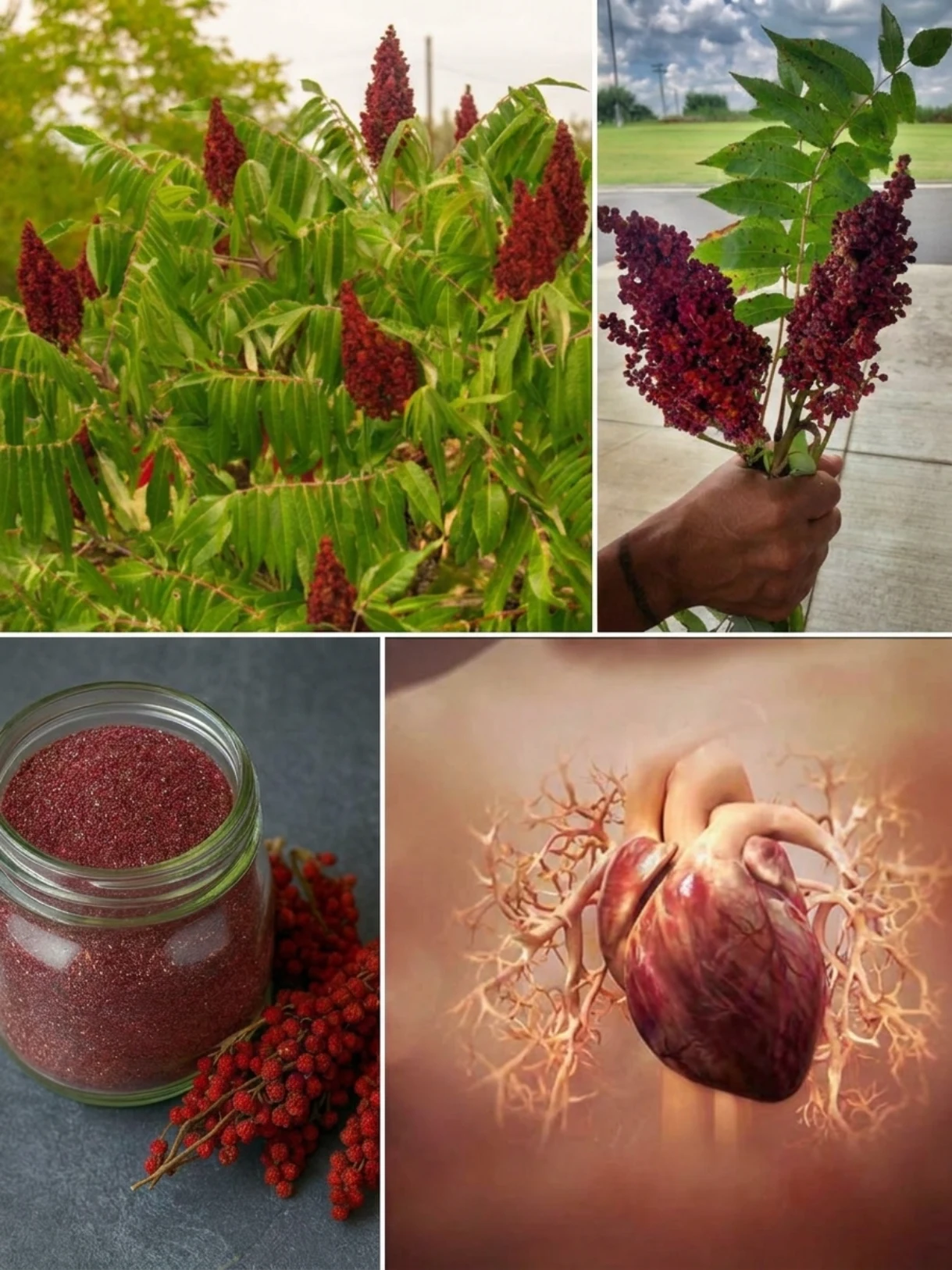
Sumac tea belongs in that second category. The red cone-shaped fruit clusters and long feather-like leaves in this plant strongly suggest a sumac in the Rhus group, most likely something like staghorn sumac or a close relative. In North America, staghorn sumac fruits were traditionally steeped into a tart drink by several Indigenous communities, and botanical references still describe the berries as a food-and-beverage plant rather than just a decorative shrub.
That history is real. The stronger claim in wellness posts is the part that needs more balance.
People often link sumac with heart health, and there is some reason for that. Modern reviews of Rhus coriaria – the culinary sumac studied most often in research — describe it as rich in polyphenols, tannins, flavonoids, and other antioxidant compounds, and a recent meta-analysis of randomized trials found that sumac supplementation may improve some cardiovascular disease risk factors, though the results were mixed rather than definitive.
So the honest version is simple: sumac tea can fit into a heart-friendly lifestyle, but it is not a miracle cure for heart disease.
Why People Connect Sumac With the Heart
When people talk about sumac as a heart herb, they are usually thinking about its antioxidant reputation.
That makes sense. Sumac has been studied for how its plant compounds may influence oxidative stress, inflammation, blood lipids, and blood sugar-related markers, all of which matter in long-term cardiovascular health. A 2025 systematic review and meta-analysis noted that clinical trials on sumac and cardiovascular risk factors have produced contradictory findings, but the topic remains important enough that researchers keep studying it.
That is encouraging, but it is not the same as proof that a homemade berry tea can “repair” arteries or reverse heart disease. It is more accurate to think of sumac as a supportive food-style herb rather than a treatment.
What Sumac Tea Is Traditionally Used For
In traditional practice, sumac tea is usually valued less for one dramatic medical claim and more for the overall experience.
People turn to it because it is:
- tart and refreshing
- lighter than sugary drinks
- easy to make from dried or fresh berry clusters
- naturally rich in plant compounds that fit a wellness routine
Ethnobotanical and botanical references describe sumac fruits as being steeped in water for a lemonade-like drink, which fits the gentle, everyday style of herbal use much better than exaggerated “heart cure” messaging.
Ingredients
For a simple sumac tea, you only need:
- 1 small handful fresh sumac berry clusters
or - 1 to 2 tablespoons dried sumac berries
- 2 to 3 cups water
If you are using fresh wild sumac, the biggest rule is this: be certain of the plant identification first.
How to Prepare Sumac Tea
This remedy is easy to make, which is part of why it has lasted so long.
Step 1: Clean the berries gently
Shake or lightly rinse the berry clusters to remove dust.
Step 2: Add to water
Place the berries into a pot or heatproof jar with 2 to 3 cups of water.
Step 3: Simmer or steep
For a lighter drink, steep in hot water for 10 to 15 minutes.
For a deeper flavor, simmer gently for about 10 minutes.
Step 4: Strain well
Strain carefully to remove the tiny hairs and solids.
Step 5: Drink warm or cooled
You can enjoy it warm, but many people prefer it slightly cooled because the tartness comes through more clearly.
The finished tea is usually light red-brown to amber and has a pleasantly sour, fruity edge.
How to Use It
Sumac tea works best as a supportive habit, not a rescue remedy.
Many people enjoy it:
- with meals
- in warm weather as a lighter herbal drink
- in place of sweetened beverages
- a few times a week rather than as an all-day tonic
Quick relief timeline
The first thing you notice is usually the flavor and freshness right away. The bigger “benefit,” if there is one, comes over time from the broader habit: drinking fewer sugary beverages and using more polyphenol-rich foods in daily life. That is much more realistic than expecting one cup to transform cardiovascular health. (Springer)
Why This Remedy Still Makes Sense
Part of the appeal is that sumac sits comfortably between food and herbal tradition.
It is not an obscure root with a harsh medicinal taste. It is a tart berry ingredient people have actually used in beverages for a long time. Modern scientific reviews add another layer by showing that sumac contains bioactive compounds with antioxidant and anti-inflammatory potential, which helps explain why people still see it as a wellness ingredient today.
That said, it is important not to confuse promising metabolic and cardiovascular markers with proven disease treatment. The research is interesting, but still mixed.
Safety Notes
This part matters more than most short posts admit.
Correct plant identification is essential. Edible sumac species are not the same thing as poison sumac, which is a different plant entirely. Traditional beverage use applies to the edible fruiting sumacs, not every plant with “sumac” in the name.
A few simple rules help:
- use only correctly identified edible sumac
- start with a small amount if it is your first time
- avoid relying on it as a treatment for chest pain, high blood pressure, or known cardiovascular disease
- be cautious if you have allergies to related plants or a very sensitive stomach
If you have active heart symptoms like chest pain, fainting, shortness of breath, or unusual palpitations, that is not an herbal tea situation.
Final Thoughts
Sumac tea for heart health is one of those remedies that makes more sense the less dramatically you describe it.
It has a real traditional history. It contains antioxidant-rich compounds. And modern research suggests sumac may help improve some cardiovascular risk markers in certain settings. But the evidence is not strong enough to call it a heart cure, and it works best when viewed as part of an overall healthy routine, not as a shortcut.
Sometimes the best herbal advice is the least flashy: enjoy the tea, respect the plant, and let the habit stay realistic.